Updates

  1. Person pages list letters, writing, profiles and links as sortable tables with filters, and show each person's companies as links; Fund letters show each letter's description in its own column.
  2. Experts show a checked job title and a short description of each person; 30 more people have photographs.
  3. Every company, fund, university and publication the experts work for has a page listing the people there.
  4. Fund letters show each letter's thesis and filter by it; 225 person pages list the essays, columns and newsletter issues the person wrote.
  5. Person pages list every essay and newsletter issue a person wrote, and their own books as a table in List view.
  6. Recommends shows the five largest kinds of book and the rest under More; browse pictures load sooner.
  7. Podcasts and talks link the original episode, filter by Audio and video or Press, and list each publisher once.
  8. Pages are wider, Recommends has List and Grid, and a filter clicked again turns off.
  9. Book cards sit in a ruled grid with Open Library and Goodreads links and each book's one-line note.
  10. Funds is now Investors; each investor's styles are buttons that filter the table.
  11. Podcasts and talks on a person's page filter by year and publisher and show as a list or a grid of pictures.
  12. Quotes show only people's own words: 472 summaries written by list sites are gone.
  13. Country pages open from Browse again, and every link on the shelf lands on a page.
  14. Subject and person pages show their sections as tabs, and each book appears once on a person's page.
  15. Book cards show the quote, who said it and the source; grids show five cards to a row.
  16. On a phone, a menu holds the sections, search, Updates, Feedback and dark mode.
  17. Feedback takes a screenshot of the page with no browser prompt, opens a screenshot full size when you click it, and clears itself once sent.
  18. Book cards are centred, search names the topic each book sits in, and any text cut short shows whole on hover.
  19. Search groups its results by kind: people, companies, geographies, subjects, topics, books, funds, fund letters and papers.
  20. The Books table lists who recommended each book by name, and the browser tab names the section you are in.
  21. Feedback can take a screenshot of the page, or one you paste or choose, and opens in the corner beside Updates.
  22. Each rail button reopens its section where you left it, and Browse, Table and People show on every book and subject page.
  23. Filters grey out choices that hold nothing instead of hiding them, and Books › People filters by authors or recommenders.
  24. Feedback takes a subject line and up to three screenshots.
  25. Biographies are grouped by the person they are about: 41 new pages, from Abraham Lincoln to Lee Kuan Yew.
  26. Sport splits into 23 sports, and Religion into one topic per faith.
  27. Book lists show as cards: the cover, one recommendation quote and every recommender by name.
  28. Seventeen subjects that had two or three pages under different names now have one page each.
  29. Every page lists its Experts as authors and recommenders, with a link to them on the Experts tab.
  30. Economics, Financial history, Financial panics and Accounting are subjects of their own, with one page per financial crisis.
  31. Book, person and subject pages open inside the app, so the tabs stay in view.
  32. 996 more book covers, and photographs or logos for 227 more people and companies.
  33. Books › Browse shows every subject as cards, and the rail holds Fund letters, Papers, Experts, Books and Funds.
  34. Every topic over 150 books splits into narrower topics, each with a page of its own.

Send feedback

What is it?
Screenshots, up to 3 (optional)
or paste one with Ctrl+V

We use your email only to reply to you.

Secrets of Sand Hill Road

Secrets of Sand Hill Road

Scott Kupor
2019
T2 320 pages · about 5h 20m to read Open Librarygoodreads

An a16z partner explaining fund economics to founders.

Summary

Kupor, managing partner at Andreessen Horowitz, explains how venture capital works from both sides, aimed at founders who need to understand what they are agreeing to. It is the most practically detailed book on the mechanics.

The first part explains venture firms as businesses: how funds are structured as limited partnerships, who the limited partners are and what their constraints require, how the two and twenty fee structure works, what a fund's ten-year life implies for the pressure on portfolio companies, why the power law forces investors to seek outliers rather than reliable returns, and how carried interest and distribution waterfalls actually operate.

The second part covers the term sheet clause by clause. Kupor explains liquidation preferences including participating and non-participating structures with the arithmetic, anti-dilution provisions and the difference between broad-based weighted average and full ratchet, protective provisions, board composition, pro rata rights, option pool shuffles and how the pool's placement affects the effective valuation, drag-along rights, and the distinction between economic terms and control terms. He argues that founders overweight valuation and underweight control and preference terms, which determine outcomes in every scenario except the best one.

The third part covers the mechanics of exits, acquisition structures and going public, including direct listings. The perspective is a general partner's, so the advice is shaped by what a venture firm considers reasonable. It is specific to United States practice at a particular period, and terms have shifted since publication. The clause-level explanations with worked arithmetic are the reason to read it.

Key takeaways 8

  1. Venture funds are limited partnerships with a ten-year life, which imposes exit pressure on portfolio companies regardless of what the business needs.
  2. The power law forces venture investors to seek outcomes that could return the whole fund, which means a reliably profitable company is not what they are buying.
  3. Founders overweight valuation and underweight liquidation preference and control terms, which determine outcomes in every scenario except the largest exit.
  4. A participating preference pays the investor their money back and then their share of the remainder, which changes founder proceeds substantially at moderate exit values.
  5. Anti-dilution provisions determine what happens in a down round, and full ratchet transfers far more from founders than weighted average does.
  6. The option pool is usually created before the investment, which means it dilutes existing holders and lowers the effective pre-money valuation.
  7. Protective provisions give investors a veto over specific actions regardless of their board or ownership position, which is where control actually sits.
  8. Board composition matters more than ownership percentage for most decisions a company faces before an exit.

Who should read it

Founders raising venture capital who need to understand term sheets clause by clause, and anyone learning how venture funds operate as businesses.

Who recommended it 5

Eric Schmidtreported
Ryan Hooverreported

Similar books 6

Chosen by shared topics, the entries that hold them, and the people who recommended both.

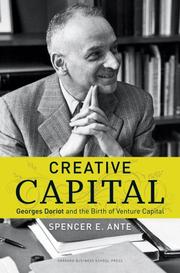
Spencer E. Ante · 2008

Georges Doriot, who showed that investing in small, risky firms could pay.

Recommended by: Patrick Collison

Sebastian Mallaby · 2022

Venture capital from Arthur Rock to SoftBank, and why a few big bets pay for all.

Where it sits in the reference 2

Investment styles
Assets

Topics

Entrepreneurship and StartupsInvesting