Updates

  1. Person pages list letters, writing, profiles and links as sortable tables with filters, and show each person's companies as links; Fund letters show each letter's description in its own column.
  2. Experts show a checked job title and a short description of each person; 30 more people have photographs.
  3. Every company, fund, university and publication the experts work for has a page listing the people there.
  4. Fund letters show each letter's thesis and filter by it; 225 person pages list the essays, columns and newsletter issues the person wrote.
  5. Person pages list every essay and newsletter issue a person wrote, and their own books as a table in List view.
  6. Recommends shows the five largest kinds of book and the rest under More; browse pictures load sooner.
  7. Podcasts and talks link the original episode, filter by Audio and video or Press, and list each publisher once.
  8. Pages are wider, Recommends has List and Grid, and a filter clicked again turns off.
  9. Book cards sit in a ruled grid with Open Library and Goodreads links and each book's one-line note.
  10. Funds is now Investors; each investor's styles are buttons that filter the table.
  11. Podcasts and talks on a person's page filter by year and publisher and show as a list or a grid of pictures.
  12. Quotes show only people's own words: 472 summaries written by list sites are gone.
  13. Country pages open from Browse again, and every link on the shelf lands on a page.
  14. Subject and person pages show their sections as tabs, and each book appears once on a person's page.
  15. Book cards show the quote, who said it and the source; grids show five cards to a row.
  16. On a phone, a menu holds the sections, search, Updates, Feedback and dark mode.
  17. Feedback takes a screenshot of the page with no browser prompt, opens a screenshot full size when you click it, and clears itself once sent.
  18. Book cards are centred, search names the topic each book sits in, and any text cut short shows whole on hover.
  19. Search groups its results by kind: people, companies, geographies, subjects, topics, books, funds, fund letters and papers.
  20. The Books table lists who recommended each book by name, and the browser tab names the section you are in.
  21. Feedback can take a screenshot of the page, or one you paste or choose, and opens in the corner beside Updates.
  22. Each rail button reopens its section where you left it, and Browse, Table and People show on every book and subject page.
  23. Filters grey out choices that hold nothing instead of hiding them, and Books › People filters by authors or recommenders.
  24. Feedback takes a subject line and up to three screenshots.
  25. Biographies are grouped by the person they are about: 41 new pages, from Abraham Lincoln to Lee Kuan Yew.
  26. Sport splits into 23 sports, and Religion into one topic per faith.
  27. Book lists show as cards: the cover, one recommendation quote and every recommender by name.
  28. Seventeen subjects that had two or three pages under different names now have one page each.
  29. Every page lists its Experts as authors and recommenders, with a link to them on the Experts tab.
  30. Economics, Financial history, Financial panics and Accounting are subjects of their own, with one page per financial crisis.
  31. Book, person and subject pages open inside the app, so the tabs stay in view.
  32. 996 more book covers, and photographs or logos for 227 more people and companies.
  33. Books › Browse shows every subject as cards, and the rail holds Fund letters, Papers, Experts, Books and Funds.
  34. Every topic over 150 books splits into narrower topics, each with a page of its own.

Send feedback

What is it?
Screenshots, up to 3 (optional)
or paste one with Ctrl+V

We use your email only to reply to you.

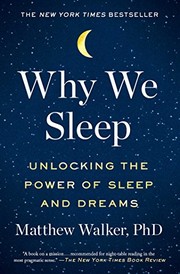
Why We Sleep

Why We Sleep

Matthew Walker
2017
360 pages · about 6h to read Open Librarygoodreads

Summary

Walker, a sleep researcher at Berkeley, argues that insufficient sleep damages nearly every biological system and that the modern reduction in sleep duration constitutes a public health problem comparable to smoking. He covers the architecture of sleep, the different functions of REM and non-REM sleep, circadian regulation, the effects of caffeine and alcohol, and the consequences of deprivation for memory, immune function, metabolism, cardiovascular health, mental health and accident rates.

The memory material is the best supported. Non-REM sleep appears to transfer material from short-term hippocampal storage to longer-term cortical storage, and REM sleep appears to integrate new material with existing knowledge, which Walker connects to problem solving and creative association. He reports experiments showing learning capacity reduced by around forty percent after a night without sleep.

The practical content covers sleep hygiene, the argument against sleeping pills, the case against early school start times, the effect of blue light on melatonin, and the distinction between chronotypes as genetically determined rather than a matter of discipline.

The book has been criticised seriously. Alexey Guzey published a detailed analysis in 2019 identifying factual errors, a misrepresented graph, an omitted data point, and claims stated with more certainty than the underlying research supports, including the claim that short sleep causes cancer and the statement that no organism benefits from less sleep. Walker acknowledged some errors. The general direction of the evidence, that chronic short sleep is harmful, is well supported. The specific figures and the strongest causal claims should not be cited without checking the primary source.

Key takeaways 8

  1. Non-REM sleep transfers learned material into longer-term storage and REM sleep integrates it with existing knowledge, so both stages serve distinct memory functions.
  2. Learning capacity is measurably reduced after a night without sleep, with deficits reported around forty percent in Walker's experiments.
  3. Sleeping less than about seven hours consistently is associated with increased risk across metabolic, immune and cardiovascular measures.
  4. Alcohol and most sleeping pills produce sedation rather than sleep and suppress REM, so they degrade the functions sleep performs.
  5. Caffeine has a half-life of around five to six hours, which means an afternoon dose measurably affects that night's sleep architecture.
  6. Chronotype is largely genetically determined, so imposing early schedules on late chronotypes reduces their performance rather than their laziness.
  7. Sleep loss cannot be repaid, and weekend recovery does not restore the deficits accumulated during the week.
  8. Several specific claims and figures in this book have been shown to overstate or misreport the underlying research, so citations should be checked against primary sources.

Who should read it

Operators treating sleep as an adjustable input to performance, who should take the direction of the argument seriously and verify specific figures.

Who recommended it 9 · 1 direct

Jason Friedreported
Keith Raboisreported
Tim Ferrissreported
Trevor Ncubereported

Similar books 6

Chosen by shared topics, the entries that hold them, and the people who recommended both.

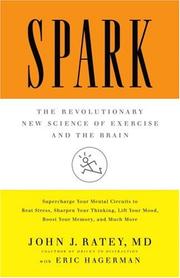
John J. Ratey · 2008

Recommended by: Tim Ferriss

Sonia Arrison · 2011

Radical life extension and what longer lifespans do to markets

Recommended by: Mohnish Pabrai, Peter Thiel

James Nestor · 2020

Recommended by: Nat Eliason, Austen Allred

Where it sits in the reference 0

No entry holds this book yet. It reached the reference because someone recommended it.

Topics

Health and FitnessScienceMedicine, health and the body