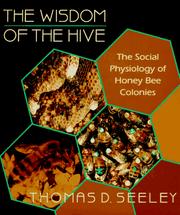
The Wisdom of the Hive
Honeybee colonies as a decentralised allocation and search system
Summary
Seeley, a biologist at Cornell, reports two decades of experimental work on how a honeybee colony allocates its foragers among nectar sources. The experiments use observation hives, individually marked bees, artificial feeders with controlled sugar concentrations, and careful measurement of individual behaviour.
The central finding is that the colony solves a distributed allocation problem without any bee having global information. A returning forager's decision to perform a waggle dance, and the number of circuits she performs, depends on the profitability of her source. Recruits watching the dance are not choosing among alternatives; they follow whichever dance they encounter, so the frequency of dances biases recruitment toward better sources. Seeley then shows how a forager assesses profitability without knowing what other sources yield: she uses the delay before a receiver bee unloads her nectar. Short delays mean the colony wants more nectar, long delays mean it is saturated. The tremble dance, whose function was previously unknown, recruits additional receivers when unloading is slow.
The general argument is that the colony operates as an information-processing system built from simple individual rules, local cues and feedback loops, with no central control and no individual holding a representation of the whole.
The book is a research monograph, written with unusual clarity but still detailed and technical. Its wide citation in management and organisational writing has produced loose analogies that Seeley does not make. The mechanisms are specific to a colony of closely related individuals with aligned genetic interests, and applying them to human organisations, where interests diverge, requires an argument the book does not supply.
Key takeaways 7
- A honeybee colony allocates foragers efficiently among food sources without any individual possessing information about the colony's overall situation.
- A forager measures the value of her source relative to the colony's needs by timing how long she waits to be unloaded.
- Waggle dance duration and frequency scale with source profitability, which biases recruitment toward better sources.
- Recruits do not compare alternatives; they follow whichever dance they encounter first, so allocation emerges from dance frequency.
- The tremble dance solves a distinct problem by recruiting more nectar receivers when unloading has become the bottleneck.
- Negative feedback through unloading delay prevents the colony from overcommitting to a source that has been saturated.
- Colony-level intelligence is produced by simple rules and local signals, not by any bee integrating information about the whole.
Who should read it
Readers interested in how decentralised systems allocate effort, provided they treat the mechanisms as biology rather than as a template for organisations.
Who recommended it 1 · 1 direct
“As Thomas Seeley writes in his delightful book, The Wisdom of the Hive”
Similar books 6
Chosen by shared topics, the entries that hold them, and the people who recommended both.
Control and communication in animals and machines run on the same principles.
How a mind could arise from parts, traced through Godel, Escher and Bach.
Recommended by: Nat Eliason, Naval Ravikant, Demis Hassabis and 3 others

Five disciplines, led by systems thinking, that let an organisation learn.
Recommended by: Mohnish Pabrai, Sahil Lavingia
Meadows wrote this before systems thinking became a popular phrase, and it remains the clearest account of why short-term interventions in complex systems so often backfire. The chapter on leverage points is the conceptual core of what long-term thinking actually requires from decision-makers.
Recommended by: Patrick O'Shaughnessy, Daniel Burka and 3 others
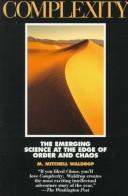
The founding of the Santa Fe Institute and the people who built complexity science.
Recommended by: Bill Gurley, Jamie Dimon, Michael Mauboussin and 1 other

How the sciences and humanities can be unified by causal links from physics up.
“I was inspired by E. O. Wilson's book Consilience, which came out in 1998 and is a book I'd recommend.” — Michael Mauboussin
Source: MOI Global interview with Michael Mauboussin
Recommended by: Michael Mauboussin, Mohnish Pabrai
Where it sits in the reference 2
Topics