Updates

  1. Person pages list letters, writing, profiles and links as sortable tables with filters, and show each person's companies as links; Fund letters show each letter's description in its own column.
  2. Experts show a checked job title and a short description of each person; 30 more people have photographs.
  3. Every company, fund, university and publication the experts work for has a page listing the people there.
  4. Fund letters show each letter's thesis and filter by it; 225 person pages list the essays, columns and newsletter issues the person wrote.
  5. Person pages list every essay and newsletter issue a person wrote, and their own books as a table in List view.
  6. Recommends shows the five largest kinds of book and the rest under More; browse pictures load sooner.
  7. Podcasts and talks link the original episode, filter by Audio and video or Press, and list each publisher once.
  8. Pages are wider, Recommends has List and Grid, and a filter clicked again turns off.
  9. Book cards sit in a ruled grid with Open Library and Goodreads links and each book's one-line note.
  10. Funds is now Investors; each investor's styles are buttons that filter the table.
  11. Podcasts and talks on a person's page filter by year and publisher and show as a list or a grid of pictures.
  12. Quotes show only people's own words: 472 summaries written by list sites are gone.
  13. Country pages open from Browse again, and every link on the shelf lands on a page.
  14. Subject and person pages show their sections as tabs, and each book appears once on a person's page.
  15. Book cards show the quote, who said it and the source; grids show five cards to a row.
  16. On a phone, a menu holds the sections, search, Updates, Feedback and dark mode.
  17. Feedback takes a screenshot of the page with no browser prompt, opens a screenshot full size when you click it, and clears itself once sent.
  18. Book cards are centred, search names the topic each book sits in, and any text cut short shows whole on hover.
  19. Search groups its results by kind: people, companies, geographies, subjects, topics, books, funds, fund letters and papers.
  20. The Books table lists who recommended each book by name, and the browser tab names the section you are in.
  21. Feedback can take a screenshot of the page, or one you paste or choose, and opens in the corner beside Updates.
  22. Each rail button reopens its section where you left it, and Browse, Table and People show on every book and subject page.
  23. Filters grey out choices that hold nothing instead of hiding them, and Books › People filters by authors or recommenders.
  24. Feedback takes a subject line and up to three screenshots.
  25. Biographies are grouped by the person they are about: 41 new pages, from Abraham Lincoln to Lee Kuan Yew.
  26. Sport splits into 23 sports, and Religion into one topic per faith.
  27. Book lists show as cards: the cover, one recommendation quote and every recommender by name.
  28. Seventeen subjects that had two or three pages under different names now have one page each.
  29. Every page lists its Experts as authors and recommenders, with a link to them on the Experts tab.
  30. Economics, Financial history, Financial panics and Accounting are subjects of their own, with one page per financial crisis.
  31. Book, person and subject pages open inside the app, so the tabs stay in view.
  32. 996 more book covers, and photographs or logos for 227 more people and companies.
  33. Books › Browse shows every subject as cards, and the rail holds Fund letters, Papers, Experts, Books and Funds.
  34. Every topic over 150 books splits into narrower topics, each with a page of its own.

Send feedback

What is it?
Screenshots, up to 3 (optional)
or paste one with Ctrl+V

We use your email only to reply to you.

Complexity: The Emerging Science at the Edge

Complexity: The Emerging Science at the Edge of Order and Chaos

M. Mitchell Waldrop
1992
T2 380 pages · about 6h 20m to read Open Librarygoodreads

Summary

Waldrop reports the founding of the Santa Fe Institute in the mid-1980s and the development of complexity science through the people involved, including physicist Murray Gell-Mann, economist Brian Arthur, biologist Stuart Kauffman, computer scientist John Holland and economist Kenneth Arrow.

The scientific content concerns complex adaptive systems, meaning systems of many interacting agents whose collective behaviour cannot be derived from the behaviour of the individual components. The recurring properties include emergence, in which organisation appears without any central direction; self-organised criticality, in which systems settle at a boundary between order and randomness where the most interesting behaviour occurs; and adaptation, in which agents change their behaviour based on outcomes.

The economics material is the part most relevant to a business readership. Brian Arthur's work on increasing returns argued that some markets exhibit positive feedback, so an early lead compounds and the outcome is path-dependent rather than determined by which technology is best. The QWERTY keyboard and the VHS format are the standard examples. This contradicted the standard economic assumption of diminishing returns and equilibrium, and Waldrop documents the resistance Arthur encountered in publishing it.

Holland's genetic algorithms and classifier systems, and Kauffman's work on autocatalytic sets and on order arising spontaneously in networks, receive substantial treatment. The book is from 1992 and complexity science has not delivered what its founders expected. Many of the specific research programmes stalled. Increasing returns became mainstream economics and is the most successful export. Read it as intellectual history and for the increasing returns argument.

Key takeaways 8

  1. Complex adaptive systems consist of many interacting agents whose collective behaviour cannot be derived from the behaviour of the components.
  2. Organisation emerges without any central direction, which means order in markets, ecosystems and organisations does not require a designer.
  3. Some markets exhibit increasing returns, so an early lead compounds and the eventual standard is path-dependent rather than the best available.
  4. Path dependence means that the technology that wins may be inferior, and the outcome could have been different with small early changes.
  5. The most interesting system behaviour occurs at a boundary between rigid order and randomness rather than at either extreme.
  6. Agents in these systems adapt their behaviour based on outcomes, which means the system's rules change as it operates.
  7. Equilibrium assumptions in standard economics fail where increasing returns operate, which was resisted strongly when Arthur proposed it.
  8. Complexity science has not delivered the general theory its founders expected, and increasing returns is its most successful export.

Who should read it

Readers wanting the intellectual history of complexity science and the origin of increasing returns and path dependence in economics.

Who recommended it 4

Bill Gurleyreported

Similar books 6

Chosen by shared topics, the entries that hold them, and the people who recommended both.

Norbert Wiener · 1948

Control and communication in animals and machines run on the same principles.
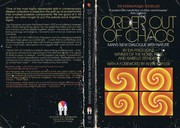
Ilya Prigogine, Isabelle Stengers · 1984
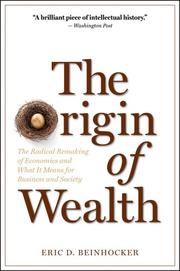
Eric D. Beinhocker · 2006

The economy as a complex evolving system rather than one in equilibrium.

Recommended by: Ryan Peterson

Edward O. Wilson · 1998

How the sciences and humanities can be unified by causal links from physics up.

“I was inspired by E. O. Wilson's book Consilience, which came out in 1998 and is a book I'd recommend.” — Michael Mauboussin

Source: MOI Global interview with Michael Mauboussin

Recommended by: Michael Mauboussin, Mohnish Pabrai

Thomas D. Seeley · 1995

Honeybee colonies as a decentralised allocation and search system

“As Thomas Seeley writes in his delightful book, The Wisdom of the Hive” — Michael Mauboussin

Source: Capital Ideas Revisited (Legg Mason Capital Management)

Recommended by: Michael Mauboussin

Where it sits in the reference 2

Mental models
Mental models

Topics

ScienceComplexity and systems science