Updates

  1. Person pages list letters, writing, profiles and links as sortable tables with filters, and show each person's companies as links; Fund letters show each letter's description in its own column.
  2. Experts show a checked job title and a short description of each person; 30 more people have photographs.
  3. Every company, fund, university and publication the experts work for has a page listing the people there.
  4. Fund letters show each letter's thesis and filter by it; 225 person pages list the essays, columns and newsletter issues the person wrote.
  5. Person pages list every essay and newsletter issue a person wrote, and their own books as a table in List view.
  6. Recommends shows the five largest kinds of book and the rest under More; browse pictures load sooner.
  7. Podcasts and talks link the original episode, filter by Audio and video or Press, and list each publisher once.
  8. Pages are wider, Recommends has List and Grid, and a filter clicked again turns off.
  9. Book cards sit in a ruled grid with Open Library and Goodreads links and each book's one-line note.
  10. Funds is now Investors; each investor's styles are buttons that filter the table.
  11. Podcasts and talks on a person's page filter by year and publisher and show as a list or a grid of pictures.
  12. Quotes show only people's own words: 472 summaries written by list sites are gone.
  13. Country pages open from Browse again, and every link on the shelf lands on a page.
  14. Subject and person pages show their sections as tabs, and each book appears once on a person's page.
  15. Book cards show the quote, who said it and the source; grids show five cards to a row.
  16. On a phone, a menu holds the sections, search, Updates, Feedback and dark mode.
  17. Feedback takes a screenshot of the page with no browser prompt, opens a screenshot full size when you click it, and clears itself once sent.
  18. Book cards are centred, search names the topic each book sits in, and any text cut short shows whole on hover.
  19. Search groups its results by kind: people, companies, geographies, subjects, topics, books, funds, fund letters and papers.
  20. The Books table lists who recommended each book by name, and the browser tab names the section you are in.
  21. Feedback can take a screenshot of the page, or one you paste or choose, and opens in the corner beside Updates.
  22. Each rail button reopens its section where you left it, and Browse, Table and People show on every book and subject page.
  23. Filters grey out choices that hold nothing instead of hiding them, and Books › People filters by authors or recommenders.
  24. Feedback takes a subject line and up to three screenshots.
  25. Biographies are grouped by the person they are about: 41 new pages, from Abraham Lincoln to Lee Kuan Yew.
  26. Sport splits into 23 sports, and Religion into one topic per faith.
  27. Book lists show as cards: the cover, one recommendation quote and every recommender by name.
  28. Seventeen subjects that had two or three pages under different names now have one page each.
  29. Every page lists its Experts as authors and recommenders, with a link to them on the Experts tab.
  30. Economics, Financial history, Financial panics and Accounting are subjects of their own, with one page per financial crisis.
  31. Book, person and subject pages open inside the app, so the tabs stay in view.
  32. 996 more book covers, and photographs or logos for 227 more people and companies.
  33. Books › Browse shows every subject as cards, and the rail holds Fund letters, Papers, Experts, Books and Funds.
  34. Every topic over 150 books splits into narrower topics, each with a page of its own.

Send feedback

What is it?
Screenshots, up to 3 (optional)
or paste one with Ctrl+V

We use your email only to reply to you.

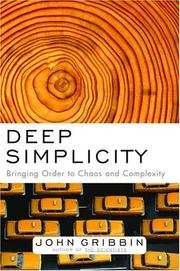
Deep Simplicity

Deep Simplicity

John Gribbin
2004
T3 304 pages · about 5h 4m to read Open Librarygoodreads

Summary

Gribbin, a science writer with a physics background, explains chaos and complexity theory for general readers, arguing that simple rules generate complex behaviour and that this accounts for a great deal of what looks inexplicable in nature.

The content covers: the historical development from Newtonian determinism through Poincare's discovery that the three-body problem has no closed solution; sensitive dependence on initial conditions and why it makes long-range prediction impossible even in fully deterministic systems; attractors and phase space; the logistic map and the route to chaos through period doubling, including the Feigenbaum constant that recurs across unrelated systems; fractals and self-similarity; systems held far from equilibrium by an energy flow, which is where dissipative structures and self-organisation appear; self-organised criticality and the sandpile model; and applications to earthquakes, climate, evolution, extinction patterns and the origin of life.

His unifying argument is that complexity arises at the boundary between order and randomness, that it requires an energy flow through the system, and that the same mathematical structures appear across domains because the structures follow from the dynamics rather than from the subject matter.

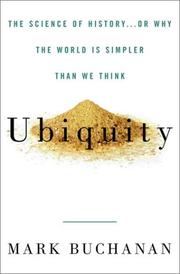
The book is an accessible introduction and covers ground that Gleick's Chaos and Buchanan's Ubiquity also cover. Its distinctive contribution is connecting the chaos material to the thermodynamics of systems far from equilibrium, which most popular treatments omit and which is what makes the biology and earth science applications work.

Key takeaways 7

  1. Simple deterministic rules generate behaviour that is unpredictable in practice, which means determinism and predictability are separate properties.
  2. Sensitive dependence on initial conditions makes long-range prediction impossible in principle, regardless of how much measurement precision improves.
  3. The same route to chaos through period doubling appears across physically unrelated systems, with the same universal constants.
  4. Complexity arises at the boundary between rigid order and randomness, and systems held there produce structure that neither extreme generates.
  5. Self-organising structure requires a continuous energy flow through the system, which is why living systems must consume to maintain order.
  6. Self-organised criticality means a system drives itself to a state where events of any size can occur, which makes large events intrinsic rather than exceptional.
  7. Identical mathematical structures appear across unrelated domains because they follow from the dynamics rather than from the subject matter.

Who should read it

Readers wanting an accessible introduction to chaos and complexity that connects the mathematics to thermodynamics and living systems.

Who recommended it 1 · 1 direct

Similar books 6

Chosen by shared topics, the entries that hold them, and the people who recommended both.
M. Mitchell Waldrop · 1992

The founding of the Santa Fe Institute and the people who built complexity science.

Norbert Wiener · 1948

Control and communication in animals and machines run on the same principles.

Ilya Prigogine, Isabelle Stengers · 1984
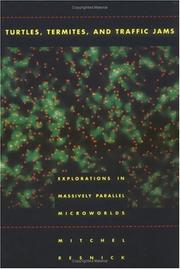
Mitchel Resnick · 1994

“The first challenge to the centralized mindset comes from a delightful book by MIT Professor Mitchel Resnick, "Turtles, Termites, and Traffic Jams.” — Michael Mauboussin

Source: The Invisible Lead Steer: New Answers to Old Questions About the Stock Market (CS First Boston)

Recommended by: Michael Mauboussin
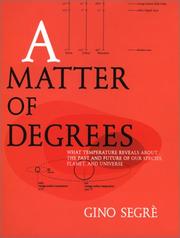
Gino Segre · 2002

Popular history of temperature and heat; entropy for the general reader

Where it sits in the reference 2

Mental models
Mental models

Topics

ScienceComplexity and systems science