Updates

  1. Person pages list letters, writing, profiles and links as sortable tables with filters, and show each person's companies as links; Fund letters show each letter's description in its own column.
  2. Experts show a checked job title and a short description of each person; 30 more people have photographs.
  3. Every company, fund, university and publication the experts work for has a page listing the people there.
  4. Fund letters show each letter's thesis and filter by it; 225 person pages list the essays, columns and newsletter issues the person wrote.
  5. Person pages list every essay and newsletter issue a person wrote, and their own books as a table in List view.
  6. Recommends shows the five largest kinds of book and the rest under More; browse pictures load sooner.
  7. Podcasts and talks link the original episode, filter by Audio and video or Press, and list each publisher once.
  8. Pages are wider, Recommends has List and Grid, and a filter clicked again turns off.
  9. Book cards sit in a ruled grid with Open Library and Goodreads links and each book's one-line note.
  10. Funds is now Investors; each investor's styles are buttons that filter the table.
  11. Podcasts and talks on a person's page filter by year and publisher and show as a list or a grid of pictures.
  12. Quotes show only people's own words: 472 summaries written by list sites are gone.
  13. Country pages open from Browse again, and every link on the shelf lands on a page.
  14. Subject and person pages show their sections as tabs, and each book appears once on a person's page.
  15. Book cards show the quote, who said it and the source; grids show five cards to a row.
  16. On a phone, a menu holds the sections, search, Updates, Feedback and dark mode.
  17. Feedback takes a screenshot of the page with no browser prompt, opens a screenshot full size when you click it, and clears itself once sent.
  18. Book cards are centred, search names the topic each book sits in, and any text cut short shows whole on hover.
  19. Search groups its results by kind: people, companies, geographies, subjects, topics, books, funds, fund letters and papers.
  20. The Books table lists who recommended each book by name, and the browser tab names the section you are in.
  21. Feedback can take a screenshot of the page, or one you paste or choose, and opens in the corner beside Updates.
  22. Each rail button reopens its section where you left it, and Browse, Table and People show on every book and subject page.
  23. Filters grey out choices that hold nothing instead of hiding them, and Books › People filters by authors or recommenders.
  24. Feedback takes a subject line and up to three screenshots.
  25. Biographies are grouped by the person they are about: 41 new pages, from Abraham Lincoln to Lee Kuan Yew.
  26. Sport splits into 23 sports, and Religion into one topic per faith.
  27. Book lists show as cards: the cover, one recommendation quote and every recommender by name.
  28. Seventeen subjects that had two or three pages under different names now have one page each.
  29. Every page lists its Experts as authors and recommenders, with a link to them on the Experts tab.
  30. Economics, Financial history, Financial panics and Accounting are subjects of their own, with one page per financial crisis.
  31. Book, person and subject pages open inside the app, so the tabs stay in view.
  32. 996 more book covers, and photographs or logos for 227 more people and companies.
  33. Books › Browse shows every subject as cards, and the rail holds Fund letters, Papers, Experts, Books and Funds.
  34. Every topic over 150 books splits into narrower topics, each with a page of its own.

Send feedback

What is it?
Screenshots, up to 3 (optional)
or paste one with Ctrl+V

We use your email only to reply to you.

The Splendid and the Vile

The Splendid and the Vile

Erik Larson
2020
644 pages · about 10h 44m to read Open Librarygoodreads

Summary

Larson covers Churchill's first year as Prime Minister, from May 1940 to May 1941, spanning the fall of France, Dunkirk, the Battle of Britain, the Blitz and the negotiation of American support. He draws on diaries including those of Churchill's daughter Mary, private secretary John Colville, and the Mass Observation project, plus intelligence files.

The leadership material concerns communication under conditions where the situation was genuinely desperate. Larson documents how Churchill's speeches were constructed and delivered, the deliberate decision to state the difficulty rather than minimise it, and the practice of appearing in bombed areas immediately after raids. He also documents the private assessments that differed from the public statements, and the periods when Churchill's own position was precarious within his party.

The domestic material is Larson's distinctive contribution. He writes about the household at Chequers and Ditchley, Churchill's working routine including the bath dictation and the late nights, the effect on his family, and the incongruity of dinner parties continuing while the bombing proceeded. The American negotiation, culminating in Lend-Lease, is covered through Harry Hopkins' visit and the personal relationship Churchill constructed with Roosevelt.

Larson is a narrative historian rather than an analyst, and readers wanting an assessment of Churchill's strategic decisions will not find one. Churchill's record outside this year, including India, is outside the book's scope and its absence produces a favourable portrait. The material on communicating with a population under sustained attack is what transfers.

Key takeaways 8

  1. Churchill stated the difficulty of the situation directly rather than minimising it, which is what made the confidence he expressed credible.
  2. Appearing physically in bombed areas immediately after raids did more for public morale than any broadcast.
  3. His private assessments differed substantially from his public statements, and Larson documents both.
  4. His position within his own party was precarious during the period, and the public confidence concealed a genuine political vulnerability.
  5. Speeches were constructed deliberately over long periods and rehearsed, rather than being spontaneous expressions of temperament.
  6. Securing American support required constructing a personal relationship with Roosevelt over months, since institutional channels would not have produced it.
  7. The German decision to bomb cities rather than continue attacking airfields relieved pressure at the moment it was most acute.
  8. Larson covers one year and the material outside it, including Churchill's record on India, is absent, which produces a favourable portrait.

Who should read it

Leaders interested in communicating with a group under sustained pressure while the situation is genuinely bad, in a narrative rather than analytical account.

Who recommended it 6 · 3 direct

“…books I've recommended, highlighted to death, or forced on friends.”

“how he handled that was really amazing to read and great, great, great book”

Daniel Petrereported
Keith Raboisreported
Sahil Bloomreported

Similar books 6

Chosen by shared topics, the entries that hold them, and the people who recommended both.
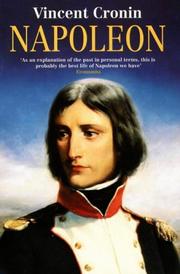
Vincent Cronin · 1971

Recommended by: Larry Ellison

T4 1944
Jay Winik · 2015

Recommended by: Keith Rabois

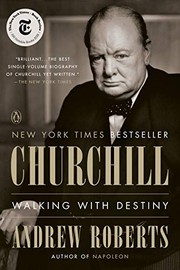
Andrew Roberts · 2018

Recommended by: Keith Rabois

Michael Beschloss · 2018

How presidents from Madison to Lyndon Johnson took America to war and gained power.

Recommended by: Bill Gates

Where it sits in the reference 0

No entry holds this book yet. It reached the reference because someone recommended it.

Topics

General HistoryWar and StrategyModern Europe and Russia