Updates

  1. Person pages list letters, writing, profiles and links as sortable tables with filters, and show each person's companies as links; Fund letters show each letter's description in its own column.
  2. Experts show a checked job title and a short description of each person; 30 more people have photographs.
  3. Every company, fund, university and publication the experts work for has a page listing the people there.
  4. Fund letters show each letter's thesis and filter by it; 225 person pages list the essays, columns and newsletter issues the person wrote.
  5. Person pages list every essay and newsletter issue a person wrote, and their own books as a table in List view.
  6. Recommends shows the five largest kinds of book and the rest under More; browse pictures load sooner.
  7. Podcasts and talks link the original episode, filter by Audio and video or Press, and list each publisher once.
  8. Pages are wider, Recommends has List and Grid, and a filter clicked again turns off.
  9. Book cards sit in a ruled grid with Open Library and Goodreads links and each book's one-line note.
  10. Funds is now Investors; each investor's styles are buttons that filter the table.
  11. Podcasts and talks on a person's page filter by year and publisher and show as a list or a grid of pictures.
  12. Quotes show only people's own words: 472 summaries written by list sites are gone.
  13. Country pages open from Browse again, and every link on the shelf lands on a page.
  14. Subject and person pages show their sections as tabs, and each book appears once on a person's page.
  15. Book cards show the quote, who said it and the source; grids show five cards to a row.
  16. On a phone, a menu holds the sections, search, Updates, Feedback and dark mode.
  17. Feedback takes a screenshot of the page with no browser prompt, opens a screenshot full size when you click it, and clears itself once sent.
  18. Book cards are centred, search names the topic each book sits in, and any text cut short shows whole on hover.
  19. Search groups its results by kind: people, companies, geographies, subjects, topics, books, funds, fund letters and papers.
  20. The Books table lists who recommended each book by name, and the browser tab names the section you are in.
  21. Feedback can take a screenshot of the page, or one you paste or choose, and opens in the corner beside Updates.
  22. Each rail button reopens its section where you left it, and Browse, Table and People show on every book and subject page.
  23. Filters grey out choices that hold nothing instead of hiding them, and Books › People filters by authors or recommenders.
  24. Feedback takes a subject line and up to three screenshots.
  25. Biographies are grouped by the person they are about: 41 new pages, from Abraham Lincoln to Lee Kuan Yew.
  26. Sport splits into 23 sports, and Religion into one topic per faith.
  27. Book lists show as cards: the cover, one recommendation quote and every recommender by name.
  28. Seventeen subjects that had two or three pages under different names now have one page each.
  29. Every page lists its Experts as authors and recommenders, with a link to them on the Experts tab.
  30. Economics, Financial history, Financial panics and Accounting are subjects of their own, with one page per financial crisis.
  31. Book, person and subject pages open inside the app, so the tabs stay in view.
  32. 996 more book covers, and photographs or logos for 227 more people and companies.
  33. Books › Browse shows every subject as cards, and the rail holds Fund letters, Papers, Experts, Books and Funds.
  34. Every topic over 150 books splits into narrower topics, each with a page of its own.

Send feedback

What is it?
Screenshots, up to 3 (optional)
or paste one with Ctrl+V

We use your email only to reply to you.

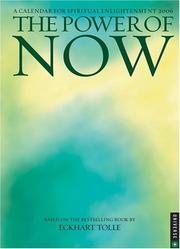
The Power of Now

The Power of Now

Eckhart Tolle
1997
224 pages · about 3h 44m to read Open Librarygoodreads

Summary

Tolle argues that psychological suffering comes from identification with the mind's continuous commentary, and that the mind constructs a false self from memories of the past and projections of the future. His prescription is to place attention on present experience, which he holds interrupts the identification and dissolves the suffering that depends on it.

His central distinctions are between clock time, which is practical and required for functioning, and psychological time, which is the mental habit of living in past and future; between pain, which is a present event, and what he calls the pain-body, an accumulated residue of past pain that seeks to reproduce the conditions that feed it; and between the observing awareness and the mental activity being observed.

The practical instruction is to notice thinking as it occurs, which he holds creates a gap between awareness and thought, and to place attention on physical sensation, particularly what he calls the inner body, as a means of holding that gap open. He also argues for accepting the present as it is, on the grounds that resistance to what has already happened produces the suffering rather than the event. The book is written as a question and answer dialogue and is repetitive by design.

It contains no evidence and Tolle makes no attempt to provide any. The metaphysical claims about consciousness and being are asserted. His account of his own sudden transformation at twenty-nine is unverifiable and functions as the book's authority. Readers with clinical mental health conditions should note that the book presents attention practice as sufficient for conditions that require treatment. The observation that suffering attaches to thinking about events rather than to events is consistent with cognitive therapy, which is where its practical value sits.

Key takeaways 8

  1. Psychological suffering comes from identification with the mind's commentary rather than from the events the commentary is about.
  2. The mind constructs a sense of self from memories and projections, and that constructed self requires continuous thought to sustain itself.
  3. Clock time is necessary for practical functioning while psychological time, meaning the habit of living in past and future, produces the distress.
  4. Noticing a thought as it occurs establishes a separation between awareness and thinking, which is the mechanism Tolle proposes.
  5. Attention to physical sensation holds the separation open, because the body is only ever in the present.
  6. Resistance to what has already occurred produces the suffering, so acceptance of the present situation removes it without changing the situation.
  7. Accumulated past pain operates as a pattern that seeks to reproduce the conditions that generated it, which Tolle calls the pain-body.
  8. The book asserts its claims without evidence and presents attention practice as sufficient for conditions that require clinical treatment.

Who should read it

Readers who want a direct argument that distress attaches to thinking rather than to circumstances, accepting metaphysical claims stated without evidence.

Who recommended it 6 · 1 direct

Iman Gadzhireported
Justin Kanreported
Mel Robbinsreported

Similar books 6

Chosen by shared topics, the entries that hold them, and the people who recommended both.

Michael A. Singer · 2007

You are the awareness watching your thoughts and feelings, not those thoughts.

Kapil Gupta

Recommended by: Naval Ravikant

Where it sits in the reference 0

No entry holds this book yet. It reached the reference because someone recommended it.

Topics

Religion and SpiritualityPhilosophyEastern philosophy and spiritual teachersModern spiritual teachers and mystics