Updates

  1. Person pages list letters, writing, profiles and links as sortable tables with filters, and show each person's companies as links; Fund letters show each letter's description in its own column.
  2. Experts show a checked job title and a short description of each person; 30 more people have photographs.
  3. Every company, fund, university and publication the experts work for has a page listing the people there.
  4. Fund letters show each letter's thesis and filter by it; 225 person pages list the essays, columns and newsletter issues the person wrote.
  5. Person pages list every essay and newsletter issue a person wrote, and their own books as a table in List view.
  6. Recommends shows the five largest kinds of book and the rest under More; browse pictures load sooner.
  7. Podcasts and talks link the original episode, filter by Audio and video or Press, and list each publisher once.
  8. Pages are wider, Recommends has List and Grid, and a filter clicked again turns off.
  9. Book cards sit in a ruled grid with Open Library and Goodreads links and each book's one-line note.
  10. Funds is now Investors; each investor's styles are buttons that filter the table.
  11. Podcasts and talks on a person's page filter by year and publisher and show as a list or a grid of pictures.
  12. Quotes show only people's own words: 472 summaries written by list sites are gone.
  13. Country pages open from Browse again, and every link on the shelf lands on a page.
  14. Subject and person pages show their sections as tabs, and each book appears once on a person's page.
  15. Book cards show the quote, who said it and the source; grids show five cards to a row.
  16. On a phone, a menu holds the sections, search, Updates, Feedback and dark mode.
  17. Feedback takes a screenshot of the page with no browser prompt, opens a screenshot full size when you click it, and clears itself once sent.
  18. Book cards are centred, search names the topic each book sits in, and any text cut short shows whole on hover.
  19. Search groups its results by kind: people, companies, geographies, subjects, topics, books, funds, fund letters and papers.
  20. The Books table lists who recommended each book by name, and the browser tab names the section you are in.
  21. Feedback can take a screenshot of the page, or one you paste or choose, and opens in the corner beside Updates.
  22. Each rail button reopens its section where you left it, and Browse, Table and People show on every book and subject page.
  23. Filters grey out choices that hold nothing instead of hiding them, and Books › People filters by authors or recommenders.
  24. Feedback takes a subject line and up to three screenshots.
  25. Biographies are grouped by the person they are about: 41 new pages, from Abraham Lincoln to Lee Kuan Yew.
  26. Sport splits into 23 sports, and Religion into one topic per faith.
  27. Book lists show as cards: the cover, one recommendation quote and every recommender by name.
  28. Seventeen subjects that had two or three pages under different names now have one page each.
  29. Every page lists its Experts as authors and recommenders, with a link to them on the Experts tab.
  30. Economics, Financial history, Financial panics and Accounting are subjects of their own, with one page per financial crisis.
  31. Book, person and subject pages open inside the app, so the tabs stay in view.
  32. 996 more book covers, and photographs or logos for 227 more people and companies.
  33. Books › Browse shows every subject as cards, and the rail holds Fund letters, Papers, Experts, Books and Funds.
  34. Every topic over 150 books splits into narrower topics, each with a page of its own.

Send feedback

What is it?
Screenshots, up to 3 (optional)
or paste one with Ctrl+V

We use your email only to reply to you.

Exhalation

Exhalation

Ted Chiang
2014
338 pages · about 5h 38m to read Open Librarygoodreads

Summary

Chiang's second collection contains nine stories, each built around a specific conceptual premise worked through rigorously. Chiang publishes rarely and the stories are unusually careful about their own logic.

The Merchant and the Alchemist's Gate uses a time travel mechanism in which the past cannot be changed, only understood, framed as a story in the style of the Thousand and One Nights. The title story describes a mechanical being dissecting its own brain to discover how memory works and what is actually running down in its universe. The Lifecycle of Software Objects, a novella, follows people raising artificial intelligences over years and addresses what obligations arise when a created being develops through experience rather than being programmed. Anxiety Is the Dizziness of Freedom uses a device that opens communication with branches of a quantum multiverse and examines what happens to moral responsibility when every choice was also made otherwise. Omphalos concerns a scientist in a world with clear evidence of creation who discovers evidence that humanity was not its purpose.

The recurring subject is free will, determinism and how a person should act if their choices were determined. Chiang's position, stated in the story notes, is that the question of whether free will exists matters less than whether people behave as though it does.

The stories are more interested in ideas than in character, and readers wanting emotional depth will find the earlier collection stronger in that respect. The story notes at the end explain the premise of each, which some readers find diminishes them. The artificial intelligence novella is the most directly relevant to technology readers and is more thoughtful about the subject than most non-fiction on it.

Key takeaways 8

  1. An artificial being that develops through years of experience acquires obligations from its creators that a programmed system would not.
  2. Raising an artificial intelligence takes as long as raising a child, which makes the economics incompatible with the products companies want to sell.
  3. A time travel mechanism in which the past cannot be changed produces understanding and acceptance rather than the paradoxes the form usually generates.
  4. Communication with alternative versions of your own choices dissolves moral responsibility unless the person decides to act as though their choice mattered.
  5. Whether free will exists matters less than whether people behave as though it does, which is Chiang's stated position.
  6. Evidence of purpose in the universe and evidence that humanity is that purpose are separate questions, and the second can fail while the first holds.
  7. The physical basis of memory and of consciousness can be investigated by a being examining its own mechanism, which the title story constructs literally.
  8. Each story works through a single premise rigorously rather than using it as a setting, which is the collection's method.

Who should read it

Readers who want rigorously constructed conceptual fiction, particularly the novella on obligations toward artificial minds.

Who recommended it 5 · 2 direct

Andrew Chenreported

Similar books 6

Chosen by shared topics, the entries that hold them, and the people who recommended both.

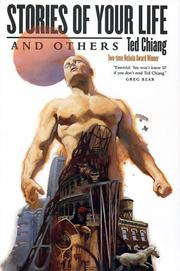
Ted Chiang · 2002

Eight science-fiction stories, each working out one premise with rigour.

Frank Miller · 1986

Recommended by: Naval Ravikant

Warren Ellis · 2001

A comic about Elijah Snow, a 100-year-old man among archaeologists of the impossible.

Recommended by: Naval Ravikant

Where it sits in the reference 0

No entry holds this book yet. It reached the reference because someone recommended it.

Topics

FictionScience fictionScience fiction stories and comics