Updates

  1. Person pages list letters, writing, profiles and links as sortable tables with filters, and show each person's companies as links; Fund letters show each letter's description in its own column.
  2. Experts show a checked job title and a short description of each person; 30 more people have photographs.
  3. Every company, fund, university and publication the experts work for has a page listing the people there.
  4. Fund letters show each letter's thesis and filter by it; 225 person pages list the essays, columns and newsletter issues the person wrote.
  5. Person pages list every essay and newsletter issue a person wrote, and their own books as a table in List view.
  6. Recommends shows the five largest kinds of book and the rest under More; browse pictures load sooner.
  7. Podcasts and talks link the original episode, filter by Audio and video or Press, and list each publisher once.
  8. Pages are wider, Recommends has List and Grid, and a filter clicked again turns off.
  9. Book cards sit in a ruled grid with Open Library and Goodreads links and each book's one-line note.
  10. Funds is now Investors; each investor's styles are buttons that filter the table.
  11. Podcasts and talks on a person's page filter by year and publisher and show as a list or a grid of pictures.
  12. Quotes show only people's own words: 472 summaries written by list sites are gone.
  13. Country pages open from Browse again, and every link on the shelf lands on a page.
  14. Subject and person pages show their sections as tabs, and each book appears once on a person's page.
  15. Book cards show the quote, who said it and the source; grids show five cards to a row.
  16. On a phone, a menu holds the sections, search, Updates, Feedback and dark mode.
  17. Feedback takes a screenshot of the page with no browser prompt, opens a screenshot full size when you click it, and clears itself once sent.
  18. Book cards are centred, search names the topic each book sits in, and any text cut short shows whole on hover.
  19. Search groups its results by kind: people, companies, geographies, subjects, topics, books, funds, fund letters and papers.
  20. The Books table lists who recommended each book by name, and the browser tab names the section you are in.
  21. Feedback can take a screenshot of the page, or one you paste or choose, and opens in the corner beside Updates.
  22. Each rail button reopens its section where you left it, and Browse, Table and People show on every book and subject page.
  23. Filters grey out choices that hold nothing instead of hiding them, and Books › People filters by authors or recommenders.
  24. Feedback takes a subject line and up to three screenshots.
  25. Biographies are grouped by the person they are about: 41 new pages, from Abraham Lincoln to Lee Kuan Yew.
  26. Sport splits into 23 sports, and Religion into one topic per faith.
  27. Book lists show as cards: the cover, one recommendation quote and every recommender by name.
  28. Seventeen subjects that had two or three pages under different names now have one page each.
  29. Every page lists its Experts as authors and recommenders, with a link to them on the Experts tab.
  30. Economics, Financial history, Financial panics and Accounting are subjects of their own, with one page per financial crisis.
  31. Book, person and subject pages open inside the app, so the tabs stay in view.
  32. 996 more book covers, and photographs or logos for 227 more people and companies.
  33. Books › Browse shows every subject as cards, and the rail holds Fund letters, Papers, Experts, Books and Funds.
  34. Every topic over 150 books splits into narrower topics, each with a page of its own.

Send feedback

What is it?
Screenshots, up to 3 (optional)
or paste one with Ctrl+V

We use your email only to reply to you.

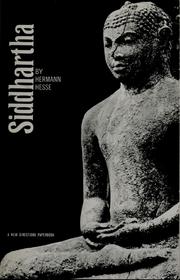
Siddhartha

Siddhartha

Hermann Hesse
1922
140 pages · about 2h 20m to read Open Librarygoodreads

Summary

Hesse's 1922 novel follows Siddhartha, a Brahmin's son in ancient India, through successive attempts to reach understanding. He leaves home to become an ascetic, meets the Buddha and declines to become his follower on the grounds that enlightenment cannot be transmitted through teaching, enters the commercial and sensual world as a merchant and lover, becomes wealthy and disgusted, contemplates suicide, and finally lives as a ferryman beside a river where he reaches the understanding he sought.

The argument is stated explicitly in Siddhartha's refusal of the Buddha. He accepts that the Buddha has attained what he claims, and argues precisely from that acceptance that the attainment came from personal experience which no doctrine can transfer. Wisdom, in Hesse's formulation, cannot be communicated, and knowledge can.

The commercial section is the part business readers respond to. Siddhartha succeeds at trade because he is indifferent to its outcomes, which makes him better at it than people who need the results, and then is gradually captured by the habits of wealth until he cannot distinguish himself from the people he had considered children. The river functions as the book's central image and Hesse works it hard, particularly the idea that time is not real and that everything exists simultaneously.

The novel is short and the prose in translation is spare. Hesse was writing from a European reading of Indian religion during a period of Western interest in Eastern thought, and scholars note that it reflects that reading rather than the traditions themselves. The claim that wisdom cannot be taught is the argument readers take from it, and it applies directly to anyone who expects instruction to substitute for experience.

Key takeaways 8

  1. Wisdom cannot be transmitted through teaching, and Siddhartha declines to follow the Buddha precisely because he accepts that the Buddha attained it personally.
  2. Knowledge can be communicated and understanding cannot, which makes direct experience the only route to the second.
  3. Indifference to outcomes made Siddhartha better at commerce than the people who needed the results, and the advantage disappeared once he began to care.
  4. Wealth and comfort accumulate as habits that capture a person gradually and without any decision being made.
  5. Rejecting a path entirely, as Siddhartha rejects asceticism and then commerce, is part of learning what it can and cannot provide.
  6. Every experience including failure and self-disgust is necessary material, and a life edited to remove them produces no understanding.
  7. Opposites are simultaneously true, which is the position Siddhartha reaches and which he presents as the limit of what language can carry.
  8. Seeking with a fixed object prevents finding, because the goal determines what a person is able to see.

Who should read it

Readers who want a short novel arguing that experience cannot be replaced by instruction, particularly those inclined to read their way to understanding.

Who recommended it 8 · 3 direct

Fred Wilsonreported
Guy Proopsreported
Nat Eliasonreported

Similar books 6

Chosen by shared topics, the entries that hold them, and the people who recommended both.
Ernest Hemingway · 1940

A novel of an American with Spanish guerrillas sent to blow up a bridge.

Where it sits in the reference 0

No entry holds this book yet. It reached the reference because someone recommended it.

Topics

FictionClassic novels and stories