
The Lessons of History
A century of history compressed into recurring patterns and rates
Summary
The Durants wrote this short book after completing the eleven volumes of The Story of Civilization, extracting what they considered the recurring patterns. It runs about a hundred pages across thirteen chapters covering history and biology, race, character, morals, religion, economics, socialism, government, war, growth and decay, and progress.
Their central positions are stated plainly. Competition is the first biological lesson of history, cooperation is the second and exists to make competition more effective, and the third is that life must breed. On economics they argue that the concentration of wealth is natural and recurring, and that history repeats a cycle in which concentration reaches a breaking point and is relieved either by legislation redistributing wealth or by revolution redistributing poverty. On government they conclude that democracy is the most difficult form because it requires the widest intelligence, and that most societies have oscillated between forms according to conditions.
On morals they argue that moral codes vary with economic conditions, shifting through hunting, agricultural and industrial phases, so that condemning present moral change misreads it as decay when it is adaptation. On war they state that war is a constant of history and has not diminished with civilisation.
The book is a set of assertions rather than an argument with evidence, which is what its authors intended after eleven volumes of evidence elsewhere. The treatment of race and biology reflects mid-century thinking and reads badly now. The claims are broad enough to accommodate many counterexamples. Investors cite the wealth concentration chapter most often. Read it as compressed judgment from two people who read enormously, not as demonstrated history.
Key takeaways 8
- The concentration of wealth is natural and recurring, and every society reaches a point where it is relieved by redistribution through law or through revolution.
- Competition is the first law of history and cooperation exists mainly to make groups more effective competitors.
- Human nature has not changed within recorded history, so the behaviour of people in past societies predicts behaviour now.
- Moral codes adapt to economic conditions rather than declining, so apparent moral decay usually accompanies a change in the mode of production.
- Freedom and equality are permanently opposed, and increasing one reduces the other.
- War has been the norm rather than the exception, occurring in the large majority of recorded years.
- Civilisations decay when their leadership fails to meet the challenges of change, not because of any fixed lifespan.
- The only real inheritance a civilisation passes on is its accumulated knowledge, which makes education the mechanism of continuity.
Who should read it
Investors and executives who want a very short statement of recurring historical patterns, particularly on wealth concentration and political cycles.
Who recommended it 14 · 5 direct
“…books I've recommended, highlighted to death, or forced on friends.”
“I recently reread The Lessons of History by Will and Ariel Durant. It's a great little history book.”
Similar books 6
Chosen by shared topics, the entries that hold them, and the people who recommended both.

A military historian's reflections on what history teaches and why we ignore it.
Recommended by: Morgan Housel, Nat Eliason, Shane Parrish
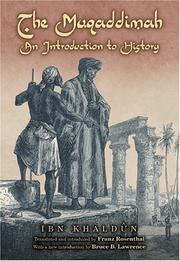
Why states rise and fall, explained through asabiyyah, the cohesion of a group.
Recommended by: Mohnish Pabrai, Mark Zuckerberg

How shared fictions such as money, nations and gods let humans cooperate at scale.
“…books I've recommended, highlighted to death, or forced on friends.” — Andrew Wilkinson
Source: Andrew Wilkinson's Bookshelf, neverenough.com
Recommended by: Andrew Wilkinson, Bill Gates, Mohnish Pabrai and 38 others

Evidence that violence of nearly every kind has declined over history, and why.
Recommended by: Bill Gates, Mohnish Pabrai, Morgan Housel and 6 others

Recommended by: Nat Eliason, Naval Ravikant

Recommended by: Ray Dalio
Where it sits in the reference 2
Topics