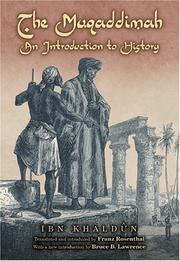
The Muqaddimah
Fourteenth-century theory of dynastic cycles, taxation and the rise of states
Summary
Ibn Khaldun wrote the Muqaddimah in 1377 as the introduction to a universal history, and it is generally treated as the first work to attempt a science of society, examining the causes of the rise and fall of states rather than recording their events.
His central concept is asabiyyah, usually translated as group feeling or social cohesion. He argues that tribal groups living under harsh conditions develop strong cohesion through kinship and shared hardship, that this cohesion allows them to conquer settled societies which have lost theirs, that the conquerors then acquire the luxury and specialisation of settled life, and that cohesion decays across roughly four generations until a new cohesive group replaces them. He documents the cycle from North African and Middle Eastern history.
He also makes economic arguments that anticipate later work. He argues that labour is the source of value, that the division of labour and the size of the market determine what a society can produce, that taxation at low rates raises more revenue than at high rates because it preserves the incentive to produce, and that dynasties reliably increase taxation as their expenditure grows, which destroys the productive base and completes the cycle. He treats the state's spending as a driver of urban economies and analyses prices, crafts and the growth of cities.
The work is long, and the translation most readers use is Rosenthal's. Its explanatory framework is deterministic in ways modern historians reject, its empirical base is one region over a few centuries, and its claims about climate and character are of their period. It remains worth reading for the cohesion cycle and the taxation argument, both of which are stated with unusual clarity for the fourteenth century.
Key takeaways 7
- Group cohesion, produced by kinship and shared hardship, is what allows a group to acquire and hold political power.
- Cohesion decays predictably once a group acquires settled luxury, and the decay runs its course in roughly four generations.
- Dynasties fall because the conditions of ruling destroy the qualities that allowed the rulers to take power, which makes the cycle structural rather than accidental.
- Low tax rates raise more total revenue than high rates, because high rates destroy the incentive to produce that generates the base.
- Ruling groups reliably increase taxation as their expenditure and their bureaucracy grow, which is the mechanism that ends the cycle.
- Human labour is the source of value, and the wealth of a city is determined by the labour concentrated in it.
- The division of labour and the size of the market together determine what a society can produce, which no individual working alone could achieve.
Who should read it
Readers interested in the earliest systematic theory of institutional decay and cohesion, and in an early statement of the tax rate and revenue argument.
Who recommended it 2 · 1 direct
Similar books 6
Chosen by shared topics, the entries that hold them, and the people who recommended both.
Recurring patterns drawn from world history: biology, morals, religion, economics.
“…books I've recommended, highlighted to death, or forced on friends.” — Andrew Wilkinson
Source: Andrew Wilkinson's Bookshelf, neverenough.com
Recommended by: Andrew Wilkinson, Balaji S. Srinivasan and 12 others
Crowd manias from the Mississippi scheme and South Sea Bubble to witch trials.
“The first couple of chapters of this book, which describes in detail the great financial and stock market manias of the eighteenth century, are essential reading for all serious investors.” — Barton Biggs
Source: Biggs on the first chapters as essential reading
Recommended by: Barton Biggs, Bernard Baruch, Peter Cundill and 2 others

The recurring features of speculative booms, and why short memories bring them back.
Recommended by: Howard Marks and 2 others
Speculation from ancient Rome and tulip mania to the 1990s, and its recurring traits.
Recommended by: Howard Marks, Mohnish Pabrai and 1 other

The history of business cycle theory and how credit cycles drive asset prices.
Financial crises follow a repeated sequence of boom, mania, panic and crash.
Recommended by: Howard Marks, Li Lu
Where it sits in the reference 2
Topics