Updates

  1. Person pages list letters, writing, profiles and links as sortable tables with filters, and show each person's companies as links; Fund letters show each letter's description in its own column.
  2. Experts show a checked job title and a short description of each person; 30 more people have photographs.
  3. Every company, fund, university and publication the experts work for has a page listing the people there.
  4. Fund letters show each letter's thesis and filter by it; 225 person pages list the essays, columns and newsletter issues the person wrote.
  5. Person pages list every essay and newsletter issue a person wrote, and their own books as a table in List view.
  6. Recommends shows the five largest kinds of book and the rest under More; browse pictures load sooner.
  7. Podcasts and talks link the original episode, filter by Audio and video or Press, and list each publisher once.
  8. Pages are wider, Recommends has List and Grid, and a filter clicked again turns off.
  9. Book cards sit in a ruled grid with Open Library and Goodreads links and each book's one-line note.
  10. Funds is now Investors; each investor's styles are buttons that filter the table.
  11. Podcasts and talks on a person's page filter by year and publisher and show as a list or a grid of pictures.
  12. Quotes show only people's own words: 472 summaries written by list sites are gone.
  13. Country pages open from Browse again, and every link on the shelf lands on a page.
  14. Subject and person pages show their sections as tabs, and each book appears once on a person's page.
  15. Book cards show the quote, who said it and the source; grids show five cards to a row.
  16. On a phone, a menu holds the sections, search, Updates, Feedback and dark mode.
  17. Feedback takes a screenshot of the page with no browser prompt, opens a screenshot full size when you click it, and clears itself once sent.
  18. Book cards are centred, search names the topic each book sits in, and any text cut short shows whole on hover.
  19. Search groups its results by kind: people, companies, geographies, subjects, topics, books, funds, fund letters and papers.
  20. The Books table lists who recommended each book by name, and the browser tab names the section you are in.
  21. Feedback can take a screenshot of the page, or one you paste or choose, and opens in the corner beside Updates.
  22. Each rail button reopens its section where you left it, and Browse, Table and People show on every book and subject page.
  23. Filters grey out choices that hold nothing instead of hiding them, and Books › People filters by authors or recommenders.
  24. Feedback takes a subject line and up to three screenshots.
  25. Biographies are grouped by the person they are about: 41 new pages, from Abraham Lincoln to Lee Kuan Yew.
  26. Sport splits into 23 sports, and Religion into one topic per faith.
  27. Book lists show as cards: the cover, one recommendation quote and every recommender by name.
  28. Seventeen subjects that had two or three pages under different names now have one page each.
  29. Every page lists its Experts as authors and recommenders, with a link to them on the Experts tab.
  30. Economics, Financial history, Financial panics and Accounting are subjects of their own, with one page per financial crisis.
  31. Book, person and subject pages open inside the app, so the tabs stay in view.
  32. 996 more book covers, and photographs or logos for 227 more people and companies.
  33. Books › Browse shows every subject as cards, and the rail holds Fund letters, Papers, Experts, Books and Funds.
  34. Every topic over 150 books splits into narrower topics, each with a page of its own.

Send feedback

What is it?
Screenshots, up to 3 (optional)
or paste one with Ctrl+V

We use your email only to reply to you.

Market Cycles and the Pendulum

Markets swing between euphoria and despair and spend almost no time at the fair-value midpoint. You cannot time the arc but you can locate yourself on it: when credit is loose and risk goes unpriced, hold less and demand more; when capital is scarce and sound assets trade at panic prices, do the opposite. Aggressiveness is calibrated to position in the cycle rather than to forecasts.

Start here

  1. A Short History of Financial EuphoriaJohn Kenneth Galbraith, 1990
  2. Mastering the Market CycleHoward Marks, 2018
  3. Devil Take the HindmostEdward Chancellor, 1999
  4. Manias, Panics, and CrashesCharles P. Kindleberger, 1978

Charles Mackay · 1841

Crowd manias from the Mississippi scheme and South Sea Bubble to witch trials.

“The first couple of chapters of this book, which describes in detail the great financial and stock market manias of the eighteenth century, are essential reading for all serious investors.” — Barton Biggs

Source: Biggs on the first chapters as essential reading

Recommended by: Barton Biggs, Bernard Baruch, Peter Cundill and 2 others

Ibn Khaldun · 1858

Why states rise and fall, explained through asabiyyah, the cohesion of a group.

Charles P. Kindleberger · 1978

Financial crises follow a repeated sequence of boom, mania, panic and crash.

Recommended by: Howard Marks, Li Lu
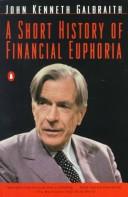
John Kenneth Galbraith · 1990

The recurring features of speculative booms, and why short memories bring them back.

Recommended by: Howard Marks and 2 others

Edward Chancellor · 1999

Speculation from ancient Rome and tulip mania to the 1990s, and its recurring traits.

Howard Marks · 2011

Second-level thinking, risk and market cycles, drawn from Oaktree's client memos.

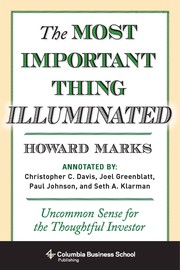
Howard Marks, Paul Johnson · 2012

Second-level thinking on risk and cycles, with notes by Klarman and Greenblatt.

“…books I've recommended, highlighted to death, or forced on friends.” — Andrew Wilkinson

Source: Andrew Wilkinson's Bookshelf, neverenough.com

Recommended by: Andrew Wilkinson, Mohnish Pabrai and 3 others

Howard Marks · 2018

Cycles can't be timed, but knowing where you stand in one lets you adjust risk.

Vitaliy N. Katsenelson · 2007

Katsenelson on buying and selling inside range-bound markets.

Vitaliy N. Katsenelson · 2010

Shorter restatement of active value investing for flat markets.

Recommended by: Mohnish Pabrai

Lars Tvede · 1997

The history of business cycle theory and how credit cycles drive asset prices.

More mental models