The Little Book of Sideways Markets: How to Make Money in Markets that Go Nowhere
Shorter restatement of active value investing for flat markets.
Summary
Katsenelson argues that equity markets alternate between secular bull markets, secular bear markets and long range-bound periods, and that the range-bound periods are the most common and the least discussed. His historical evidence is that periods of strong returns end with high price-earnings multiples that then compress over a decade or more even while earnings grow, producing flat index returns.
His explanation is mechanical. Total return decomposes into earnings growth, dividend yield and change in the multiple. In a sideways market earnings growth continues at its normal rate while the multiple contracts, and the two roughly offset. He argues the multiple compression occurs because the preceding bull market ended with valuations that impounded returns already delivered.
His prescribed approach is an active value strategy adapted to that environment. He raises the required margin of safety, treats selling discipline as more important than buying discipline since positions will not be carried up by the market, weights dividend yield heavily because it becomes a larger share of total return, and applies what he calls a quality, valuation and growth framework in which a stock must pass all three rather than compensate on one.
The book is short and readable. Its framework is a straightforward decomposition rather than a novel insight, and the historical pattern identification is done by inspection. The specific forecast was made in 2010 and the following decade was a strong bull market, which the framework did not anticipate. The decomposition and the selling discipline argument remain useful.
Key takeaways 7
- Equity total return decomposes into earnings growth, dividend yield and change in the valuation multiple, and only the third is unpredictable.
- Sideways markets occur when earnings grow at a normal rate while the valuation multiple compresses from a high starting level, and the two offset.
- Range-bound periods have historically been more common than either secular bull or secular bear markets and last a decade or more.
- Selling discipline matters more than buying discipline in a sideways market, because the market will not carry a position to fair value.
- Dividend yield becomes a much larger share of total return when multiple expansion is absent, which changes which stocks are worth owning.
- A stock should pass quality, valuation and growth tests together, since strength on one does not compensate for failure on another.
- The starting valuation multiple is the single best predictor of the following decade's equity returns.
Who should read it
Equity investors who want the return decomposition framework and an approach calibrated to periods without multiple expansion.
Who recommended it 1 · 1 direct
Similar books 6
Chosen by shared topics, the entries that hold them, and the people who recommended both.
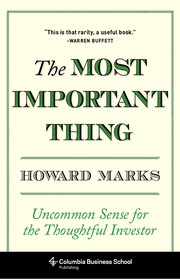
Second-level thinking, risk and market cycles, drawn from Oaktree's client memos.
Recommended by: Matt Mullenweg, Mohnish Pabrai, Nat Eliason and 3 others
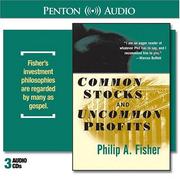
Buy a few outstanding growth companies, research them by scuttlebutt, and hold.
“The late Philip Fisher wrote several books that are very good [including] Common Stocks and Uncommon Profits.” — Arnold Van Den Berg
Source: Van Den Berg on Fisher's books
Recommended by: Arnold Van Den Berg, Bill Stewart and 10 others
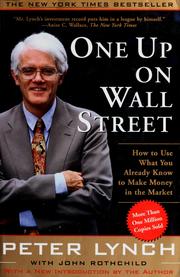
The amateur's edge argument from the Magellan record.
“One book that probably made the biggest impact on my career in those early formidable years back in the day was Peter Lynch's 'One Up on Wall Street.'” — David Rolfe
Source: Rolfe on the book that most shaped his early career
Recommended by: David Rolfe, Francisco Garcia Parames and 9 others
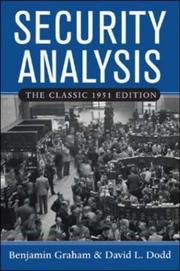
How to read financial statements sceptically and value bonds and stocks.
“I've spent more time with all of the editions of Benjamin Graham and David Dodd's Security Analysis than with any other book” — Christopher Bloomstran
Source: Semper Augustus 2024 Letter to Clients, 'Books and Tunes for Walking', p. 95
Recommended by: Christopher Bloomstran, Howard Marks and 11 others
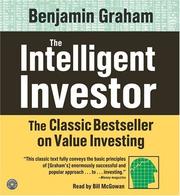
Treat stocks as parts of businesses and buy only with a margin of safety.
“I have been accused of telling all my secrets. I have written a number of books, and I reveal them all in these books.” — Benjamin Graham
Source: Graham on revealing everything he knows in his books
Recommended by: Benjamin Graham, Christopher Bloomstran and 27 others
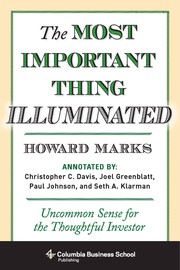
Second-level thinking on risk and cycles, with notes by Klarman and Greenblatt.
“…books I've recommended, highlighted to death, or forced on friends.” — Andrew Wilkinson
Source: Andrew Wilkinson's Bookshelf, neverenough.com
Recommended by: Andrew Wilkinson, Mohnish Pabrai and 3 others
Where it sits in the reference 3
Topics