Business Cycles: History, Theory and Investment Reality
Tvede on how credit and business cycles drive asset prices.
Summary
Tvede, a Danish investor and writer, surveys the intellectual history of business cycle theory and connects it to investment practice. The historical section covers the economists who built the field, from John Law and Cantillon through Juglar, Jevons, Mitchell, Schumpeter, Kondratieff, Keynes, Hayek and later work on real business cycles.
His synthesis identifies several cycles operating at different frequencies simultaneously: an inventory cycle of roughly three to five years, a capital expenditure cycle of seven to eleven years, a property and construction cycle of around eighteen to twenty years, and the long Kondratieff wave whose existence is disputed. He argues that the interaction of cycles operating at different lengths explains why no single cycle is clearly visible in the data.
The investment section maps asset classes onto cycle phases: which sectors lead a recovery, when bonds outperform equities, how commodities behave late in an expansion, and which indicators lead and lag. He gives specific attention to inventories, to the yield curve, to money supply and to construction starts as leading indicators.
The book is a survey rather than an original contribution, and it is more useful as an organised introduction to the literature than as a source of investment method. The Kondratieff material is the weakest part, since the long wave's existence is not established and Tvede treats it as more solid than the evidence supports. The specific indicator relationships are drawn from a period whose monetary regime has changed.
Key takeaways 7
- Several economic cycles of different lengths operate simultaneously, which is why no single clean cycle appears in the data.
- The inventory cycle of three to five years is the most reliably observable, because inventory adjustment amplifies small demand changes.
- The property and construction cycle runs roughly eighteen to twenty years, driven by the long lag between a decision to build and the completed supply.
- Different asset classes and sectors lead and lag at identifiable points in the cycle, which makes rotation a usable strategy if the phase can be identified.
- The yield curve, money supply growth and construction starts have historically led turning points, while employment and earnings lag them.
- Capital investment cycles are self-reinforcing because investment creates the demand that justifies further investment until capacity exceeds it.
- Business cycle theory has been dominated by disputes between monetary, real and psychological explanations, and each captures part of an interacting process.
Who should read it
Investors who want an organised survey of business cycle theory connected to asset class behaviour, read as introduction rather than as method.
Similar books 6
Chosen by shared topics, the entries that hold them, and the people who recommended both.
Financial crises follow a repeated sequence of boom, mania, panic and crash.
Recommended by: Howard Marks, Li Lu
A template for how big debt crises unfold, with detailed case studies.
Free PDF at economicprinciples.org; first issued as A Template for Understanding Big Debt Crises.
Recommended by: Ray Dalio

Client letters through the dot-com bubble; value discipline written contemporaneously
“What a unique opportunity to traverse the Bubble and post-Bubble years with Frank Martin, exactly as he described them to his clients in real time. Speculative Contagion is sure to enlighten…” — Seth Klarman
Source: Klarman on traversing the bubble years with Martin
Recommended by: Mohnish Pabrai, Seth Klarman, Warren Buffett
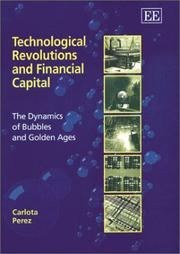
Five technological revolutions since 1771, and why each brings a financial bubble.
“Perhaps the best book on the topic is Carlota Perez, Technological Revolutions and Financial Capital” — Michael Mauboussin
Source: New Business Boom and Bust: How Capitalism Experiments (Consilient Observer, Counterpoint Global)
Recommended by: Michael Mauboussin, Patrick Collison
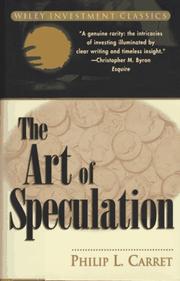
Buying securities to profit from changes in value, with twelve commandments.
“The oldest book in my hall of fame is not The Intelligent Investor, but The Art of Speculation by Philip Carret. The book was published in 1930 and the best part in the book is the '12 Commandments'.” — Francois Rochon
Source: Rochon on the oldest book in his hall of fame
Recommended by: Francois Rochon, Mohnish Pabrai
Where it sits in the reference 4
Topics