
Speculative Contagion
Client letters through the dot-com bubble; value discipline written contemporaneously
Summary
The reference has not verified this book in detail; the summary states only what the title, author and subject establish.
Martin runs Martin Capital Management in Indiana, and the book collects material from his annual reports written between roughly 1998 and 2005, in which he documented the technology bubble as it inflated and then deflated. The reference has not verified the detail of this book, and what follows rests on its structure and its author's stated position rather than on a close reading.
The format matters more than any individual argument. Because the material was written contemporaneously and published to clients, it constitutes a dated record of what an investor said before outcomes were known, which is the only form of evidence that can test a forecasting record. Martin's position was consistently cautious about valuations during the period, and the reports document the cost of holding that position while the market rose.
The recurring themes, so far as the reference has established them, concern the difference between price and value, the behaviour of investors during a period when caution produces underperformance, and the pressure a manager faces from clients when a defensive position looks wrong for several years in succession.
Because the book is a compilation of client letters rather than a constructed argument, it does not present a method. Its interest is documentary. Readers wanting a general treatment of bubbles have better options in Kindleberger, Chancellor and Galbraith, and readers wanting a contemporaneous record of one manager's reasoning through a specific episode will find that here.
Key takeaways 6
- The book collects contemporaneous client reports rather than a retrospective account, which makes the record checkable against outcomes.
- Martin held a cautious position on valuations throughout the technology bubble and documented the cost of holding it while markets rose.
- A defensive position that is eventually correct produces years of underperformance first, which is the practical problem the reports describe.
- Client pressure on a manager whose position looks wrong is a material constraint on holding a correct view.
- Writing an investment position down at the time it is held is what allows it to be evaluated later rather than reconstructed.
- The compilation presents no method and is documentary rather than analytical.
Who should read it
Investors interested in a contemporaneous record of one manager's reasoning through the technology bubble, rather than a general treatment of speculation.
Who recommended it 3 · 3 direct
“What a unique opportunity to traverse the Bubble and post-Bubble years with Frank Martin, exactly as he described them to his clients in real time. Speculative Contagion is sure to enlighten…”
“For many years I've enjoyed reading Frank Martin's letters. This collection contains much investment wisdom and, just as important, sets a standard for advisor-client relationship.”
Similar books 6
Chosen by shared topics, the entries that hold them, and the people who recommended both.
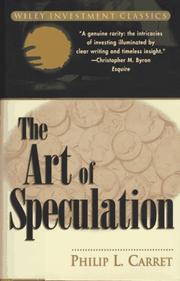
Buying securities to profit from changes in value, with twelve commandments.
“The oldest book in my hall of fame is not The Intelligent Investor, but The Art of Speculation by Philip Carret. The book was published in 1930 and the best part in the book is the '12 Commandments'.” — Francois Rochon
Source: Rochon on the oldest book in his hall of fame
Recommended by: Francois Rochon, Mohnish Pabrai

The history of business cycle theory and how credit cycles drive asset prices.
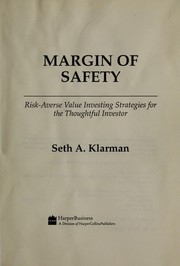
Avoid permanent loss: buy well below value and aim for absolute returns.
“Seth Klarman's 'Margin of Safety' is a good book about risk.” — Arnold Van Den Berg
Source: Van Den Berg on Margin of Safety as a book about risk
Recommended by: Arnold Van Den Berg, Frank Martin, Guy Spier and 6 others

How to read financial statements sceptically and value bonds and stocks.
“I've spent more time with all of the editions of Benjamin Graham and David Dodd's Security Analysis than with any other book” — Christopher Bloomstran
Source: Semper Augustus 2024 Letter to Clients, 'Books and Tunes for Walking', p. 95
Recommended by: Christopher Bloomstran, Howard Marks and 11 others
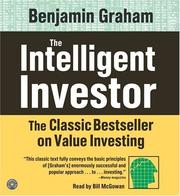
Treat stocks as parts of businesses and buy only with a margin of safety.
“I have been accused of telling all my secrets. I have written a number of books, and I reveal them all in these books.” — Benjamin Graham
Source: Graham on revealing everything he knows in his books
Recommended by: Benjamin Graham, Christopher Bloomstran and 27 others

Where it sits in the reference 2
Topics