| Valuing AI: Extreme Bubble, New Golden Era, or Both | GMO | 2026 |
| Old national debt warnings are new again | Reuters Breakingviews | 2026 |
| Momentum trade is market's short-term steamroller | Reuters Breakingviews | 2026 |
| AI fight exposes Silicon Valley's mimetic flaw | Reuters Breakingviews | 2026 |
| Galbraith's bezzle lurks beneath the AI frenzy | Reuters Breakingviews | 2026 |
| Hidden persuaders: when behavioural economics meets politics | Times Literary Supplement | 2026 |
| Passive investors actively pump market bubble | Reuters Breakingviews | 2026 |
| Why it's too late to jump on the chip bandwagon | Reuters Breakingviews | 2026 |
| Survival tips from Britain's oldest bank | Reuters Breakingviews | 2026 |
| Markets have poor scorecard for spotting AI losers | Reuters Breakingviews | 2026 |
| Why investors can still believe in mean reversion | Reuters Breakingviews | 2026 |
| The debt supercycle has reached its final leg | Reuters Breakingviews | 2025 |
| 'Meltdown' Review: A Failure of Oversight | The Wall Street Journal | 2025 |
| Gold's bubble behaviour may signal paradigm shift | Reuters Breakingviews | 2025 |
| Social media explains why markets keep going crazy | Reuters Breakingviews | 2025 |
| Stock market frenzy is a louder echo of the 1990s | Reuters Breakingviews | 2025 |
| How a stock market collapse can lead to a slump | Reuters Breakingviews | 2025 |
| There's no such thing as a 'good' bubble | Reuters Breakingviews | 2025 |
| AI investment bubble inflated by trio of dilemmas | Reuters Breakingviews | 2025 |
| Inflation defences are no match for debt burden | Reuters Breakingviews | 2025 |
| 'Inflation' Review: The Price of Cheap Money | The Wall Street Journal | 2025 |
| Big Booze can sweat off its multi-year hangover | Reuters Breakingviews | 2025 |
| Why green investors keep getting carried away | Reuters Breakingviews | 2025 |
| Unloved emerging markets are due a revival | Reuters Breakingviews | 2025 |
| King Dollar's shaky throne | Times Literary Supplement | 2025 |
| China's stock market favours foxes over hedgehogs | Reuters Breakingviews | 2025 |
| Value investing is poised to rise from the dead | Reuters Breakingviews | 2025 |
| Gold's golden moment dazzles better-value rivals | Reuters Breakingviews | 2025 |
| There's no easy escape from the US bubble economy | Reuters Breakingviews | 2025 |
| King Dollar's long reign is set to continue | Reuters Breakingviews | 2025 |
| Trump's confidence-sapping policies echo the 1930s | Reuters Breakingviews | 2025 |
| Climate policy requires a more realistic approach | Reuters Breakingviews | 2025 |
| Buyout firms' equity-debt double act is creaking | Reuters Breakingviews | 2025 |
| 'House of Huawei' Review: The Path to Dominance | The Wall Street Journal | 2025 |
| The VC Funding Party Is Over | Wired | 2024 |
| CAPE Fear | Reuters Breakingviews | 2024 |
| Gold surge adds glitter to tarnished miners | Reuters Breakingviews | 2024 |
| Inflation's not dead, just resting | Reuters Breakingviews | 2024 |
| China and India reveal emerging market mistakes | Reuters Breakingviews | 2024 |
| Modern capitalism's problem is too much prosperity | Reuters Breakingviews | 2024 |
| Victorian rail mania has lessons for AI investors | Reuters Breakingviews | 2024 |
| A warning from history about large-cap stock booms | Reuters Breakingviews | 2024 |
| Japan has ways to avoid a sovereign debt crunch | Reuters Breakingviews | 2024 |
| Japan's new widowmaker trade may have shorter life | Reuters Breakingviews | 2024 |
| Economic hard landing is delayed but not cancelled | Reuters Breakingviews | 2024 |
| Growth: A Reckoning | Times Literary Supplement | 2024 |
| 'To Make A Killing' Review: The Wheat King's Lost Harvest | The Wall Street Journal | 2024 |
| The Naturalist | The New York Review of Books | 2023 |
| The future of interest rates is more surprises | Reuters Breakingviews | 2023 |
| Japan has become a gold mine for value investors | Reuters Breakingviews | 2023 |
| China's leaders speed towards Japanisation | Reuters Breakingviews | 2023 |
| Wall Street is firmly in Wonderland | Reuters Breakingviews | 2020 |
| Ponzi Nation | Institutional Investor | 2007 |
 Lazard Brothers
 GMO


 Devil Take the Hindmost: A History of Financial Speculation
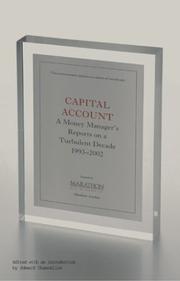
 Capital Account: A Money Manager's Reports on a Turbulent Decade
 Crunch-Time for Credit? An Inquiry into the State of the Credit System in the United States and Britain
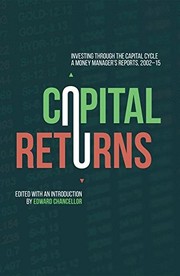
 Capital Returns: Investing Through the Capital Cycle