Updates

  1. Person pages list letters, writing, profiles and links as sortable tables with filters, and show each person's companies as links; Fund letters show each letter's description in its own column.
  2. Experts show a checked job title and a short description of each person; 30 more people have photographs.
  3. Every company, fund, university and publication the experts work for has a page listing the people there.
  4. Fund letters show each letter's thesis and filter by it; 225 person pages list the essays, columns and newsletter issues the person wrote.
  5. Person pages list every essay and newsletter issue a person wrote, and their own books as a table in List view.
  6. Recommends shows the five largest kinds of book and the rest under More; browse pictures load sooner.
  7. Podcasts and talks link the original episode, filter by Audio and video or Press, and list each publisher once.
  8. Pages are wider, Recommends has List and Grid, and a filter clicked again turns off.
  9. Book cards sit in a ruled grid with Open Library and Goodreads links and each book's one-line note.
  10. Funds is now Investors; each investor's styles are buttons that filter the table.
  11. Podcasts and talks on a person's page filter by year and publisher and show as a list or a grid of pictures.
  12. Quotes show only people's own words: 472 summaries written by list sites are gone.
  13. Country pages open from Browse again, and every link on the shelf lands on a page.
  14. Subject and person pages show their sections as tabs, and each book appears once on a person's page.
  15. Book cards show the quote, who said it and the source; grids show five cards to a row.
  16. On a phone, a menu holds the sections, search, Updates, Feedback and dark mode.
  17. Feedback takes a screenshot of the page with no browser prompt, opens a screenshot full size when you click it, and clears itself once sent.
  18. Book cards are centred, search names the topic each book sits in, and any text cut short shows whole on hover.
  19. Search groups its results by kind: people, companies, geographies, subjects, topics, books, funds, fund letters and papers.
  20. The Books table lists who recommended each book by name, and the browser tab names the section you are in.
  21. Feedback can take a screenshot of the page, or one you paste or choose, and opens in the corner beside Updates.
  22. Each rail button reopens its section where you left it, and Browse, Table and People show on every book and subject page.
  23. Filters grey out choices that hold nothing instead of hiding them, and Books › People filters by authors or recommenders.
  24. Feedback takes a subject line and up to three screenshots.
  25. Biographies are grouped by the person they are about: 41 new pages, from Abraham Lincoln to Lee Kuan Yew.
  26. Sport splits into 23 sports, and Religion into one topic per faith.
  27. Book lists show as cards: the cover, one recommendation quote and every recommender by name.
  28. Seventeen subjects that had two or three pages under different names now have one page each.
  29. Every page lists its Experts as authors and recommenders, with a link to them on the Experts tab.
  30. Economics, Financial history, Financial panics and Accounting are subjects of their own, with one page per financial crisis.
  31. Book, person and subject pages open inside the app, so the tabs stay in view.
  32. 996 more book covers, and photographs or logos for 227 more people and companies.
  33. Books › Browse shows every subject as cards, and the rail holds Fund letters, Papers, Experts, Books and Funds.
  34. Every topic over 150 books splits into narrower topics, each with a page of its own.

Send feedback

What is it?
Screenshots, up to 3 (optional)
or paste one with Ctrl+V

We use your email only to reply to you.

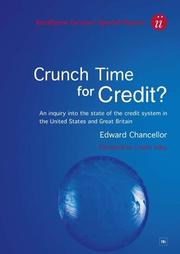
Crunch-Time for Credit? An Inquiry into the

Crunch-Time for Credit? An Inquiry into the State of the Credit System in the United States and Britain

Edward Chancellor
2005
T4 220 pages · about 3h 40m to read Open Librarygoodreads

Listed on his own site

Summary

Chancellor, the financial historian who wrote Devil Take the Hindmost, produced this study in 2005 examining the state of credit in the United States and Britain.

The reference has not verified the report's detailed contents. Its significance is its timing and its author. Chancellor had written the standard history of financial speculation and had worked as an analyst, and this study examined the credit expansion then under way, two years before it broke.

The conditions Chancellor was examining included household debt at record levels relative to income in both countries; house prices at record multiples of earnings; mortgage lending standards deteriorating, with the growth of interest-only, self-certified and high loan-to-value lending; the growth of securitisation, which moved credit risk off bank balance sheets and severed the connection between the party assessing the borrower and the party bearing the loss; the expansion of credit derivatives; low measured volatility and compressed credit spreads, which Chancellor's own historical work identified as characteristic of late-cycle conditions; and the belief that risk had been distributed to those best able to bear it, which was the official view at the time.

Chancellor's general analytical position, developed in his other work and applied since as a strategist and columnist, is that credit expansion drives asset cycles, that suppressed interest rates encourage borrowing and misallocate capital, and that periods of apparent stability generate the risk-taking that ends them.

The study is a policy pamphlet rather than a book and readers should verify its specific arguments. Its interest is as documentation that the conditions were identified and published before the crisis.

Key takeaways 7

  1. Household debt relative to income reached record levels in the United States and Britain before the crisis.
  2. Mortgage lending standards deteriorated through interest-only, self-certified and high loan-to-value products.
  3. Securitisation severed the connection between the party assessing a borrower and the party bearing the eventual loss.
  4. Compressed credit spreads and low measured volatility are characteristic of late-cycle conditions rather than of genuine safety.
  5. The official view that risk had been distributed to those best able to bear it was untested and turned out to be wrong.
  6. The conditions that produced the crisis were identified and published in 2005 by observers using historical analysis.
  7. Credit expansion drives asset cycles, and periods of apparent stability generate the risk-taking that ends them.

Who should read it

Readers interested in what was identifiable before the crisis and in credit cycle analysis applied contemporaneously.

About Edward Chancellor

Financial historian and investment strategist; formerly Lazard Brothers, GMO and Breakingviews; columnist, Reuters Breakingviews

Devil Take the Hindmost remains the standard history of speculative bubbles, and The Price of Time did the same job for interest rates.

Reuters Breakingviews, GMO

Similar books 6

Chosen by shared topics, the entries that hold them, and the people who recommended both.
Joseph J. Wang · 2021

A former Fed trader on repo, bills and reserve plumbing.
Sidney Homer, Richard Sylla · 1963

Interest rates from Babylonian lending through Rome and Europe to modern bonds.

Recommended by: Mohnish Pabrai
Walter Bagehot · 1873

How the London money market worked, and why a central bank lends freely in a panic.
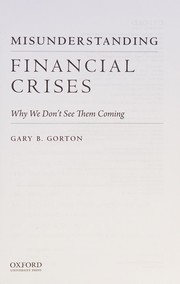
Gary Gorton · 2012

The 2007 to 2008 crisis was a bank run like the panics of the 19th century.
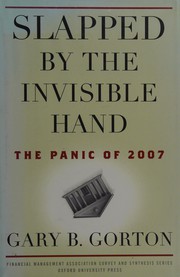
Gary Gorton · 2010

Papers explaining the 2007 crisis as a run on the repo and securitisation system.

Marcia L. Stigum · 1978

Stigum's institutional bible of bills, repo, CP and Fed funds.

Where it sits in the reference 2

Investors
Assets

Topics

Finance and MarketsEconomics