
Capital Returns: Investing Through the Capital Cycle
Edited by Chancellor; collects Marathon Asset Management's investment reports
Summary
Edward Chancellor edited a selection of Marathon Asset Management's client letters from 2002 to 2015 and wrote linking commentary that sets out the firm's framework. The argument is that returns on capital in an industry are driven primarily by changes in the supply of capital, and that supply is more forecastable than demand.
The cycle works in one direction. High returns attract capital, capital funds new capacity, capacity depresses prices and returns, low returns drive capital out, supply shrinks, and returns recover. Marathon's investment approach follows from this: look for industries where capital is leaving, where capacity is being closed and where competitors are consolidating, and avoid industries where capital is flooding in regardless of how attractive the demand story sounds. They pay close attention to management's capital allocation behaviour, to industry consolidation, to depreciation and reinvestment rates, and to whether incentive structures push managers to grow assets.
The letters give worked examples across shipping, mining, semiconductors, banking, cement, Irish and Spanish property, and the pre-crisis credit expansion, and several of them called the housing and banking problems in advance. For investors the framework is directly usable and it explains a large share of sector-level return dispersion. The limits are that the approach can keep an investor out of secular growth industries where capital inflows are justified by demand growth, that Marathon's own record is presented selectively by the editor, and that the letters were written for existing clients and assume familiarity with the firm's positions.
Key takeaways 7
- Changes in the supply of capital to an industry drive returns more than changes in demand, and supply is easier to forecast.
- High returns on capital reliably attract new entrants and new capacity, which destroys the returns that attracted them.
- The best time to invest in a sector is when capital is leaving it, capacity is closing and competitors are consolidating.
- Company management should be assessed primarily on capital allocation behaviour, since that determines whether the firm compounds or dissipates its returns.
- Growth in industry assets is a warning signal even when reported earnings are rising.
- Investor and management incentives typically reward asset growth over return on capital, which is why capital cycles overshoot in both directions.
- Analysts concentrate on demand forecasting because it is what the sell-side supplies, which leaves supply-side analysis relatively uncrowded.
Who should read it
Equity investors who want a supply-side framework for sector selection and worked examples of it applied over a full cycle.
About Edward Chancellor
Financial historian and investment strategist; formerly Lazard Brothers, GMO and Breakingviews; columnist, Reuters Breakingviews
Devil Take the Hindmost remains the standard history of speculative bubbles, and The Price of Time did the same job for interest rates.
Who recommended it 1
Similar books 6
Chosen by shared topics, the entries that hold them, and the people who recommended both.
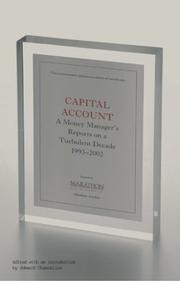
Marathon's client reports from 1993 to 2002 on investing through the capital cycle.
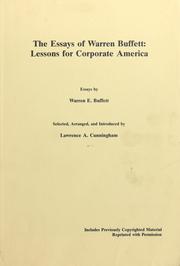
Berkshire's shareholder letters arranged by topic: governance, valuation, mergers.
“The resource is as valuable as Larry Cunningham's The Essays of Warren Buffett, which similarly organizes by subject matter” — Christopher Bloomstran
Source: Semper Augustus 2024 Letter to Clients, 'Books and Tunes for Walking', p. 96
Recommended by: Christopher Bloomstran, Francois Rochon and 11 others
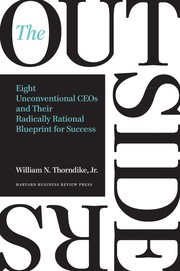
Eight CEOs who beat the market by allocating capital, not by running operations.
“…books I've recommended, highlighted to death, or forced on friends.” — Andrew Wilkinson
Source: Andrew Wilkinson's Bookshelf, neverenough.com
Recommended by: Andrew Wilkinson, Dan Loeb, Francois Rochon and 12 others

Every Berkshire annual letter since 1965, in order, as the company grew.
“…books I've recommended, highlighted to death, or forced on friends.” — Andrew Wilkinson
Source: Andrew Wilkinson's Bookshelf, neverenough.com
Recommended by: Andrew Wilkinson, Arnold Van Den Berg and 5 others
Recommended by: Andrew Wilkinson
A large-fund manager's framework for ranking buybacks against alternatives.
Where it sits in the reference 4
Topics