Updates

  1. Person pages list letters, writing, profiles and links as sortable tables with filters, and show each person's companies as links; Fund letters show each letter's description in its own column.
  2. Experts show a checked job title and a short description of each person; 30 more people have photographs.
  3. Every company, fund, university and publication the experts work for has a page listing the people there.
  4. Fund letters show each letter's thesis and filter by it; 225 person pages list the essays, columns and newsletter issues the person wrote.
  5. Person pages list every essay and newsletter issue a person wrote, and their own books as a table in List view.
  6. Recommends shows the five largest kinds of book and the rest under More; browse pictures load sooner.
  7. Podcasts and talks link the original episode, filter by Audio and video or Press, and list each publisher once.
  8. Pages are wider, Recommends has List and Grid, and a filter clicked again turns off.
  9. Book cards sit in a ruled grid with Open Library and Goodreads links and each book's one-line note.
  10. Funds is now Investors; each investor's styles are buttons that filter the table.
  11. Podcasts and talks on a person's page filter by year and publisher and show as a list or a grid of pictures.
  12. Quotes show only people's own words: 472 summaries written by list sites are gone.
  13. Country pages open from Browse again, and every link on the shelf lands on a page.
  14. Subject and person pages show their sections as tabs, and each book appears once on a person's page.
  15. Book cards show the quote, who said it and the source; grids show five cards to a row.
  16. On a phone, a menu holds the sections, search, Updates, Feedback and dark mode.
  17. Feedback takes a screenshot of the page with no browser prompt, opens a screenshot full size when you click it, and clears itself once sent.
  18. Book cards are centred, search names the topic each book sits in, and any text cut short shows whole on hover.
  19. Search groups its results by kind: people, companies, geographies, subjects, topics, books, funds, fund letters and papers.
  20. The Books table lists who recommended each book by name, and the browser tab names the section you are in.
  21. Feedback can take a screenshot of the page, or one you paste or choose, and opens in the corner beside Updates.
  22. Each rail button reopens its section where you left it, and Browse, Table and People show on every book and subject page.
  23. Filters grey out choices that hold nothing instead of hiding them, and Books › People filters by authors or recommenders.
  24. Feedback takes a subject line and up to three screenshots.
  25. Biographies are grouped by the person they are about: 41 new pages, from Abraham Lincoln to Lee Kuan Yew.
  26. Sport splits into 23 sports, and Religion into one topic per faith.
  27. Book lists show as cards: the cover, one recommendation quote and every recommender by name.
  28. Seventeen subjects that had two or three pages under different names now have one page each.
  29. Every page lists its Experts as authors and recommenders, with a link to them on the Experts tab.
  30. Economics, Financial history, Financial panics and Accounting are subjects of their own, with one page per financial crisis.
  31. Book, person and subject pages open inside the app, so the tabs stay in view.
  32. 996 more book covers, and photographs or logos for 227 more people and companies.
  33. Books › Browse shows every subject as cards, and the rail holds Fund letters, Papers, Experts, Books and Funds.
  34. Every topic over 150 books splits into narrower topics, each with a page of its own.

Send feedback

What is it?
Screenshots, up to 3 (optional)
or paste one with Ctrl+V

We use your email only to reply to you.

The Price of Time: The Real Story of Interes

The Price of Time: The Real Story of Interest

title confirmed on edwardchancellor.com

Summary

Chancellor argues that interest is the price of time, that it performs several distinct economic functions, and that pushing it to zero or below after 2008 damaged each of them. He traces the history of interest from Mesopotamian lending through the usury debates, the Dutch and British markets, Bagehot and Wicksell, to the post-crisis period.

The functional argument is the analytical spine. He identifies interest as the reward for saving, the price that allocates capital between competing uses, the mechanism that values assets by discounting future cash flows, the price of risk, and a constraint on leverage. He then argues that near-zero rates degraded each: savers were penalised and pension funds became insolvent on their liabilities, capital was allocated to projects that could not clear any normal hurdle, asset prices rose in a way that transferred wealth to existing owners and widened inequality, risk was systematically mispriced, companies used cheap debt for buybacks rather than investment, and firms that should have failed were kept alive, which lowered aggregate productivity growth.

He supports this with historical episodes where low rates preceded speculative episodes, from John Law through the 1920s to the present.

The book is well written and the historical material is strong. It is also a sustained argument for a position, and Chancellor does not engage seriously with the counter-case that rates were low because of a global savings glut and weak demand rather than because central banks chose it. Readers should note the causality question is exactly what is at issue and the book largely assumes its answer.

Key takeaways 7

  1. Interest performs several distinct functions, including rewarding saving, allocating capital, valuing assets, pricing risk and constraining leverage, and suppressing it damages each.
  2. Near-zero rates allocated capital to projects that could not clear any normal hurdle, which lowered aggregate productivity growth.
  3. Low rates raised asset prices and thereby transferred wealth to existing asset owners, which is a mechanical consequence rather than a side effect.
  4. Cheap debt was used predominantly for share repurchases and financial engineering rather than for productive investment.
  5. Keeping insolvent firms alive through low borrowing costs prevents the reallocation of labour and capital that raises productivity.
  6. Pension funds and insurers became structurally unable to meet liabilities that had been calculated on historically normal discount rates.
  7. Historical episodes of unusually low interest rates have consistently preceded speculative manias, from John Law's scheme onward.

Who should read it

Investors who want the case that low rates cause misallocation, with the counter-argument about savings gluts sought elsewhere.

About Edward Chancellor

Financial historian and investment strategist; formerly Lazard Brothers, GMO and Breakingviews; columnist, Reuters Breakingviews

Devil Take the Hindmost remains the standard history of speculative bubbles, and The Price of Time did the same job for interest rates.

Reuters Breakingviews, GMO

Similar books 6

Chosen by shared topics, the entries that hold them, and the people who recommended both.

David Graeber · 2011

Debt came before money and barter, and its history is one of forgiveness and revolt.

Recommended by: Patrick Collison

Ben S. Bernanke · 2022

Insider account of the Fed from Burns through the QE era.

Charles P. Kindleberger · 1984

European finance from the Middle Ages on: money, banking, markets and public debt.
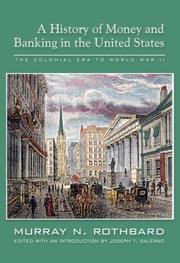
Murray N. Rothbard · 2002

US money from colonial paper to the Fed, read as bank-and-state booms and busts.

Allan H. Meltzer · 2003

The Fed from 1913 to 1951, told from its own minutes and internal memos.

Milton Friedman, Anna Jacobson Schwartz · 1963

The US money stock from 1867 to 1960, and how changes in it drove prices and income.

Where it sits in the reference 3

Investors
Secular themes
Financial history

Topics

Financial HistoryEconomics