Updates

  1. Person pages list letters, writing, profiles and links as sortable tables with filters, and show each person's companies as links; Fund letters show each letter's description in its own column.
  2. Experts show a checked job title and a short description of each person; 30 more people have photographs.
  3. Every company, fund, university and publication the experts work for has a page listing the people there.
  4. Fund letters show each letter's thesis and filter by it; 225 person pages list the essays, columns and newsletter issues the person wrote.
  5. Person pages list every essay and newsletter issue a person wrote, and their own books as a table in List view.
  6. Recommends shows the five largest kinds of book and the rest under More; browse pictures load sooner.
  7. Podcasts and talks link the original episode, filter by Audio and video or Press, and list each publisher once.
  8. Pages are wider, Recommends has List and Grid, and a filter clicked again turns off.
  9. Book cards sit in a ruled grid with Open Library and Goodreads links and each book's one-line note.
  10. Funds is now Investors; each investor's styles are buttons that filter the table.
  11. Podcasts and talks on a person's page filter by year and publisher and show as a list or a grid of pictures.
  12. Quotes show only people's own words: 472 summaries written by list sites are gone.
  13. Country pages open from Browse again, and every link on the shelf lands on a page.
  14. Subject and person pages show their sections as tabs, and each book appears once on a person's page.
  15. Book cards show the quote, who said it and the source; grids show five cards to a row.
  16. On a phone, a menu holds the sections, search, Updates, Feedback and dark mode.
  17. Feedback takes a screenshot of the page with no browser prompt, opens a screenshot full size when you click it, and clears itself once sent.
  18. Book cards are centred, search names the topic each book sits in, and any text cut short shows whole on hover.
  19. Search groups its results by kind: people, companies, geographies, subjects, topics, books, funds, fund letters and papers.
  20. The Books table lists who recommended each book by name, and the browser tab names the section you are in.
  21. Feedback can take a screenshot of the page, or one you paste or choose, and opens in the corner beside Updates.
  22. Each rail button reopens its section where you left it, and Browse, Table and People show on every book and subject page.
  23. Filters grey out choices that hold nothing instead of hiding them, and Books › People filters by authors or recommenders.
  24. Feedback takes a subject line and up to three screenshots.
  25. Biographies are grouped by the person they are about: 41 new pages, from Abraham Lincoln to Lee Kuan Yew.
  26. Sport splits into 23 sports, and Religion into one topic per faith.
  27. Book lists show as cards: the cover, one recommendation quote and every recommender by name.
  28. Seventeen subjects that had two or three pages under different names now have one page each.
  29. Every page lists its Experts as authors and recommenders, with a link to them on the Experts tab.
  30. Economics, Financial history, Financial panics and Accounting are subjects of their own, with one page per financial crisis.
  31. Book, person and subject pages open inside the app, so the tabs stay in view.
  32. 996 more book covers, and photographs or logos for 227 more people and companies.
  33. Books › Browse shows every subject as cards, and the rail holds Fund letters, Papers, Experts, Books and Funds.
  34. Every topic over 150 books splits into narrower topics, each with a page of its own.

Send feedback

What is it?
Screenshots, up to 3 (optional)
or paste one with Ctrl+V

We use your email only to reply to you.

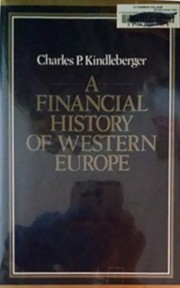
A Financial History of Western Europe

A Financial History of Western Europe

Charles P. Kindleberger
1984
T1 525 pages · about 8h 45m to read Open Librarygoodreads

Six centuries of banking, coinage and crises across the continent.

Summary

Kindleberger wrote a survey covering European financial development from the Middle Ages to the late twentieth century, organised by function rather than by country. Sections cover money and coinage, banking, the development of financial markets, public finance and taxation, international capital movements, central banking, and financial crises.

The method is comparative. Kindleberger takes each function and traces how it developed differently in Italy, the Netherlands, Britain, France and Germany, arguing that the sequence and the institutional form varied with each country's political structure and its position in international trade. He gives particular attention to the shift of financial leadership from the Italian city-states to Antwerp, then Amsterdam, then London, and to the question of what makes a financial centre and why the position moves.

The analytical positions that recur include his view that central banking developed as a practical response to crises rather than by design, that a lender of last resort is necessary and that its absence explains the severity of particular panics, and that international financial systems require a leading country willing to perform stabilising functions. This last point connects to his hegemonic stability argument in The World in Depression.

The book covers an enormous amount of ground and consequently treats most topics briefly. It is a work of synthesis rather than original research, drawing on the national historiographies. Economic historians have revised parts of it since 1984, particularly on medieval and early modern banking and on the quantitative record of European growth. Kindleberger writes for readers who already have economics, and the organisation by function rather than chronology makes it a reference more than a narrative.

Key takeaways 7

  1. European financial functions developed in different sequences in different countries, so there is no single path from primitive to modern finance.
  2. Financial leadership moved from the Italian city-states to Antwerp, Amsterdam and London, and the moves followed trade and political stability rather than financial innovation.
  3. Central banks acquired their functions through improvised responses to crises rather than through deliberate design.
  4. The absence of a lender of last resort explains the severity of specific historical panics.
  5. Public finance and the need to fund wars drove much of the institutional development of European banking and securities markets.
  6. International capital flows have repeatedly reversed suddenly, and the pattern predates modern markets by centuries.
  7. An international financial system needs a country willing to perform stabilising functions, and instability follows when none does.

Who should read it

Investors and economists who want a functional comparative survey of how European financial institutions developed, used as reference rather than read straight through.

About Charles P. Kindleberger

Professor of economics at MIT and a State Department economist who helped draft the Marshall Plan; died in 2003.

Manias, Panics and Crashes turns Hyman Minsky's financial instability hypothesis into a repeatable sequence - displacement, credit expansion, euphoria, distress, revulsion - and tests it against four centuries of episodes, which is why later crisis writing keeps returning to it. The World in Depression advances the argument that the 1930s slump deepened because no state would act as lender of last resort.

State Department

Similar books 6

Chosen by shared topics, the entries that hold them, and the people who recommended both.
Ben S. Bernanke · 2022

Insider account of the Fed from Burns through the QE era.
Murray N. Rothbard · 2002

US money from colonial paper to the Fed, read as bank-and-state booms and busts.
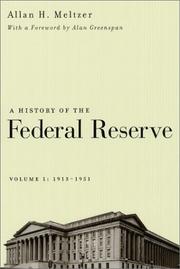
Allan H. Meltzer · 2003

The Fed from 1913 to 1951, told from its own minutes and internal memos.

Milton Friedman, Anna Jacobson Schwartz · 1963

The US money stock from 1867 to 1960, and how changes in it drove prices and income.
Where it sits in the reference 2

Academics
Financial history

Topics

Financial HistoryEconomics