
Updates

  1. Person pages list letters, writing, profiles and links as sortable tables with filters, and show each person's companies as links; Fund letters show each letter's description in its own column.
  2. Experts show a checked job title and a short description of each person; 30 more people have photographs.
  3. Every company, fund, university and publication the experts work for has a page listing the people there.
  4. Fund letters show each letter's thesis and filter by it; 225 person pages list the essays, columns and newsletter issues the person wrote.
  5. Person pages list every essay and newsletter issue a person wrote, and their own books as a table in List view.
  6. Recommends shows the five largest kinds of book and the rest under More; browse pictures load sooner.
  7. Podcasts and talks link the original episode, filter by Audio and video or Press, and list each publisher once.
  8. Pages are wider, Recommends has List and Grid, and a filter clicked again turns off.
  9. Book cards sit in a ruled grid with Open Library and Goodreads links and each book's one-line note.
  10. Funds is now Investors; each investor's styles are buttons that filter the table.
  11. Podcasts and talks on a person's page filter by year and publisher and show as a list or a grid of pictures.
  12. Quotes show only people's own words: 472 summaries written by list sites are gone.
  13. Country pages open from Browse again, and every link on the shelf lands on a page.
  14. Subject and person pages show their sections as tabs, and each book appears once on a person's page.
  15. Book cards show the quote, who said it and the source; grids show five cards to a row.
  16. On a phone, a menu holds the sections, search, Updates, Feedback and dark mode.
  17. Feedback takes a screenshot of the page with no browser prompt, opens a screenshot full size when you click it, and clears itself once sent.
  18. Book cards are centred, search names the topic each book sits in, and any text cut short shows whole on hover.
  19. Search groups its results by kind: people, companies, geographies, subjects, topics, books, funds, fund letters and papers.
  20. The Books table lists who recommended each book by name, and the browser tab names the section you are in.
  21. Feedback can take a screenshot of the page, or one you paste or choose, and opens in the corner beside Updates.
  22. Each rail button reopens its section where you left it, and Browse, Table and People show on every book and subject page.
  23. Filters grey out choices that hold nothing instead of hiding them, and Books › People filters by authors or recommenders.
  24. Feedback takes a subject line and up to three screenshots.
  25. Biographies are grouped by the person they are about: 41 new pages, from Abraham Lincoln to Lee Kuan Yew.
  26. Sport splits into 23 sports, and Religion into one topic per faith.
  27. Book lists show as cards: the cover, one recommendation quote and every recommender by name.
  28. Seventeen subjects that had two or three pages under different names now have one page each.
  29. Every page lists its Experts as authors and recommenders, with a link to them on the Experts tab.
  30. Economics, Financial history, Financial panics and Accounting are subjects of their own, with one page per financial crisis.
  31. Book, person and subject pages open inside the app, so the tabs stay in view.
  32. 996 more book covers, and photographs or logos for 227 more people and companies.
  33. Books › Browse shows every subject as cards, and the rail holds Fund letters, Papers, Experts, Books and Funds.
  34. Every topic over 150 books splits into narrower topics, each with a page of its own.

Send feedback

What is it?
Screenshots, up to 3 (optional)
or paste one with Ctrl+V

We use your email only to reply to you.

A Monetary History of the United States, 186

A Monetary History of the United States, 1867-1960

Milton Friedman, Anna Jacobson Schwartz
1963
T1 860 pages · about 14h 20m to read Open Librarygoodreads

The founding work of monetary history; the Depression chapter changed policy.

Summary

Friedman and Schwartz constructed a continuous series of the United States money stock from 1867 to 1960 and used it to argue that changes in the quantity of money have been the dominant proximate cause of changes in nominal income and prices. The book is a work of data construction as much as of argument, and the series they built became the standard.

The famous chapter concerns 1929 to 1933. They document that the money stock fell by about a third, that this contraction was the result of Federal Reserve inaction in the face of successive banking panics rather than an inevitable consequence of the downturn, and that the Fed had both the legal power and the reserves to prevent it. Their argument turns on the Fed's failure to act as lender of last resort after Benjamin Strong's death removed the leadership that had understood the function. They call the period the Great Contraction and argue it was made by policy rather than by the market.

The wider claims are that money is neutral in the long run but not the short, that monetary policy acts with long and variable lags which makes fine-tuning impossible, and that a rule for steady money growth would outperform discretionary management. The book reoriented macroeconomics and its influence on central banking is direct, including on Bernanke's response in 2008.

It has been substantially qualified. Later work established that the gold standard constraint, international transmission and the collapse of banking intermediation carry more of the explanatory weight than Friedman and Schwartz allowed, and the stable money demand relationship their policy rule depends on broke down after financial deregulation. The historical narrative and the data remain standard.

Key takeaways 7

  1. The United States money stock fell by roughly a third between 1929 and 1933, and this contraction was the primary cause of the Depression's depth.
  2. The Federal Reserve had both the legal authority and the reserves to prevent the monetary contraction and chose not to use them.
  3. Changes in the quantity of money are the dominant proximate cause of changes in nominal income and prices over any substantial period.
  4. Monetary policy operates with long and variable lags, which makes discretionary fine-tuning of the economy impossible in practice.
  5. Banking panics converted a recession into a depression by destroying deposits, and deposit insurance introduced in 1934 ended that mechanism.
  6. A rule requiring steady growth in the money stock would produce better outcomes than discretionary policy by competent officials.
  7. Benjamin Strong's death removed the one person at the Federal Reserve who understood the lender of last resort function, and the institution's structure allowed regional interests to block action afterwards.

Who should read it

Macro investors and anyone who needs the monetarist account of the Depression and the origin of the data series that later work argues with.

About Milton Friedman

Economist at the University of Chicago and the Hoover Institution who led the monetarist school and won the 1976 Nobel prize.

A Monetary History of the United States, written with Anna Schwartz, established that the Federal Reserve's contraction of the money supply turned the 1929 downturn into the Depression, and it set the terms of monetary policy argument ever since. Capitalism and Freedom and Free to Choose make the political case for markets and supply the standard arguments on floating rates, schooling and regulation.

University of Chicago, Hoover Institution

Similar books 6

Chosen by shared topics, the entries that hold them, and the people who recommended both.
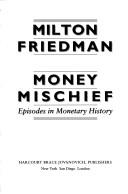
Milton Friedman · 1992

Episodes from Yap's stone money onward showing that inflation comes from money.
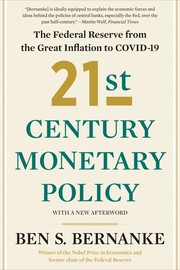
Ben S. Bernanke · 2022

Insider account of the Fed from Burns through the QE era.

Charles P. Kindleberger · 1984

European finance from the Middle Ages on: money, banking, markets and public debt.
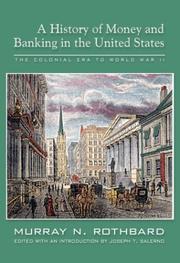
Murray N. Rothbard · 2002

US money from colonial paper to the Fed, read as bank-and-state booms and busts.
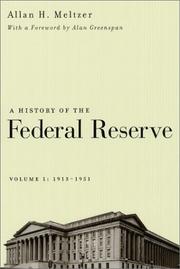
Allan H. Meltzer · 2003

The Fed from 1913 to 1951, told from its own minutes and internal memos.
Where it sits in the reference 3

Academics
Geographies
Financial history

Topics

EconomicsFinancial History