Updates

  1. Person pages list letters, writing, profiles and links as sortable tables with filters, and show each person's companies as links; Fund letters show each letter's description in its own column.
  2. Experts show a checked job title and a short description of each person; 30 more people have photographs.
  3. Every company, fund, university and publication the experts work for has a page listing the people there.
  4. Fund letters show each letter's thesis and filter by it; 225 person pages list the essays, columns and newsletter issues the person wrote.
  5. Person pages list every essay and newsletter issue a person wrote, and their own books as a table in List view.
  6. Recommends shows the five largest kinds of book and the rest under More; browse pictures load sooner.
  7. Podcasts and talks link the original episode, filter by Audio and video or Press, and list each publisher once.
  8. Pages are wider, Recommends has List and Grid, and a filter clicked again turns off.
  9. Book cards sit in a ruled grid with Open Library and Goodreads links and each book's one-line note.
  10. Funds is now Investors; each investor's styles are buttons that filter the table.
  11. Podcasts and talks on a person's page filter by year and publisher and show as a list or a grid of pictures.
  12. Quotes show only people's own words: 472 summaries written by list sites are gone.
  13. Country pages open from Browse again, and every link on the shelf lands on a page.
  14. Subject and person pages show their sections as tabs, and each book appears once on a person's page.
  15. Book cards show the quote, who said it and the source; grids show five cards to a row.
  16. On a phone, a menu holds the sections, search, Updates, Feedback and dark mode.
  17. Feedback takes a screenshot of the page with no browser prompt, opens a screenshot full size when you click it, and clears itself once sent.
  18. Book cards are centred, search names the topic each book sits in, and any text cut short shows whole on hover.
  19. Search groups its results by kind: people, companies, geographies, subjects, topics, books, funds, fund letters and papers.
  20. The Books table lists who recommended each book by name, and the browser tab names the section you are in.
  21. Feedback can take a screenshot of the page, or one you paste or choose, and opens in the corner beside Updates.
  22. Each rail button reopens its section where you left it, and Browse, Table and People show on every book and subject page.
  23. Filters grey out choices that hold nothing instead of hiding them, and Books › People filters by authors or recommenders.
  24. Feedback takes a subject line and up to three screenshots.
  25. Biographies are grouped by the person they are about: 41 new pages, from Abraham Lincoln to Lee Kuan Yew.
  26. Sport splits into 23 sports, and Religion into one topic per faith.
  27. Book lists show as cards: the cover, one recommendation quote and every recommender by name.
  28. Seventeen subjects that had two or three pages under different names now have one page each.
  29. Every page lists its Experts as authors and recommenders, with a link to them on the Experts tab.
  30. Economics, Financial history, Financial panics and Accounting are subjects of their own, with one page per financial crisis.
  31. Book, person and subject pages open inside the app, so the tabs stay in view.
  32. 996 more book covers, and photographs or logos for 227 more people and companies.
  33. Books › Browse shows every subject as cards, and the rail holds Fund letters, Papers, Experts, Books and Funds.
  34. Every topic over 150 books splits into narrower topics, each with a page of its own.

Send feedback

What is it?
Screenshots, up to 3 (optional)
or paste one with Ctrl+V

We use your email only to reply to you.

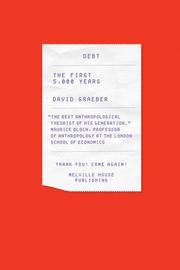
Debt: The First 5,000 Years

Debt: The First 5,000 Years

David Graeber
2011
T4 544 pages · about 9h 4m to read Open Librarygoodreads

The long anthropological view of debt forgiveness and its politics.

Summary

Graeber, an anthropologist, argues that the standard economic story of money's origin is empirically false. Textbooks describe barter giving way to money and money to credit. Graeber marshals the anthropological and historical record to argue the sequence ran the other way: credit systems and accounting units came first, coinage appeared much later and mainly to pay soldiers, and no society has ever been found that ran on barter as economists describe it.

From that starting point he builds a history in which debt is primarily a moral and political relationship rather than an economic one. He examines Mesopotamian debt jubilees, the ancient categories of honour and slavery, medieval Eurasian credit networks, the role of violence and coinage in what he calls the military-coinage-slavery complex, and the return of virtual credit money after 1971. He argues that debts between equals are negotiable while debts backed by state violence are not, and that periodic debt cancellation was a normal feature of ancient states which modern states have abandoned.

The book is enormously influential and heavily contested. Economists and historians have documented specific factual errors, including the treatment of Apple's founding, claims about the IMF and Madagascar, and several ancient sources. Graeber's political conclusions, which favour a modern jubilee, do not follow tightly from the historical material. The book is still worth reading for investors because it makes the strongest available case that credit is a social arrangement whose enforcement is political, and because it reframes what a sovereign default or a debt restructuring actually is. Read it with a critical eye and check specific claims before repeating them.

Key takeaways 7

  1. Barter economies of the kind described in economics textbooks have never been documented, and credit and accounting units preceded coinage by thousands of years.
  2. Coinage arose principally to pay standing armies and to allow states to provision soldiers, not to solve the inconvenience of barter.
  3. Periodic debt cancellation was a routine instrument of ancient states, used to prevent debt from converting free citizens into bondage.
  4. The obligation to repay a debt is a moral claim enforced by political power, not a natural or purely economic fact.
  5. Human economies that track social obligations operate on different principles from commercial economies that price them, and violence is what converts one into the other.
  6. Monetary history alternates between long periods dominated by credit and long periods dominated by bullion, and the transitions coincide with changes in state violence.
  7. The end of gold convertibility in 1971 returned the world to a virtual credit money regime, whose historical precedents suggest institutional protections for debtors that have not been rebuilt.

Who should read it

Investors and founders who want to understand debt as a political and social institution rather than a contract, with the caveat that specific factual claims need checking.

Who recommended it 1 · 1 direct

Similar books 6

Chosen by shared topics, the entries that hold them, and the people who recommended both.

Barry Eichengreen · 1992

How the gold standard spread the Depression, and why leaving it early meant recovery.

Barry Eichengreen, Asmaa El-Ganainy, Rui Esteves, Kris James Mitchener · 2021

Sovereign borrowing from Italian city-states to the pandemic, and what it paid for.

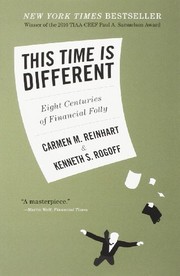
Carmen M. Reinhart, Kenneth S. Rogoff · 2009

Eight centuries of defaults and banking crises show the same patterns recurring.

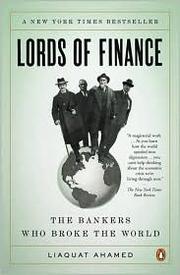
Liaquat Ahamed · 2009

How four central bankers and the gold standard turned a slump into the Depression.

“I'm going to use "classic" again but rightfully so.” — Christopher Bloomstran

Source: Semper Augustus 2020 Letter to Clients, 'To Read or Not to Read', p. 57

Recommended by: Christopher Bloomstran, Mohnish Pabrai
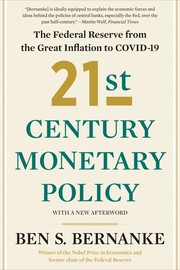
Ben S. Bernanke · 2022

Insider account of the Fed from Burns through the QE era.

Where it sits in the reference 3

Secular themes
Secular themes
Financial history

Topics

Financial HistorySociology and CultureEconomicsAnthropology and human origins