
Letters from a Stoic
Summary
Seneca wrote one hundred and twenty-four letters to Lucilius, a friend and procurator of Sicily, in the last years of his life after withdrawing from public affairs. They are not correspondence in the ordinary sense but essays in letter form, intended for publication, each addressing a specific practical question.
The recurring subjects are the use of time, which Seneca treats as the only thing genuinely owned and the only thing people give away without accounting; the practice of poverty, meaning periodically living on the minimum in order to remove the fear of losing what you have; the preparation for adversity through premeditation of what might happen; the distinction between what is genuinely necessary and what habit has made feel necessary; friendship; and the correct attitude toward death, which he treats as the subject that clarifies everything else.
He writes about wealth without condemning it, arguing that a philosopher may possess wealth provided it is held loosely, which is convenient given that he was one of the richest men in Rome. He was Nero's tutor and adviser, participated in a regime he could not restrain, and was ordered to kill himself in 65 for alleged involvement in a conspiracy.
The gap between his writing and his life is the standard objection, and Seneca addresses it directly, arguing that he describes the destination rather than claiming to have arrived. Readers differ on whether that answers the charge. The letters can be read in any order and most are short, which suits them to occasional reading. Modern selections vary considerably in which letters they include. The material on time and on the practice of poverty is the most immediately usable.
Key takeaways 8
- Time is the only possession genuinely owned and the only one people surrender without keeping any account of it.
- People guard property carefully and give away their time to anyone who asks, which reverses the correct valuation.
- Practising poverty deliberately for a few days at a time removes the fear of losing wealth, because the feared condition has been experienced.
- Rehearsing possible misfortunes in advance removes their power to shock, since the mind has already occupied the situation.
- Most fears concern things that never happen, and suffering in anticipation costs more than the events themselves.
- Wealth is acceptable provided it is held loosely, and the test is whether losing it would change the person.
- A person should read a small number of works thoroughly rather than many superficially, since scattered reading produces nothing that stays.
- Seneca states that he describes the destination rather than claiming to have arrived, which is his own answer to the gap between his writing and his life.
Who should read it
Readers wanting practical Stoicism in short instalments, particularly on time, wealth and preparation for adversity.
Who recommended it 6 · 3 direct
Similar books 6
Chosen by shared topics, the entries that hold them, and the people who recommended both.

A Roman emperor's private notes reminding himself to live by Stoic principles.
Recommended by: Mohnish Pabrai, Nat Eliason, Naval Ravikant and 17 others
Life in Nazi concentration camps, and logotherapy: finding meaning to survive.
“I have been deeply influenced by the existentialist and eminent psychiatrist Viktor Frankl, who wrote the perennial best seller Man's Search for Meaning, one of the most influential books I've ever…” — Frank Martin
Source: Martin on one of the most influential books he has read and reread
Recommended by: Frank Martin, Mohnish Pabrai, Nat Eliason and 24 others

Recommended by: Nat Eliason, Naval Ravikant, Ryan Holiday and 1 other
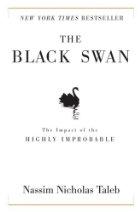
Rare, unforeseen, high-impact events drive history, explained only after the fact.
“The message of The Black Swan is how important it is to realize that the things everyone rules out can still come to pass.” — Howard Marks
Source: Oaktree memo 'The Limits to Negativism'
Recommended by: Howard Marks, Marc Andreessen, Nat Eliason and 18 others

Recommended by: Nat Eliason, Ryan Holiday, Naval Ravikant and 1 other

Recommended by: Ryan Holiday, James Altucher, Jordan Hughes and 3 others
Where it sits in the reference 0
No entry holds this book yet. It reached the reference because someone recommended it.
Topics