
Updates

  1. Person pages list letters, writing, profiles and links as sortable tables with filters, and show each person's companies as links; Fund letters show each letter's description in its own column.
  2. Experts show a checked job title and a short description of each person; 30 more people have photographs.
  3. Every company, fund, university and publication the experts work for has a page listing the people there.
  4. Fund letters show each letter's thesis and filter by it; 225 person pages list the essays, columns and newsletter issues the person wrote.
  5. Person pages list every essay and newsletter issue a person wrote, and their own books as a table in List view.
  6. Recommends shows the five largest kinds of book and the rest under More; browse pictures load sooner.
  7. Podcasts and talks link the original episode, filter by Audio and video or Press, and list each publisher once.
  8. Pages are wider, Recommends has List and Grid, and a filter clicked again turns off.
  9. Book cards sit in a ruled grid with Open Library and Goodreads links and each book's one-line note.
  10. Funds is now Investors; each investor's styles are buttons that filter the table.
  11. Podcasts and talks on a person's page filter by year and publisher and show as a list or a grid of pictures.
  12. Quotes show only people's own words: 472 summaries written by list sites are gone.
  13. Country pages open from Browse again, and every link on the shelf lands on a page.
  14. Subject and person pages show their sections as tabs, and each book appears once on a person's page.
  15. Book cards show the quote, who said it and the source; grids show five cards to a row.
  16. On a phone, a menu holds the sections, search, Updates, Feedback and dark mode.
  17. Feedback takes a screenshot of the page with no browser prompt, opens a screenshot full size when you click it, and clears itself once sent.
  18. Book cards are centred, search names the topic each book sits in, and any text cut short shows whole on hover.
  19. Search groups its results by kind: people, companies, geographies, subjects, topics, books, funds, fund letters and papers.
  20. The Books table lists who recommended each book by name, and the browser tab names the section you are in.
  21. Feedback can take a screenshot of the page, or one you paste or choose, and opens in the corner beside Updates.
  22. Each rail button reopens its section where you left it, and Browse, Table and People show on every book and subject page.
  23. Filters grey out choices that hold nothing instead of hiding them, and Books › People filters by authors or recommenders.
  24. Feedback takes a subject line and up to three screenshots.
  25. Biographies are grouped by the person they are about: 41 new pages, from Abraham Lincoln to Lee Kuan Yew.
  26. Sport splits into 23 sports, and Religion into one topic per faith.
  27. Book lists show as cards: the cover, one recommendation quote and every recommender by name.
  28. Seventeen subjects that had two or three pages under different names now have one page each.
  29. Every page lists its Experts as authors and recommenders, with a link to them on the Experts tab.
  30. Economics, Financial history, Financial panics and Accounting are subjects of their own, with one page per financial crisis.
  31. Book, person and subject pages open inside the app, so the tabs stay in view.
  32. 996 more book covers, and photographs or logos for 227 more people and companies.
  33. Books › Browse shows every subject as cards, and the rail holds Fund letters, Papers, Experts, Books and Funds.
  34. Every topic over 150 books splits into narrower topics, each with a page of its own.

Send feedback

What is it?
Screenshots, up to 3 (optional)
or paste one with Ctrl+V

We use your email only to reply to you.

Profit First

Profit First

Mike Michalowicz
2014
T4 207 pages · about 3h 27m to read Open Librarygoodreads

Cash discipline for small businesses; a system, not an accounting theory.

Summary

Michalowicz proposes reversing the standard accounting formula. Instead of sales minus expenses equals profit, he argues small business owners should take profit first and operate on what remains, on the argument that expenses expand to consume whatever is available.

The mechanism is a set of bank accounts. Revenue arrives in an income account and is distributed on a fixed schedule, usually twice monthly, into separate accounts for profit, owner's compensation, tax and operating expenses, at predetermined percentages. The operating account is the only one the business spends from, which means the constraint is visible and enforced by the account balance rather than by discipline.

He gives target allocation percentages that vary by revenue level, and a method for moving from current allocations toward the targets gradually rather than immediately, since an immediate change would make the business insolvent. His argument for why this works is behavioural rather than financial. Parkinson's law means expenses expand to fill available funds, and the primacy effect means whatever is deducted first is treated as unavailable. Physically separating the money removes the decision.

He also covers the quarterly profit distribution, which he insists must actually be taken by the owner rather than reinvested, on the argument that a business that never distributes profit is not profitable in any meaningful sense. The method is a budgeting envelope system applied to a business, which is not novel. It fits small owner-operated businesses with simple cash flows and fits poorly where working capital cycles are long or where growth requires reinvestment. The insight that expenses expand to available funds is correct and the mechanism enforces it without requiring discipline.

Key takeaways 8

  1. Profit should be taken first and the business operated on what remains, rather than treating profit as what is left over.
  2. Expenses expand to consume whatever funds are available, which is why a business with growing revenue frequently remains unprofitable.
  3. Physically separating money into different accounts removes the decision, which works where discipline does not.
  4. The operating account balance becomes the visible constraint, which forces expense decisions that a profit and loss statement does not.
  5. Allocation percentages should move toward targets gradually, since an immediate change would make most businesses insolvent.
  6. Quarterly profit must actually be distributed to the owner rather than reinvested, or the business is not profitable in any meaningful sense.
  7. Tax should be set aside at the point revenue arrives rather than found when the liability falls due.
  8. The method fits small owner-operated businesses with simple cash flows and fits poorly where working capital cycles are long.

Who should read it

Owners of small businesses with revenue but no profit who need a mechanism rather than a budgeting principle.

Who recommended it 3 · 1 direct

Ran Segallreported

Similar books 6

Chosen by shared topics, the entries that hold them, and the people who recommended both.

Greg Crabtree, Beverly Herzog · 2011

Owner-operator economics: labour efficiency and the four keys.

Recommended by: Nat Eliason
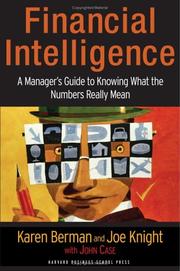
Karen Berman, Joe Knight · 2006

How non-financial managers can read income statements, balance sheets and cash flow.

Recommended by: Nat Eliason
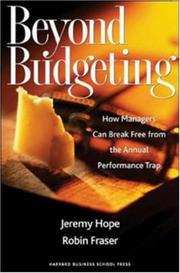
Jeremy Hope, Robin Fraser · 2003

Why the annual budget harms firms, and how some run without one.
Charles T. Horngren, Srikant M. Datar, Madhav Rajan · 1962

The standard cost accounting text, built around costs that serve managers' decisions.
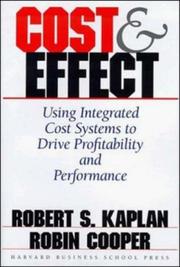
Robert S. Kaplan, Robin Cooper · 1998

How to design cost systems, from activity-based costing to performance measures.

Brian H. Maskell, Bruce Baggaley · 2003

Why standard costing hinders lean factories, and value-stream costing instead.

Where it sits in the reference 1

Accounting

Topics

AccountingEntrepreneurship and StartupsSmall Business and Bootstrapping