Updates

  1. Person pages list letters, writing, profiles and links as sortable tables with filters, and show each person's companies as links; Fund letters show each letter's description in its own column.
  2. Experts show a checked job title and a short description of each person; 30 more people have photographs.
  3. Every company, fund, university and publication the experts work for has a page listing the people there.
  4. Fund letters show each letter's thesis and filter by it; 225 person pages list the essays, columns and newsletter issues the person wrote.
  5. Person pages list every essay and newsletter issue a person wrote, and their own books as a table in List view.
  6. Recommends shows the five largest kinds of book and the rest under More; browse pictures load sooner.
  7. Podcasts and talks link the original episode, filter by Audio and video or Press, and list each publisher once.
  8. Pages are wider, Recommends has List and Grid, and a filter clicked again turns off.
  9. Book cards sit in a ruled grid with Open Library and Goodreads links and each book's one-line note.
  10. Funds is now Investors; each investor's styles are buttons that filter the table.
  11. Podcasts and talks on a person's page filter by year and publisher and show as a list or a grid of pictures.
  12. Quotes show only people's own words: 472 summaries written by list sites are gone.
  13. Country pages open from Browse again, and every link on the shelf lands on a page.
  14. Subject and person pages show their sections as tabs, and each book appears once on a person's page.
  15. Book cards show the quote, who said it and the source; grids show five cards to a row.
  16. On a phone, a menu holds the sections, search, Updates, Feedback and dark mode.
  17. Feedback takes a screenshot of the page with no browser prompt, opens a screenshot full size when you click it, and clears itself once sent.
  18. Book cards are centred, search names the topic each book sits in, and any text cut short shows whole on hover.
  19. Search groups its results by kind: people, companies, geographies, subjects, topics, books, funds, fund letters and papers.
  20. The Books table lists who recommended each book by name, and the browser tab names the section you are in.
  21. Feedback can take a screenshot of the page, or one you paste or choose, and opens in the corner beside Updates.
  22. Each rail button reopens its section where you left it, and Browse, Table and People show on every book and subject page.
  23. Filters grey out choices that hold nothing instead of hiding them, and Books › People filters by authors or recommenders.
  24. Feedback takes a subject line and up to three screenshots.
  25. Biographies are grouped by the person they are about: 41 new pages, from Abraham Lincoln to Lee Kuan Yew.
  26. Sport splits into 23 sports, and Religion into one topic per faith.
  27. Book lists show as cards: the cover, one recommendation quote and every recommender by name.
  28. Seventeen subjects that had two or three pages under different names now have one page each.
  29. Every page lists its Experts as authors and recommenders, with a link to them on the Experts tab.
  30. Economics, Financial history, Financial panics and Accounting are subjects of their own, with one page per financial crisis.
  31. Book, person and subject pages open inside the app, so the tabs stay in view.
  32. 996 more book covers, and photographs or logos for 227 more people and companies.
  33. Books › Browse shows every subject as cards, and the rail holds Fund letters, Papers, Experts, Books and Funds.
  34. Every topic over 150 books splits into narrower topics, each with a page of its own.

Send feedback

What is it?
Screenshots, up to 3 (optional)
or paste one with Ctrl+V

We use your email only to reply to you.

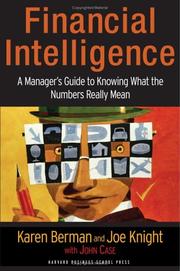
Financial Intelligence

Financial Intelligence

Karen Berman, Joe Knight
2006
T2 Open Librarygoodreads

Written for managers who have to read the numbers without an accounting background.

Summary

Berman and Knight wrote this to teach non-financial managers to read and use financial statements. It covers the income statement, balance sheet and cash flow statement, the relationships between them, ratio analysis, return on invested capital, and working capital management.

The distinctive contribution is the emphasis on how much of accounting is estimate and assumption rather than fact. They work through the specific places where judgement enters: revenue recognition timing, allocation of overhead, depreciation schedules and useful life assumptions, allowances for bad debt, inventory valuation method, and accruals generally. Their point to a manager is that the numbers being reported about their unit contain choices, that different choices produce different results, and that understanding which choices were made is part of understanding the result.

The practical sections cover what a manager can actually influence: days sales outstanding, inventory turns, days payable, and the effect of each on cash. They explain why a profitable company can run out of cash and why growth consumes cash, which are the two things operating managers most commonly fail to understand.

The book is written for a general audience and is clear. It is not for investors, who will find it elementary, and it does not cover analysis of a company from outside. Its value is in equipping an operating manager to argue with a finance function on equal terms and to understand how their own decisions appear in the reported numbers. The examples are American and the accounting is United States GAAP.

Key takeaways 7

  1. Financial statements contain estimates and judgement calls at many points, so two accountants applying the same standards to the same facts produce different numbers.
  2. Profit and cash are different things, and a profitable and growing company can run out of cash because growth consumes working capital.
  3. Days sales outstanding, inventory turns and days payable are the working capital levers an operating manager can actually move.
  4. Return on invested capital is the measure that connects operating decisions to whether the business creates value, and it is more informative than any profit figure.
  5. Revenue recognition timing, depreciation schedules and overhead allocation are choices that materially change reported results without changing the underlying business.
  6. Operating managers should know which accounting choices affect their reported performance, because those choices determine how their decisions appear.
  7. Comparing a ratio to itself over time and to competitors is where the information is, since a ratio in isolation says almost nothing.

Who should read it

Operating managers and founders without a finance background who need to read financial statements and argue with a finance function competently.

Who recommended it 1 · 1 direct

Similar books 6

Chosen by shared topics, the entries that hold them, and the people who recommended both.
Greg Crabtree, Beverly Herzog · 2011

Owner-operator economics: labour efficiency and the four keys.

Recommended by: Nat Eliason
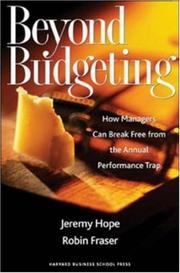
Jeremy Hope, Robin Fraser · 2003

Why the annual budget harms firms, and how some run without one.
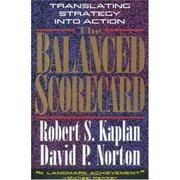
Robert S. Kaplan, David P. Norton · 1996

Measure a firm on finance, customers, internal processes, and learning and growth.

Recommended by: Mohnish Pabrai
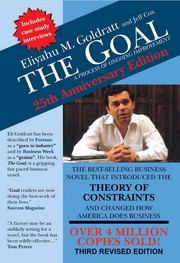
Eliyahu M. Goldratt, Jeff Cox · 1984

A plant manager learns that a system's output is set by its bottleneck.

Eric Ries · 2011

Build, measure, learn: test what customers want with small experiments.

Where it sits in the reference 4

Accounting
Business themes
Business themes
Accounting

Topics

AccountingBusiness and Management