Updates

  1. Person pages list letters, writing, profiles and links as sortable tables with filters, and show each person's companies as links; Fund letters show each letter's description in its own column.
  2. Experts show a checked job title and a short description of each person; 30 more people have photographs.
  3. Every company, fund, university and publication the experts work for has a page listing the people there.
  4. Fund letters show each letter's thesis and filter by it; 225 person pages list the essays, columns and newsletter issues the person wrote.
  5. Person pages list every essay and newsletter issue a person wrote, and their own books as a table in List view.
  6. Recommends shows the five largest kinds of book and the rest under More; browse pictures load sooner.
  7. Podcasts and talks link the original episode, filter by Audio and video or Press, and list each publisher once.
  8. Pages are wider, Recommends has List and Grid, and a filter clicked again turns off.
  9. Book cards sit in a ruled grid with Open Library and Goodreads links and each book's one-line note.
  10. Funds is now Investors; each investor's styles are buttons that filter the table.
  11. Podcasts and talks on a person's page filter by year and publisher and show as a list or a grid of pictures.
  12. Quotes show only people's own words: 472 summaries written by list sites are gone.
  13. Country pages open from Browse again, and every link on the shelf lands on a page.
  14. Subject and person pages show their sections as tabs, and each book appears once on a person's page.
  15. Book cards show the quote, who said it and the source; grids show five cards to a row.
  16. On a phone, a menu holds the sections, search, Updates, Feedback and dark mode.
  17. Feedback takes a screenshot of the page with no browser prompt, opens a screenshot full size when you click it, and clears itself once sent.
  18. Book cards are centred, search names the topic each book sits in, and any text cut short shows whole on hover.
  19. Search groups its results by kind: people, companies, geographies, subjects, topics, books, funds, fund letters and papers.
  20. The Books table lists who recommended each book by name, and the browser tab names the section you are in.
  21. Feedback can take a screenshot of the page, or one you paste or choose, and opens in the corner beside Updates.
  22. Each rail button reopens its section where you left it, and Browse, Table and People show on every book and subject page.
  23. Filters grey out choices that hold nothing instead of hiding them, and Books › People filters by authors or recommenders.
  24. Feedback takes a subject line and up to three screenshots.
  25. Biographies are grouped by the person they are about: 41 new pages, from Abraham Lincoln to Lee Kuan Yew.
  26. Sport splits into 23 sports, and Religion into one topic per faith.
  27. Book lists show as cards: the cover, one recommendation quote and every recommender by name.
  28. Seventeen subjects that had two or three pages under different names now have one page each.
  29. Every page lists its Experts as authors and recommenders, with a link to them on the Experts tab.
  30. Economics, Financial history, Financial panics and Accounting are subjects of their own, with one page per financial crisis.
  31. Book, person and subject pages open inside the app, so the tabs stay in view.
  32. 996 more book covers, and photographs or logos for 227 more people and companies.
  33. Books › Browse shows every subject as cards, and the rail holds Fund letters, Papers, Experts, Books and Funds.
  34. Every topic over 150 books splits into narrower topics, each with a page of its own.

Send feedback

What is it?
Screenshots, up to 3 (optional)
or paste one with Ctrl+V

We use your email only to reply to you.

The Exchange-Traded Funds Manual

The Exchange-Traded Funds Manual

Gary L. Gastineau
2002
T4 401 pages · about 6h 41m to read Open Librarygoodreads

Summary

Gastineau, who was involved in exchange-traded fund development at the American Stock Exchange, wrote the standard technical reference on how these instruments actually work.

The mechanical content is the substance. The creation and redemption process, in which authorised participants deliver or receive a basket of underlying securities in exchange for large blocks of fund shares, is what keeps the fund's market price close to its net asset value, and Gastineau explains why this arbitrage works and under what conditions it breaks. He covers the tax consequences of in-kind redemption, which allows an exchange-traded fund to dispose of low-basis securities without realising gains for continuing holders, and which is the structural tax advantage over mutual funds in the United States.

He also covers the regulatory history and the exemptive relief each structure required, the differences between unit investment trusts, open-end structures and grantor trusts, the trading costs and spreads that determine an investor's real cost, the index licensing arrangements, and the specific problems with fixed income and international products where the underlying does not trade when the fund does.

Gastineau is critical of index construction and of the reconstitution effect, arguing that funds tracking published indices are forced to trade at times when everyone knows they must, which costs holders measurably. He proposed alternatives.

The book is from 2002 and the product set has expanded enormously since, including leveraged, inverse, actively managed and thematic products the book does not cover. The mechanics it explains are unchanged.

Key takeaways 7

  1. The creation and redemption mechanism, in which authorised participants exchange baskets of securities for fund shares, is what keeps market price close to net asset value.
  2. In-kind redemption allows an exchange-traded fund to dispose of low-basis securities without realising taxable gains for continuing holders.
  3. An investor's real cost includes the trading spread and any premium or discount to net asset value, not only the expense ratio.
  4. Funds tracking published indices must trade at reconstitution dates that every other participant knows in advance, which costs holders measurably.
  5. Fixed income and international products face a structural problem because the underlying securities do not trade during the hours the fund does.
  6. The arbitrage that holds price to value depends on authorised participants being able and willing to transact, which is not guaranteed in a dislocation.
  7. Different legal structures including unit investment trusts, open-end funds and grantor trusts have different consequences for dividends, lending and tax.

Who should read it

Investors and allocators who need to understand exchange-traded fund mechanics, tax treatment and the conditions under which the arbitrage holds.

Who recommended it 1 · 1 direct

Similar books 6

Chosen by shared topics, the entries that hold them, and the people who recommended both.

John C. Bogle · 1999

Vanguard's founder on costs, turnover and fund structure.

“Wonderful Book. I highly recommend all of John Bogle's writings to any investor.” — Mohnish Pabrai

Source: Mohnish's Bookshelf — Books on Investing & Capital Allocation, entry 50

Recommended by: Mohnish Pabrai, Jason Zweig and 3 others
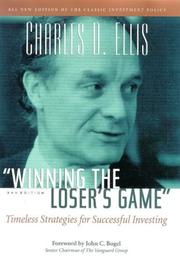
Charles D. Ellis · 1998

Why active investing became a loser's game, decided by errors, not by skill.

“In his marvelous book, Winning the Loser's Game, Charlie Ellis says” — Bill Miller

Source: Bill Miller 2Q 2020 Market Letter

Recommended by: Bill Miller, Mohnish Pabrai, Howard Marks

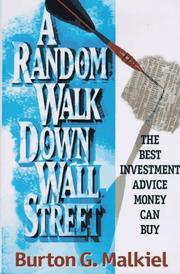
Burton G. Malkiel · 1973

Stock prices follow a random walk, so a low-cost index fund beats stock picking.

Recommended by: Nat Eliason, Mohnish Pabrai
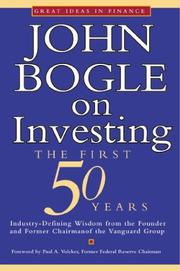
John C. Bogle · 2000

Fifty years of speeches and essays arguing for low-cost index funds.

Where it sits in the reference 2

Investment styles
Business models

Topics

InvestingFinance and MarketsReference WorksFinance, accounting and economics references