Updates

  1. Person pages list letters, writing, profiles and links as sortable tables with filters, and show each person's companies as links; Fund letters show each letter's description in its own column.
  2. Experts show a checked job title and a short description of each person; 30 more people have photographs.
  3. Every company, fund, university and publication the experts work for has a page listing the people there.
  4. Fund letters show each letter's thesis and filter by it; 225 person pages list the essays, columns and newsletter issues the person wrote.
  5. Person pages list every essay and newsletter issue a person wrote, and their own books as a table in List view.
  6. Recommends shows the five largest kinds of book and the rest under More; browse pictures load sooner.
  7. Podcasts and talks link the original episode, filter by Audio and video or Press, and list each publisher once.
  8. Pages are wider, Recommends has List and Grid, and a filter clicked again turns off.
  9. Book cards sit in a ruled grid with Open Library and Goodreads links and each book's one-line note.
  10. Funds is now Investors; each investor's styles are buttons that filter the table.
  11. Podcasts and talks on a person's page filter by year and publisher and show as a list or a grid of pictures.
  12. Quotes show only people's own words: 472 summaries written by list sites are gone.
  13. Country pages open from Browse again, and every link on the shelf lands on a page.
  14. Subject and person pages show their sections as tabs, and each book appears once on a person's page.
  15. Book cards show the quote, who said it and the source; grids show five cards to a row.
  16. On a phone, a menu holds the sections, search, Updates, Feedback and dark mode.
  17. Feedback takes a screenshot of the page with no browser prompt, opens a screenshot full size when you click it, and clears itself once sent.
  18. Book cards are centred, search names the topic each book sits in, and any text cut short shows whole on hover.
  19. Search groups its results by kind: people, companies, geographies, subjects, topics, books, funds, fund letters and papers.
  20. The Books table lists who recommended each book by name, and the browser tab names the section you are in.
  21. Feedback can take a screenshot of the page, or one you paste or choose, and opens in the corner beside Updates.
  22. Each rail button reopens its section where you left it, and Browse, Table and People show on every book and subject page.
  23. Filters grey out choices that hold nothing instead of hiding them, and Books › People filters by authors or recommenders.
  24. Feedback takes a subject line and up to three screenshots.
  25. Biographies are grouped by the person they are about: 41 new pages, from Abraham Lincoln to Lee Kuan Yew.
  26. Sport splits into 23 sports, and Religion into one topic per faith.
  27. Book lists show as cards: the cover, one recommendation quote and every recommender by name.
  28. Seventeen subjects that had two or three pages under different names now have one page each.
  29. Every page lists its Experts as authors and recommenders, with a link to them on the Experts tab.
  30. Economics, Financial history, Financial panics and Accounting are subjects of their own, with one page per financial crisis.
  31. Book, person and subject pages open inside the app, so the tabs stay in view.
  32. 996 more book covers, and photographs or logos for 227 more people and companies.
  33. Books › Browse shows every subject as cards, and the rail holds Fund letters, Papers, Experts, Books and Funds.
  34. Every topic over 150 books splits into narrower topics, each with a page of its own.

Send feedback

What is it?
Screenshots, up to 3 (optional)
or paste one with Ctrl+V

We use your email only to reply to you.

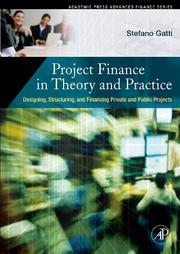
Project Finance in Theory and Practice

Project Finance in Theory and Practice

Stefano Gatti
2007
T3 634 pages · about 10h 34m to read Open Librarygoodreads

Academic-practitioner treatment with worked deal structures.

Summary

Stefano Gatti teaches finance at Bocconi and wrote this as a treatment of project finance that combines the academic literature with practitioner mechanics. It covers similar ground to Yescombe with more attention to the theoretical justification for the structure and to quantitative modelling.

The theoretical chapters address why project finance exists at all, drawing on the corporate finance literature on agency costs, asymmetric information and debt overhang. The argument is that separating a project into its own vehicle with dedicated cash flows resolves conflicts that would arise if it were financed on a sponsor's balance sheet: it prevents cash flow from being diverted to other uses, it allows a leverage level appropriate to the project rather than the firm, and it makes the project's risks assessable independently of the sponsor's other activities.

The practical chapters cover risk identification and allocation, the contract structure, the due diligence process, financial modelling including the construction of the base case and sensitivity analysis, debt sizing through cover ratios, the valuation of the sponsor's equity position, and the roles of advisers and lenders. Later editions add public-private partnerships, project bonds and the effect of Basel capital rules on bank participation. It is a textbook with worked cases and is used in specialist master's programmes as well as by practitioners.

Key takeaways 7

  1. Project finance exists because separating a project into its own vehicle resolves agency conflicts that on-balance-sheet financing would create.
  2. Dedicating cash flows to a single project prevents their diversion to other corporate uses, which is what allows higher leverage.
  3. Risk allocation through contracts, not the quality of the asset, determines whether a project can be financed.
  4. Cover ratios rather than leverage multiples determine debt capacity, because the analysis is of cash flow rather than of asset value.
  5. Sensitivity and scenario analysis on the financial model is the negotiation, since every party argues through the assumptions.
  6. Basel capital rules changed which lenders can hold long-dated project debt, which shifted the market toward institutional and bond funding.
  7. Gatti argues that the sponsor's equity return depends primarily on leverage and on construction outcome rather than on operating performance.

Who should read it

Practitioners and students who want project finance treated with both its corporate finance justification and its contractual and modelling mechanics.

Similar books 6

Chosen by shared topics, the entries that hold them, and the people who recommended both.

E. R. Yescombe · 2002

The standard text on non-recourse financing of infrastructure projects.
Barbara Weber, Mirjam Staub-Bisang, Hans Wilhelm Alfen · 2010

Infrastructure's risk, return and role in a portfolio, from an allocator's view.
Rajeev J. Sawant · 2010

Treats infrastructure as an asset class rather than a project-finance problem.
E. R. Yescombe · 2010

How PPP concessions are structured, priced and argued over.
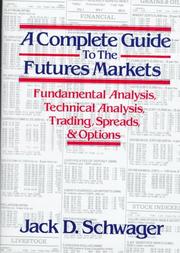
Jack D. Schwager · 1984

Second edition 2017 with Mark Etzkorn, titled A Complete Guide to the Futures Market.

Vitaly S. Guzhva, Sunder Raghavan, Damon J. D'Agostino · 2018

The only book-length treatment of aircraft leasing; a textbook.

Where it sits in the reference 1

Assets

Topics

Finance and MarketsReference WorksFinance, accounting and economics references