Updates

  1. Person pages list letters, writing, profiles and links as sortable tables with filters, and show each person's companies as links; Fund letters show each letter's description in its own column.
  2. Experts show a checked job title and a short description of each person; 30 more people have photographs.
  3. Every company, fund, university and publication the experts work for has a page listing the people there.
  4. Fund letters show each letter's thesis and filter by it; 225 person pages list the essays, columns and newsletter issues the person wrote.
  5. Person pages list every essay and newsletter issue a person wrote, and their own books as a table in List view.
  6. Recommends shows the five largest kinds of book and the rest under More; browse pictures load sooner.
  7. Podcasts and talks link the original episode, filter by Audio and video or Press, and list each publisher once.
  8. Pages are wider, Recommends has List and Grid, and a filter clicked again turns off.
  9. Book cards sit in a ruled grid with Open Library and Goodreads links and each book's one-line note.
  10. Funds is now Investors; each investor's styles are buttons that filter the table.
  11. Podcasts and talks on a person's page filter by year and publisher and show as a list or a grid of pictures.
  12. Quotes show only people's own words: 472 summaries written by list sites are gone.
  13. Country pages open from Browse again, and every link on the shelf lands on a page.
  14. Subject and person pages show their sections as tabs, and each book appears once on a person's page.
  15. Book cards show the quote, who said it and the source; grids show five cards to a row.
  16. On a phone, a menu holds the sections, search, Updates, Feedback and dark mode.
  17. Feedback takes a screenshot of the page with no browser prompt, opens a screenshot full size when you click it, and clears itself once sent.
  18. Book cards are centred, search names the topic each book sits in, and any text cut short shows whole on hover.
  19. Search groups its results by kind: people, companies, geographies, subjects, topics, books, funds, fund letters and papers.
  20. The Books table lists who recommended each book by name, and the browser tab names the section you are in.
  21. Feedback can take a screenshot of the page, or one you paste or choose, and opens in the corner beside Updates.
  22. Each rail button reopens its section where you left it, and Browse, Table and People show on every book and subject page.
  23. Filters grey out choices that hold nothing instead of hiding them, and Books › People filters by authors or recommenders.
  24. Feedback takes a subject line and up to three screenshots.
  25. Biographies are grouped by the person they are about: 41 new pages, from Abraham Lincoln to Lee Kuan Yew.
  26. Sport splits into 23 sports, and Religion into one topic per faith.
  27. Book lists show as cards: the cover, one recommendation quote and every recommender by name.
  28. Seventeen subjects that had two or three pages under different names now have one page each.
  29. Every page lists its Experts as authors and recommenders, with a link to them on the Experts tab.
  30. Economics, Financial history, Financial panics and Accounting are subjects of their own, with one page per financial crisis.
  31. Book, person and subject pages open inside the app, so the tabs stay in view.
  32. 996 more book covers, and photographs or logos for 227 more people and companies.
  33. Books › Browse shows every subject as cards, and the rail holds Fund letters, Papers, Experts, Books and Funds.
  34. Every topic over 150 books splits into narrower topics, each with a page of its own.

Send feedback

What is it?
Screenshots, up to 3 (optional)
or paste one with Ctrl+V

We use your email only to reply to you.

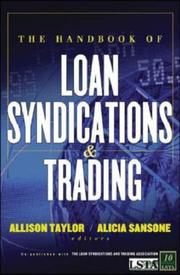
The Handbook of Loan Syndications and Tradin

The Handbook of Loan Syndications and Trading

LSTA
2006
T4 1000 pages · about 16h 40m to read Open Librarygoodreads

LSTA reference on how leveraged loans are originated, syndicated and traded.

Summary

The Loan Syndications and Trading Association produced this as the reference work on the American syndicated corporate loan market, with chapters contributed by practitioners across the industry.

The content covers the market's full mechanics. Origination and syndication, including the roles of arranger, agent and participants, the underwritten versus best-efforts commitment, and the flex provisions that let arrangers adjust terms when syndication is difficult. Credit agreement documentation, including the covenant structure, the events of default, the amendment and waiver provisions and the voting thresholds that determine who can consent to what. The secondary market, including the settlement mechanics that make loan trading operationally difficult, the distinction between assignment and participation, and the treatment of confidential information given that lenders receive material non-public information routinely.

Further chapters cover collateralised loan obligations and their role as the market's dominant buyer, distressed loan trading and the specific documentation risks in it, accounting and regulatory treatment, and legal questions including whether loans are securities. The book is a reference for practitioners rather than a book to read through. It dates from 2006, so it precedes the covenant-lite era, the growth of private credit, the LIBOR transition and the post-crisis regulatory changes to bank lending, all of which change the market description while leaving the mechanics intact.

Key takeaways 7

  1. Syndicated loans are originated by an arranger who commits and then sells participations, which places syndication risk on the arranger.
  2. Flex provisions allow arrangers to change pricing and terms when syndication proves difficult, which transfers that risk to the borrower.
  3. Loan settlement is operationally slow and manual compared with bond settlement, which creates real cost and risk in secondary trading.
  4. Assignment transfers the lender's position while participation creates a derivative exposure to it, and the legal difference matters in a default.
  5. Lenders receive material non-public information routinely, which constrains their ability to trade other securities of the same issuer.
  6. Amendment and waiver voting thresholds determine which creditors can be bound by a majority, and these provisions decide restructuring outcomes.
  7. Collateralised loan obligations became the dominant buyer, which tied loan market demand to structured finance economics rather than to credit views.

Who should read it

Practitioners in leveraged lending, loan trading or restructuring who need the market's documentation and settlement mechanics in one reference.

Similar books 6

Chosen by shared topics, the entries that hold them, and the people who recommended both.

Robert Kricheff · 2012

How a credit analyst measures leverage and coverage in high-yield bonds and loans.
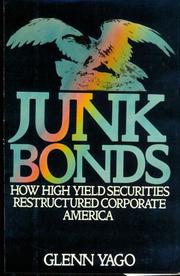
Glenn Yago · 1990

The revisionist defence of high yield as a financing innovation.

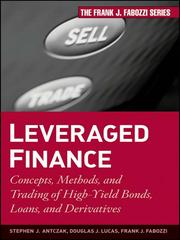
Stephen J. Antczak, Douglas J. Lucas, Frank J. Fabozzi · 2009

High-yield bonds, leveraged loans and the credit derivatives written on them.
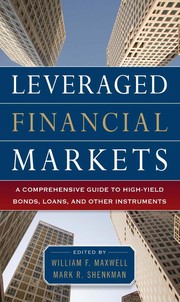
William F. Maxwell, Mark Shenkman · 2010

A guide to leveraged loans and high-yield bonds, public cousins of private credit.
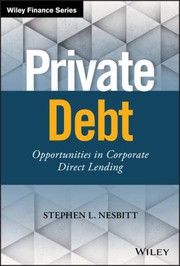
Stephen L. Nesbitt · 2018

The case for direct lending to middle-market companies as an asset class.
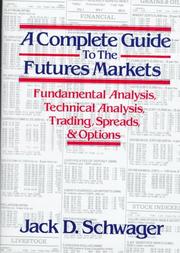
Jack D. Schwager · 1984

Second edition 2017 with Mark Etzkorn, titled A Complete Guide to the Futures Market.

Where it sits in the reference 1

Assets

Topics

Finance and MarketsReference WorksFinance, accounting and economics references