
Updates

  1. Person pages list letters, writing, profiles and links as sortable tables with filters, and show each person's companies as links; Fund letters show each letter's description in its own column.
  2. Experts show a checked job title and a short description of each person; 30 more people have photographs.
  3. Every company, fund, university and publication the experts work for has a page listing the people there.
  4. Fund letters show each letter's thesis and filter by it; 225 person pages list the essays, columns and newsletter issues the person wrote.
  5. Person pages list every essay and newsletter issue a person wrote, and their own books as a table in List view.
  6. Recommends shows the five largest kinds of book and the rest under More; browse pictures load sooner.
  7. Podcasts and talks link the original episode, filter by Audio and video or Press, and list each publisher once.
  8. Pages are wider, Recommends has List and Grid, and a filter clicked again turns off.
  9. Book cards sit in a ruled grid with Open Library and Goodreads links and each book's one-line note.
  10. Funds is now Investors; each investor's styles are buttons that filter the table.
  11. Podcasts and talks on a person's page filter by year and publisher and show as a list or a grid of pictures.
  12. Quotes show only people's own words: 472 summaries written by list sites are gone.
  13. Country pages open from Browse again, and every link on the shelf lands on a page.
  14. Subject and person pages show their sections as tabs, and each book appears once on a person's page.
  15. Book cards show the quote, who said it and the source; grids show five cards to a row.
  16. On a phone, a menu holds the sections, search, Updates, Feedback and dark mode.
  17. Feedback takes a screenshot of the page with no browser prompt, opens a screenshot full size when you click it, and clears itself once sent.
  18. Book cards are centred, search names the topic each book sits in, and any text cut short shows whole on hover.
  19. Search groups its results by kind: people, companies, geographies, subjects, topics, books, funds, fund letters and papers.
  20. The Books table lists who recommended each book by name, and the browser tab names the section you are in.
  21. Feedback can take a screenshot of the page, or one you paste or choose, and opens in the corner beside Updates.
  22. Each rail button reopens its section where you left it, and Browse, Table and People show on every book and subject page.
  23. Filters grey out choices that hold nothing instead of hiding them, and Books › People filters by authors or recommenders.
  24. Feedback takes a subject line and up to three screenshots.
  25. Biographies are grouped by the person they are about: 41 new pages, from Abraham Lincoln to Lee Kuan Yew.
  26. Sport splits into 23 sports, and Religion into one topic per faith.
  27. Book lists show as cards: the cover, one recommendation quote and every recommender by name.
  28. Seventeen subjects that had two or three pages under different names now have one page each.
  29. Every page lists its Experts as authors and recommenders, with a link to them on the Experts tab.
  30. Economics, Financial history, Financial panics and Accounting are subjects of their own, with one page per financial crisis.
  31. Book, person and subject pages open inside the app, so the tabs stay in view.
  32. 996 more book covers, and photographs or logos for 227 more people and companies.
  33. Books › Browse shows every subject as cards, and the rail holds Fund letters, Papers, Experts, Books and Funds.
  34. Every topic over 150 books splits into narrower topics, each with a page of its own.

Send feedback

What is it?
Screenshots, up to 3 (optional)
or paste one with Ctrl+V

We use your email only to reply to you.

The Handbook of Municipal Bonds

The Handbook of Municipal Bonds

Sylvan G. Feldstein, Frank J. Fabozzi
2008
T2 1376 pages · about 22h 56m to read Open Librarygoodreads

Fabozzi-style reference covering credit, structure and analytics.

Summary

The reference has not verified this book in detail; the summary states only what the title, author and subject establish.

Feldstein and Fabozzi edited a comprehensive reference on the American municipal bond market, with chapters contributed by practitioners covering the instruments, the credit analysis, the market structure and the legal framework. The reference has not verified the individual chapters.

The subject divides into distinct areas. The instruments include general obligation bonds backed by the issuer's taxing power, revenue bonds backed by a specific project's receipts, and the many specialised structures covering water and sewer, transportation, higher education, healthcare, housing and industrial development. Credit analysis differs by type: a general obligation credit turns on the tax base, the local economy, the debt burden per capita and the pension obligations, while a revenue credit turns on the project's economics, the rate covenant and the debt service coverage.

The tax treatment is the market's organising feature. Interest on most municipal bonds is exempt from federal income tax and often from state tax for in-state holders, which means the buyer base is dominated by individuals and by tax-sensitive institutions, and yields trade at a ratio to Treasury yields determined by the marginal tax rate of the buyer at the margin.

Other material covers bond insurance and its role before the crisis, the disclosure regime which differs substantially from corporate securities, the primary market and competitive versus negotiated sales, secondary market liquidity, derivatives and refunding structures.

The 2008 edition predates the collapse of the monoline insurers, the auction rate securities market failure, the Detroit and Puerto Rico defaults, and the tax changes affecting advance refunding. Readers should verify against current market structure.

Key takeaways 7

  1. Federal tax exemption determines who buys municipal bonds, which is why yields trade at a ratio to taxable yields set by marginal tax rates.
  2. General obligation credits depend on the tax base and the economy while revenue credits depend on a specific project's economics.
  3. Rate covenants and debt service coverage requirements are the primary protections in revenue bond structures.
  4. Pension and other post-employment benefit obligations are a larger determinant of municipal credit than reported debt in many cases.
  5. Bond insurance substituted the insurer's rating for the issuer's, and its collapse removed a credit assessment that investors had relied on instead of their own.
  6. Municipal disclosure requirements are substantially weaker than those for corporate securities, so analysis depends on documents that arrive late.
  7. Secondary market liquidity is poor because the market has many small issues and a buyer base that holds to maturity.

Who should read it

Practitioners in municipal finance who need a comprehensive reference on instruments and credit analysis, verified against post-crisis market changes.

About Frank J. Fabozzi

Finance professor and longtime editor of the Journal of Portfolio Management, who writes and edits the standard fixed-income handbooks.

The handbooks define how bond, mortgage and preferred-stock markets are measured: cash-flow mechanics, duration and convexity, credit structures, and the pricing conventions desks actually use. Practitioners and CFA candidates work through these volumes to value and hedge the instruments the equity literature skips.

Similar books 6

Chosen by shared topics, the entries that hold them, and the people who recommended both.
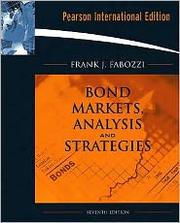
Frank J. Fabozzi · 1989

The standard text on bonds: instruments, valuation, risk and portfolio strategy.
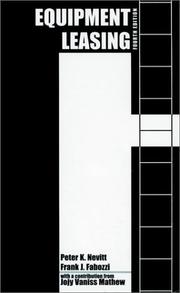
Frank J. Fabozzi, Peter K. Nevitt · 2000

Lease structures, residual values and tax treatment of equipment leasing.
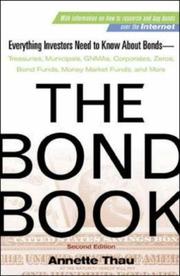
Annette Thau · 1991

Retail-investor guide with the clearest chapters on buying munis.
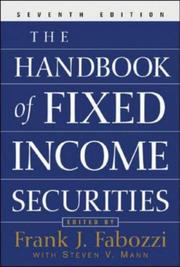
Frank J. Fabozzi · 1983

The standard reference on every kind of bond, its analysis and its management.
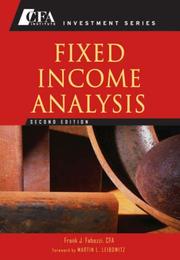
Frank J. Fabozzi, Barbara S. Petitt, Jerald E. Pinto, Wendy L. Pirie · 2007

The CFA Institute's fixed-income text: bond valuation, risk and analysis.

John Brynjolfsson, Frank J. Fabozzi · 1999

Essays on inflation-indexed bonds, written as the US TIPS market opened.

Where it sits in the reference 2

Academics
Assets

Topics

Finance and MarketsReference WorksFinance, accounting and economics references