Updates

  1. Person pages list letters, writing, profiles and links as sortable tables with filters, and show each person's companies as links; Fund letters show each letter's description in its own column.
  2. Experts show a checked job title and a short description of each person; 30 more people have photographs.
  3. Every company, fund, university and publication the experts work for has a page listing the people there.
  4. Fund letters show each letter's thesis and filter by it; 225 person pages list the essays, columns and newsletter issues the person wrote.
  5. Person pages list every essay and newsletter issue a person wrote, and their own books as a table in List view.
  6. Recommends shows the five largest kinds of book and the rest under More; browse pictures load sooner.
  7. Podcasts and talks link the original episode, filter by Audio and video or Press, and list each publisher once.
  8. Pages are wider, Recommends has List and Grid, and a filter clicked again turns off.
  9. Book cards sit in a ruled grid with Open Library and Goodreads links and each book's one-line note.
  10. Funds is now Investors; each investor's styles are buttons that filter the table.
  11. Podcasts and talks on a person's page filter by year and publisher and show as a list or a grid of pictures.
  12. Quotes show only people's own words: 472 summaries written by list sites are gone.
  13. Country pages open from Browse again, and every link on the shelf lands on a page.
  14. Subject and person pages show their sections as tabs, and each book appears once on a person's page.
  15. Book cards show the quote, who said it and the source; grids show five cards to a row.
  16. On a phone, a menu holds the sections, search, Updates, Feedback and dark mode.
  17. Feedback takes a screenshot of the page with no browser prompt, opens a screenshot full size when you click it, and clears itself once sent.
  18. Book cards are centred, search names the topic each book sits in, and any text cut short shows whole on hover.
  19. Search groups its results by kind: people, companies, geographies, subjects, topics, books, funds, fund letters and papers.
  20. The Books table lists who recommended each book by name, and the browser tab names the section you are in.
  21. Feedback can take a screenshot of the page, or one you paste or choose, and opens in the corner beside Updates.
  22. Each rail button reopens its section where you left it, and Browse, Table and People show on every book and subject page.
  23. Filters grey out choices that hold nothing instead of hiding them, and Books › People filters by authors or recommenders.
  24. Feedback takes a subject line and up to three screenshots.
  25. Biographies are grouped by the person they are about: 41 new pages, from Abraham Lincoln to Lee Kuan Yew.
  26. Sport splits into 23 sports, and Religion into one topic per faith.
  27. Book lists show as cards: the cover, one recommendation quote and every recommender by name.
  28. Seventeen subjects that had two or three pages under different names now have one page each.
  29. Every page lists its Experts as authors and recommenders, with a link to them on the Experts tab.
  30. Economics, Financial history, Financial panics and Accounting are subjects of their own, with one page per financial crisis.
  31. Book, person and subject pages open inside the app, so the tabs stay in view.
  32. 996 more book covers, and photographs or logos for 227 more people and companies.
  33. Books › Browse shows every subject as cards, and the rail holds Fund letters, Papers, Experts, Books and Funds.
  34. Every topic over 150 books splits into narrower topics, each with a page of its own.

Send feedback

What is it?
Screenshots, up to 3 (optional)
or paste one with Ctrl+V

We use your email only to reply to you.

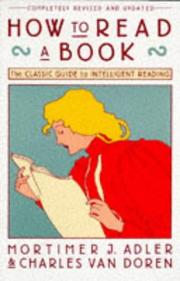
How to Read a Book

How to Read a Book

Mortimer J. Adler, Charles van Doren
1940
398 pages · about 6h 38m to read Open Librarygoodreads

Summary

Adler and Van Doren present a method for reading demanding books, arguing that most educated people can read for information and cannot read for understanding, and that the two are different activities requiring different techniques.

They identify four levels. Elementary reading is the decoding taught in school. Inspectional reading is systematic skimming, in which a reader examines the title page, preface, table of contents, index and key passages within a fixed time to determine what the book is, what it argues and whether it is worth full attention. Analytical reading is the thorough reading of a single book, which they break into fifteen rules covering classifying the book, stating its unity in a sentence, outlining its parts, identifying the author's problems, coming to terms with the author's key words, grasping the propositions and arguments, determining what the author solved and failed to solve, and only then criticising. Syntopical reading is reading many books on a subject to construct an understanding that no single book provides, which requires establishing a neutral terminology since different authors use different words for the same concepts.

Their most useful discipline is the rule that a reader must be able to state the author's argument in their own words before agreeing or disagreeing, and that saying you do not understand is a legitimate response distinct from disagreement.

The book is from 1940, revised in 1972, and the tone is prescriptive. The reading list appended is dated and heavily Western. It is longer than its method requires. The inspectional reading technique and the requirement to state an argument before criticising it are the two elements that transfer immediately.

Key takeaways 8

  1. Reading for information and reading for understanding are different activities, and most educated people can do only the first.
  2. Systematic skimming, conducted within a fixed time and following a defined sequence, establishes what a book is and whether it deserves full attention.
  3. A reader should be able to state a book's argument in their own words before agreeing or disagreeing with it.
  4. Saying you do not understand is a legitimate response and is distinct from disagreement, which most readers conflate.
  5. A reader must come to terms with an author's key words, since disagreements frequently turn out to be different uses of the same term.
  6. Criticism should identify whether the author is uninformed, misinformed, illogical or incomplete, which are different faults requiring different responses.
  7. Reading many books on a subject requires constructing a neutral terminology, since authors use different words for the same concepts.
  8. A book worth reading analytically should be read three times, once for structure, once for content and once for criticism.

Who should read it

Anyone who reads demanding material regularly and wants a method for triage and for genuine comprehension rather than accumulation.

Who recommended it 5 · 1 direct

Similar books 6

Chosen by shared topics, the entries that hold them, and the people who recommended both.

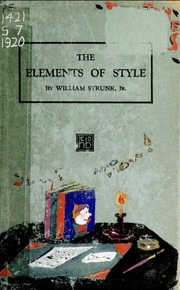
William Strunk, E.B. White · 1920

Numbered rules of English usage and composition, with examples, under 100 pages.

Where it sits in the reference 0

No entry holds this book yet. It reached the reference because someone recommended it.

Topics

Education and LearningReference WorksWriting and CommunicationGeneral knowledge and practical guides