Updates

  1. Person pages list letters, writing, profiles and links as sortable tables with filters, and show each person's companies as links; Fund letters show each letter's description in its own column.
  2. Experts show a checked job title and a short description of each person; 30 more people have photographs.
  3. Every company, fund, university and publication the experts work for has a page listing the people there.
  4. Fund letters show each letter's thesis and filter by it; 225 person pages list the essays, columns and newsletter issues the person wrote.
  5. Person pages list every essay and newsletter issue a person wrote, and their own books as a table in List view.
  6. Recommends shows the five largest kinds of book and the rest under More; browse pictures load sooner.
  7. Podcasts and talks link the original episode, filter by Audio and video or Press, and list each publisher once.
  8. Pages are wider, Recommends has List and Grid, and a filter clicked again turns off.
  9. Book cards sit in a ruled grid with Open Library and Goodreads links and each book's one-line note.
  10. Funds is now Investors; each investor's styles are buttons that filter the table.
  11. Podcasts and talks on a person's page filter by year and publisher and show as a list or a grid of pictures.
  12. Quotes show only people's own words: 472 summaries written by list sites are gone.
  13. Country pages open from Browse again, and every link on the shelf lands on a page.
  14. Subject and person pages show their sections as tabs, and each book appears once on a person's page.
  15. Book cards show the quote, who said it and the source; grids show five cards to a row.
  16. On a phone, a menu holds the sections, search, Updates, Feedback and dark mode.
  17. Feedback takes a screenshot of the page with no browser prompt, opens a screenshot full size when you click it, and clears itself once sent.
  18. Book cards are centred, search names the topic each book sits in, and any text cut short shows whole on hover.
  19. Search groups its results by kind: people, companies, geographies, subjects, topics, books, funds, fund letters and papers.
  20. The Books table lists who recommended each book by name, and the browser tab names the section you are in.
  21. Feedback can take a screenshot of the page, or one you paste or choose, and opens in the corner beside Updates.
  22. Each rail button reopens its section where you left it, and Browse, Table and People show on every book and subject page.
  23. Filters grey out choices that hold nothing instead of hiding them, and Books › People filters by authors or recommenders.
  24. Feedback takes a subject line and up to three screenshots.
  25. Biographies are grouped by the person they are about: 41 new pages, from Abraham Lincoln to Lee Kuan Yew.
  26. Sport splits into 23 sports, and Religion into one topic per faith.
  27. Book lists show as cards: the cover, one recommendation quote and every recommender by name.
  28. Seventeen subjects that had two or three pages under different names now have one page each.
  29. Every page lists its Experts as authors and recommenders, with a link to them on the Experts tab.
  30. Economics, Financial history, Financial panics and Accounting are subjects of their own, with one page per financial crisis.
  31. Book, person and subject pages open inside the app, so the tabs stay in view.
  32. 996 more book covers, and photographs or logos for 227 more people and companies.
  33. Books › Browse shows every subject as cards, and the rail holds Fund letters, Papers, Experts, Books and Funds.
  34. Every topic over 150 books splits into narrower topics, each with a page of its own.

Send feedback

What is it?
Screenshots, up to 3 (optional)
or paste one with Ctrl+V

We use your email only to reply to you.

Third Party Litigation Funding

Third Party Litigation Funding

Nicholas Rowles-Davies, Jeremy Cousins
2014
T4 288 pages · about 4h 48m to read Open Librarygoodreads

English-law practitioner text on funding agreements.

Summary

The reference has not verified this book in detail; the summary states only what the title, author and subject establish.

Nicholas Rowles-Davies and Jeremy Cousins wrote this practitioner text on third-party litigation funding under English law, covering the commercial and legal framework for funding claims in exchange for a share of recovery.

The subject matter includes the historical doctrines of maintenance and champerty and their modern narrowing; the regulatory position including the voluntary code administered by the Association of Litigation Funders; the structure and terms of funding agreements; the interaction with conditional fee agreements, damages-based agreements and after-the-event insurance; the disclosure and privilege questions that arise when a funder is involved; security for costs applications against funded claimants; and the application of funding to insolvency claims, arbitration and group litigation.

The reference has not verified this book's contents in detail. It is jurisdiction-specific and predates significant later developments including the Supreme Court's PACCAR decision in 2023, which held that certain litigation funding agreements were damages-based agreements and therefore unenforceable unless compliant with the relevant regulations, a ruling that disrupted the English funding market substantially.

Key takeaways 6

  1. Third-party funding converts a legal claim into a financeable asset separate from the claimant's other resources.
  2. Maintenance and champerty doctrines that once prohibited funding have been narrowed but not abolished in English law.
  3. Funding agreements must address control of settlement decisions explicitly, since the funder's and claimant's interests diverge there.
  4. Security for costs applications against funded claimants are the principal defensive response available to respondents.
  5. The English market operated under a voluntary code rather than statutory regulation.
  6. The book predates the PACCAR decision, which disrupted the enforceability of English funding agreements substantially.

Who should read it

English litigation practitioners and funders wanting a jurisdiction-specific text, with the caveat that this entry is not verified and the law has changed.

Similar books 6

Chosen by shared topics, the entries that hold them, and the people who recommended both.

Steven Friel · 2020

How litigation funders raise money, pick cases, structure deals and earn returns.

Rocco Pirozzolo · 2014

Short procedural handbook for funded claims in England.

Lisa Bench Nieuwveld, Victoria Shannon Sahani · 2017

How funders back claims in international arbitration, and how it is regulated.

Steven Garber · 2010

RAND occasional paper; the early survey of the US market.

Anthony J. Sebok · 2024

The law and ethics of investing in other people's legal claims.
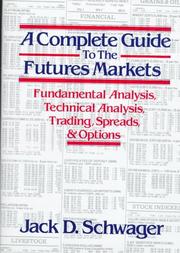
Jack D. Schwager · 1984

Second edition 2017 with Mark Etzkorn, titled A Complete Guide to the Futures Market.

Where it sits in the reference 1

Assets

Topics

Finance and MarketsReference WorksFinance, accounting and economics references