
Updates

  1. Person pages list letters, writing, profiles and links as sortable tables with filters, and show each person's companies as links; Fund letters show each letter's description in its own column.
  2. Experts show a checked job title and a short description of each person; 30 more people have photographs.
  3. Every company, fund, university and publication the experts work for has a page listing the people there.
  4. Fund letters show each letter's thesis and filter by it; 225 person pages list the essays, columns and newsletter issues the person wrote.
  5. Person pages list every essay and newsletter issue a person wrote, and their own books as a table in List view.
  6. Recommends shows the five largest kinds of book and the rest under More; browse pictures load sooner.
  7. Podcasts and talks link the original episode, filter by Audio and video or Press, and list each publisher once.
  8. Pages are wider, Recommends has List and Grid, and a filter clicked again turns off.
  9. Book cards sit in a ruled grid with Open Library and Goodreads links and each book's one-line note.
  10. Funds is now Investors; each investor's styles are buttons that filter the table.
  11. Podcasts and talks on a person's page filter by year and publisher and show as a list or a grid of pictures.
  12. Quotes show only people's own words: 472 summaries written by list sites are gone.
  13. Country pages open from Browse again, and every link on the shelf lands on a page.
  14. Subject and person pages show their sections as tabs, and each book appears once on a person's page.
  15. Book cards show the quote, who said it and the source; grids show five cards to a row.
  16. On a phone, a menu holds the sections, search, Updates, Feedback and dark mode.
  17. Feedback takes a screenshot of the page with no browser prompt, opens a screenshot full size when you click it, and clears itself once sent.
  18. Book cards are centred, search names the topic each book sits in, and any text cut short shows whole on hover.
  19. Search groups its results by kind: people, companies, geographies, subjects, topics, books, funds, fund letters and papers.
  20. The Books table lists who recommended each book by name, and the browser tab names the section you are in.
  21. Feedback can take a screenshot of the page, or one you paste or choose, and opens in the corner beside Updates.
  22. Each rail button reopens its section where you left it, and Browse, Table and People show on every book and subject page.
  23. Filters grey out choices that hold nothing instead of hiding them, and Books › People filters by authors or recommenders.
  24. Feedback takes a subject line and up to three screenshots.
  25. Biographies are grouped by the person they are about: 41 new pages, from Abraham Lincoln to Lee Kuan Yew.
  26. Sport splits into 23 sports, and Religion into one topic per faith.
  27. Book lists show as cards: the cover, one recommendation quote and every recommender by name.
  28. Seventeen subjects that had two or three pages under different names now have one page each.
  29. Every page lists its Experts as authors and recommenders, with a link to them on the Experts tab.
  30. Economics, Financial history, Financial panics and Accounting are subjects of their own, with one page per financial crisis.
  31. Book, person and subject pages open inside the app, so the tabs stay in view.
  32. 996 more book covers, and photographs or logos for 227 more people and companies.
  33. Books › Browse shows every subject as cards, and the rail holds Fund letters, Papers, Experts, Books and Funds.
  34. Every topic over 150 books splits into narrower topics, each with a page of its own.

Send feedback

What is it?
Screenshots, up to 3 (optional)
or paste one with Ctrl+V

We use your email only to reply to you.

The Handbook of Insurance-Linked Securities

The Handbook of Insurance-Linked Securities

Pauline Barrieu, Luca Albertini
2009
T3 385 pages · about 6h 25m to read Open Librarygoodreads

The closest thing to a cat bond reference; several chapters on structure and triggers.

Summary

The reference has not verified this book in detail; the summary states only what the title, author and subject establish.

Barrieu and Albertini edited a collection of contributions on insurance-linked securities, covering the instruments, the modelling and the market as it stood around 2009. The reference has not verified the individual chapters.

The subject covers the transfer of insurance risk to capital markets. Catastrophe bonds are the principal instrument: an issuer, typically a special purpose vehicle, sells notes whose principal is at risk if a defined event occurs, and the proceeds are held in collateral to pay either the sponsor's claim or the investors' return. Trigger structures determine what counts as the event, and each involves a trade-off between basis risk for the sponsor and transparency for the investor: indemnity triggers pay on the sponsor's actual losses, industry index triggers on aggregate market losses, parametric triggers on measured physical characteristics such as wind speed or ground acceleration, and modelled loss triggers on the output of an agreed model run on the event's parameters.

The modelling material covers catastrophe models supplied by a small number of vendors, the estimation of exceedance probability curves, and the difficulty of validating models for events with thin historical records.

Other instruments covered include sidecars, industry loss warranties, mortality and longevity bonds, and life insurance embedded value securitisations.

The market has developed substantially since 2009, including sustained growth in issuance, the entry of pension funds as investors, losses from the 2017 hurricane season and from wildfire events, and repricing after those losses. Readers should verify market structure and pricing conventions against current sources.

Key takeaways 7

  1. Catastrophe bonds place principal at risk against a defined event, with proceeds held in collateral rather than depending on a counterparty's credit.
  2. Trigger design trades basis risk for the sponsor against transparency and speed for the investor.
  3. Parametric triggers pay quickly on measured physical characteristics but may not match the sponsor's actual loss.
  4. Catastrophe models from a small number of vendors determine pricing across the market, which concentrates model risk.
  5. Historical data on rare catastrophic events is thin by definition, so pricing rests on models rather than on experience.
  6. Insurance risk is largely uncorrelated with financial markets, which is the basis of investor demand for the asset class.
  7. Capital markets can absorb catastrophe exposure in amounts that the reinsurance industry's own capital cannot support.

Who should read it

Practitioners and allocators in insurance-linked securities who need the technical reference, verified against current market conditions.

Similar books 6

Chosen by shared topics, the entries that hold them, and the people who recommended both.

Alex Krutov · 2010

Covers cat bond pricing and the investor case for the asset.

J. David Cummins, Olivier Mahul · 2008

World Bank study of sovereign catastrophe risk transfer.

Christoph Weber · 2011

Academic treatment of the securitisation of non-life risk.
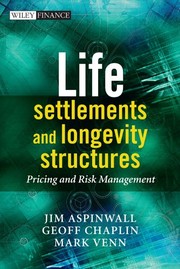
Geoff Chaplin, Jim Aspinwall, Mark Venn · 2009

The one book specifically on buying life policies as an investment.

Thomas Nowak, Andreas Richter, Thomas Hartung · 2014

Risk and pricing analysis of property-catastrophe insurance-linked securities.
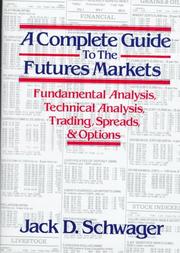
Jack D. Schwager · 1984

Second edition 2017 with Mark Etzkorn, titled A Complete Guide to the Futures Market.

Where it sits in the reference 2

Assets
Assets

Topics

Finance and MarketsReference WorksFinance, accounting and economics references