Updates

  1. Person pages list letters, writing, profiles and links as sortable tables with filters, and show each person's companies as links; Fund letters show each letter's description in its own column.
  2. Experts show a checked job title and a short description of each person; 30 more people have photographs.
  3. Every company, fund, university and publication the experts work for has a page listing the people there.
  4. Fund letters show each letter's thesis and filter by it; 225 person pages list the essays, columns and newsletter issues the person wrote.
  5. Person pages list every essay and newsletter issue a person wrote, and their own books as a table in List view.
  6. Recommends shows the five largest kinds of book and the rest under More; browse pictures load sooner.
  7. Podcasts and talks link the original episode, filter by Audio and video or Press, and list each publisher once.
  8. Pages are wider, Recommends has List and Grid, and a filter clicked again turns off.
  9. Book cards sit in a ruled grid with Open Library and Goodreads links and each book's one-line note.
  10. Funds is now Investors; each investor's styles are buttons that filter the table.
  11. Podcasts and talks on a person's page filter by year and publisher and show as a list or a grid of pictures.
  12. Quotes show only people's own words: 472 summaries written by list sites are gone.
  13. Country pages open from Browse again, and every link on the shelf lands on a page.
  14. Subject and person pages show their sections as tabs, and each book appears once on a person's page.
  15. Book cards show the quote, who said it and the source; grids show five cards to a row.
  16. On a phone, a menu holds the sections, search, Updates, Feedback and dark mode.
  17. Feedback takes a screenshot of the page with no browser prompt, opens a screenshot full size when you click it, and clears itself once sent.
  18. Book cards are centred, search names the topic each book sits in, and any text cut short shows whole on hover.
  19. Search groups its results by kind: people, companies, geographies, subjects, topics, books, funds, fund letters and papers.
  20. The Books table lists who recommended each book by name, and the browser tab names the section you are in.
  21. Feedback can take a screenshot of the page, or one you paste or choose, and opens in the corner beside Updates.
  22. Each rail button reopens its section where you left it, and Browse, Table and People show on every book and subject page.
  23. Filters grey out choices that hold nothing instead of hiding them, and Books › People filters by authors or recommenders.
  24. Feedback takes a subject line and up to three screenshots.
  25. Biographies are grouped by the person they are about: 41 new pages, from Abraham Lincoln to Lee Kuan Yew.
  26. Sport splits into 23 sports, and Religion into one topic per faith.
  27. Book lists show as cards: the cover, one recommendation quote and every recommender by name.
  28. Seventeen subjects that had two or three pages under different names now have one page each.
  29. Every page lists its Experts as authors and recommenders, with a link to them on the Experts tab.
  30. Economics, Financial history, Financial panics and Accounting are subjects of their own, with one page per financial crisis.
  31. Book, person and subject pages open inside the app, so the tabs stay in view.
  32. 996 more book covers, and photographs or logos for 227 more people and companies.
  33. Books › Browse shows every subject as cards, and the rail holds Fund letters, Papers, Experts, Books and Funds.
  34. Every topic over 150 books splits into narrower topics, each with a page of its own.

Send feedback

What is it?
Screenshots, up to 3 (optional)
or paste one with Ctrl+V

We use your email only to reply to you.

Real Estate Finance and Investments

Real Estate Finance and Investments

William B. Brueggeman, Jeffrey Fisher
1993
T3 724 pages · about 12h 4m to read Open Librarygoodreads

The standard university text on property underwriting.

Summary

William Brueggeman and Jeffrey Fisher wrote the standard American textbook on real estate finance, used in university courses and by practitioners, and revised across many editions since the 1970s.

The coverage moves from legal foundations through financing instruments to investment analysis. Early chapters cover interests in real property, mortgage instruments and their terms, the mathematics of loan payments and yields, fixed and adjustable rate structures, and residential financing including underwriting and default. The investment chapters cover income property analysis, the construction of pro forma cash flow projections, leverage and its effect on equity returns, tax treatment including depreciation and its recapture, valuation by capitalisation and by discounted cash flow, and the analysis of lease structures.

Later sections cover development and construction financing, joint venture and partnership structures, real estate investment trusts, commercial mortgage-backed securities and the secondary mortgage market, and portfolio considerations for institutional investors. The book's method is worked numerical examples throughout, and its strength is completeness rather than argument. Readers should use a recent edition, since the tax rules, the mortgage market structure and the securitisation material have all changed substantially, particularly after 2008.

Key takeaways 7

  1. Leverage magnifies equity returns in both directions, and the break-even point is where the loan constant equals the property's unlevered return.
  2. Property value under the income approach is determined by the capitalisation rate applied to net operating income, so cap rate movement dominates most valuations.
  3. Depreciation deductions and their recapture on sale determine after-tax returns, which makes tax structure inseparable from investment analysis.
  4. Lease terms including escalation clauses, expense recovery and tenant improvement allowances determine the actual cash flow behind a headline rent.
  5. Construction lending carries completion risk that permanent lending does not, which is why the two are financed separately.
  6. Mortgage default is a decision about the value of the borrower's option to walk away, not merely an inability to pay.
  7. Securitisation transfers mortgage credit risk to investors whose analysis depends on pool statistics rather than on individual underwriting.

Who should read it

Anyone learning commercial or residential real estate finance who needs a complete technical reference with worked examples, using a current edition.

Similar books 6

Chosen by shared topics, the entries that hold them, and the people who recommended both.
Jack D. Schwager · 1984

Second edition 2017 with Mark Etzkorn, titled A Complete Guide to the Futures Market.
Frank J. Fabozzi · 1989

The standard text on bonds: instruments, valuation, risk and portfolio strategy.
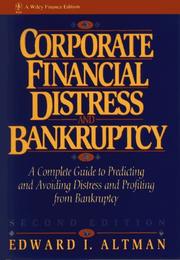
Edward I. Altman, Edith Hotchkiss · 1993

Predicting corporate failure with models like the Z-score, and how bankruptcy works.
Lawrence J. Gitman, Michael D. Joehnk · 1981

Recommended by: Mohnish Pabrai

Where it sits in the reference 1

Assets

Topics

Finance and MarketsInvestingReference WorksFinance, accounting and economics references