Updates

  1. Person pages list letters, writing, profiles and links as sortable tables with filters, and show each person's companies as links; Fund letters show each letter's description in its own column.
  2. Experts show a checked job title and a short description of each person; 30 more people have photographs.
  3. Every company, fund, university and publication the experts work for has a page listing the people there.
  4. Fund letters show each letter's thesis and filter by it; 225 person pages list the essays, columns and newsletter issues the person wrote.
  5. Person pages list every essay and newsletter issue a person wrote, and their own books as a table in List view.
  6. Recommends shows the five largest kinds of book and the rest under More; browse pictures load sooner.
  7. Podcasts and talks link the original episode, filter by Audio and video or Press, and list each publisher once.
  8. Pages are wider, Recommends has List and Grid, and a filter clicked again turns off.
  9. Book cards sit in a ruled grid with Open Library and Goodreads links and each book's one-line note.
  10. Funds is now Investors; each investor's styles are buttons that filter the table.
  11. Podcasts and talks on a person's page filter by year and publisher and show as a list or a grid of pictures.
  12. Quotes show only people's own words: 472 summaries written by list sites are gone.
  13. Country pages open from Browse again, and every link on the shelf lands on a page.
  14. Subject and person pages show their sections as tabs, and each book appears once on a person's page.
  15. Book cards show the quote, who said it and the source; grids show five cards to a row.
  16. On a phone, a menu holds the sections, search, Updates, Feedback and dark mode.
  17. Feedback takes a screenshot of the page with no browser prompt, opens a screenshot full size when you click it, and clears itself once sent.
  18. Book cards are centred, search names the topic each book sits in, and any text cut short shows whole on hover.
  19. Search groups its results by kind: people, companies, geographies, subjects, topics, books, funds, fund letters and papers.
  20. The Books table lists who recommended each book by name, and the browser tab names the section you are in.
  21. Feedback can take a screenshot of the page, or one you paste or choose, and opens in the corner beside Updates.
  22. Each rail button reopens its section where you left it, and Browse, Table and People show on every book and subject page.
  23. Filters grey out choices that hold nothing instead of hiding them, and Books › People filters by authors or recommenders.
  24. Feedback takes a subject line and up to three screenshots.
  25. Biographies are grouped by the person they are about: 41 new pages, from Abraham Lincoln to Lee Kuan Yew.
  26. Sport splits into 23 sports, and Religion into one topic per faith.
  27. Book lists show as cards: the cover, one recommendation quote and every recommender by name.
  28. Seventeen subjects that had two or three pages under different names now have one page each.
  29. Every page lists its Experts as authors and recommenders, with a link to them on the Experts tab.
  30. Economics, Financial history, Financial panics and Accounting are subjects of their own, with one page per financial crisis.
  31. Book, person and subject pages open inside the app, so the tabs stay in view.
  32. 996 more book covers, and photographs or logos for 227 more people and companies.
  33. Books › Browse shows every subject as cards, and the rail holds Fund letters, Papers, Experts, Books and Funds.
  34. Every topic over 150 books splits into narrower topics, each with a page of its own.

Send feedback

What is it?
Screenshots, up to 3 (optional)
or paste one with Ctrl+V

We use your email only to reply to you.

Market Sense and Nonsense

Market Sense and Nonsense

Jack D. Schwager
2012
T4 368 pages · about 6h 8m to read Open Librarygoodreads

Summary

Jack Schwager, best known for the Market Wizards interview books, wrote this as an attack on beliefs he considers widely held and empirically wrong. Each chapter takes a proposition, states the case for it, and then presents the data against it.

The propositions concern both individual investing and institutional practice. On markets, he disputes that prices are efficient in any strong sense while also disputing that inefficiency makes markets easy to beat. On risk, he argues that volatility and risk are different things, that a track record with low volatility can conceal a large tail exposure, and that the standard measures including the Sharpe ratio mislead when returns are not normally distributed. On hedge funds, he argues that the industry's reported returns are distorted by survivorship and backfill bias, that fund of funds fees rarely justify themselves, and that the diversification benefit hedge funds are bought for disappears in the conditions that make it necessary.

He also treats past performance, arguing that it carries information about manager quality only in combination with an understanding of the strategy, and correlation, arguing that investors use a single number to describe relationships that are not linear and not stable. The book is written for institutional allocators and sophisticated individuals. Its main limitation is that Schwager's alternative recommendations are less rigorous than his criticisms, and readers may finish more sceptical without being better equipped.

Key takeaways 7

  1. Volatility and risk are different quantities, and strategies that suppress volatility frequently increase the probability of large loss.
  2. Reported hedge fund index returns overstate the achievable return because of survivorship and backfill bias in the underlying databases.
  3. Past performance is uninformative unless the observer understands what produced it and whether those conditions persist.
  4. Correlation is a single number describing a relationship that is neither linear nor stable, and it rises toward one in exactly the conditions where diversification is needed.
  5. Markets are neither efficient nor easy to beat, and both errors lead to bad allocation decisions.
  6. The Sharpe ratio penalises upside variance and understates risk in strategies with negatively skewed returns, so it favours option-selling profiles.
  7. Schwager argues that evaluating a manager requires understanding the source of returns, because performance statistics cannot distinguish skill from a hidden short volatility position.

Who should read it

Allocators and individual investors evaluating managers and strategies who want the standard performance statistics attacked on their own terms.

About Jack D. Schwager

Futures research director and author; co-founder of FundSeeder; creator of the Market Wizards series

The Market Wizards interviews are a primary record of how top traders actually operate, cited across the field.

FundSeeder

Similar books 6

Chosen by shared topics, the entries that hold them, and the people who recommended both.
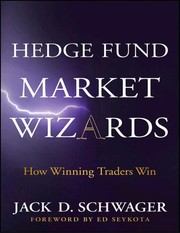
Jack D. Schwager · 2012

Includes a long Dalio interview predating the Principles publicity machine.
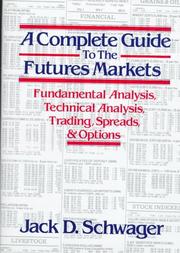
Jack D. Schwager · 1984

Second edition 2017 with Mark Etzkorn, titled A Complete Guide to the Futures Market.
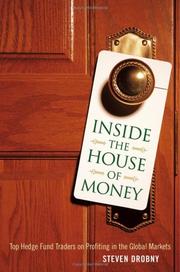
Steven Drobny · 2006

Global macro managers on how they build trades.

Victor Niederhoffer, Laurel Kenner · 2003

Recommended by: Mohnish Pabrai

Where it sits in the reference 2

Investors
Investment styles

Topics

InvestingFinance and Markets