Updates

  1. Person pages list letters, writing, profiles and links as sortable tables with filters, and show each person's companies as links; Fund letters show each letter's description in its own column.
  2. Experts show a checked job title and a short description of each person; 30 more people have photographs.
  3. Every company, fund, university and publication the experts work for has a page listing the people there.
  4. Fund letters show each letter's thesis and filter by it; 225 person pages list the essays, columns and newsletter issues the person wrote.
  5. Person pages list every essay and newsletter issue a person wrote, and their own books as a table in List view.
  6. Recommends shows the five largest kinds of book and the rest under More; browse pictures load sooner.
  7. Podcasts and talks link the original episode, filter by Audio and video or Press, and list each publisher once.
  8. Pages are wider, Recommends has List and Grid, and a filter clicked again turns off.
  9. Book cards sit in a ruled grid with Open Library and Goodreads links and each book's one-line note.
  10. Funds is now Investors; each investor's styles are buttons that filter the table.
  11. Podcasts and talks on a person's page filter by year and publisher and show as a list or a grid of pictures.
  12. Quotes show only people's own words: 472 summaries written by list sites are gone.
  13. Country pages open from Browse again, and every link on the shelf lands on a page.
  14. Subject and person pages show their sections as tabs, and each book appears once on a person's page.
  15. Book cards show the quote, who said it and the source; grids show five cards to a row.
  16. On a phone, a menu holds the sections, search, Updates, Feedback and dark mode.
  17. Feedback takes a screenshot of the page with no browser prompt, opens a screenshot full size when you click it, and clears itself once sent.
  18. Book cards are centred, search names the topic each book sits in, and any text cut short shows whole on hover.
  19. Search groups its results by kind: people, companies, geographies, subjects, topics, books, funds, fund letters and papers.
  20. The Books table lists who recommended each book by name, and the browser tab names the section you are in.
  21. Feedback can take a screenshot of the page, or one you paste or choose, and opens in the corner beside Updates.
  22. Each rail button reopens its section where you left it, and Browse, Table and People show on every book and subject page.
  23. Filters grey out choices that hold nothing instead of hiding them, and Books › People filters by authors or recommenders.
  24. Feedback takes a subject line and up to three screenshots.
  25. Biographies are grouped by the person they are about: 41 new pages, from Abraham Lincoln to Lee Kuan Yew.
  26. Sport splits into 23 sports, and Religion into one topic per faith.
  27. Book lists show as cards: the cover, one recommendation quote and every recommender by name.
  28. Seventeen subjects that had two or three pages under different names now have one page each.
  29. Every page lists its Experts as authors and recommenders, with a link to them on the Experts tab.
  30. Economics, Financial history, Financial panics and Accounting are subjects of their own, with one page per financial crisis.
  31. Book, person and subject pages open inside the app, so the tabs stay in view.
  32. 996 more book covers, and photographs or logos for 227 more people and companies.
  33. Books › Browse shows every subject as cards, and the rail holds Fund letters, Papers, Experts, Books and Funds.
  34. Every topic over 150 books splits into narrower topics, each with a page of its own.

Send feedback

What is it?
Screenshots, up to 3 (optional)
or paste one with Ctrl+V

We use your email only to reply to you.

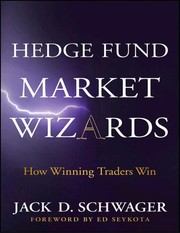
Hedge Fund Market Wizards

Hedge Fund Market Wizards

Jack D. Schwager
2012
T3 526 pages · about 8h 46m to read Open Librarygoodreads

Includes a long Dalio interview predating the Principles publicity machine.

Summary

Schwager interviews fifteen hedge fund managers with strong long-term records, following the format of his earlier Market Wizards books. The subjects include Ray Dalio, Colm O'Shea, Ed Thorp, Jamie Mai, Michael Platt, Steve Clark, Martin Taylor, Tom Claugus, Joe Vidich, Kevin Daly, Jimmy Balodimas, Joel Greenblatt and Scott Ramsey. The interviews cover trading approaches that are mutually incompatible, including global macro, statistical arbitrage, deep value, tail risk and short selling, which is the format's principal analytical value: comparable records produced by incompatible methods.

What Schwager identifies as common across the subjects concerns risk rather than method. Every one of them had a defined process for limiting losses, most had experienced a serious loss early that shaped their approach permanently, and all of them treated position sizing as a more consequential decision than position selection. Several stated explicitly that they were wrong more often than right and that the asymmetry between the size of their gains and losses produced the record.

The Thorp interview covers the mathematical origins of quantitative investing, the Dalio interview covers the framework he later published in Principles, and the Mai interview covers the tail risk approach Cornwall Capital used in the subprime trade. Schwager's concluding chapter draws forty observations across the interviews.

The format is transcription with light editing, so the quality varies with the subject. The interviews are with successful managers, which is a survivorship problem Schwager acknowledges. The consistent emphasis on loss limitation and position sizing over selection is the finding that emerges across incompatible methods.

Key takeaways 8

  1. Managers using mutually incompatible methods produced comparable long-term records, which argues against any single approach being necessary.
  2. Every subject had a defined process for limiting losses, which is what they shared rather than any analytical technique.
  3. Position sizing is a more consequential decision than position selection, and several subjects stated this explicitly.
  4. Most of these managers were wrong more often than right, and the asymmetry between gain and loss size produced the record.
  5. A serious early loss shaped the risk approach of most subjects permanently, which suggests the discipline is learned rather than adopted.
  6. Being flexible about changing a position when the evidence changes was described as more important than the original analysis.
  7. Personal fit between a method and a manager's temperament determines whether they can execute it under pressure.
  8. The subjects are selected for success, which Schwager acknowledges and which limits what the common features establish.

Who should read it

Investors who want first-person accounts of incompatible successful methods and the risk practices that recur across all of them.

About Jack D. Schwager

Futures research director and author; co-founder of FundSeeder; creator of the Market Wizards series

The Market Wizards interviews are a primary record of how top traders actually operate, cited across the field.

FundSeeder

Similar books 6

Chosen by shared topics, the entries that hold them, and the people who recommended both.
Sebastian Mallaby · 2010

Hedge funds from Alfred Winslow Jones in 1949 through Soros, Robertson and beyond.

“It's hard to imagine anyone will ever write a better book on the subject.” — Paul Graham

Source: Paul Graham on X (Apr 8, 2021)

Recommended by: Mohnish Pabrai, Paul Graham, Josh Wolfe and 1 other
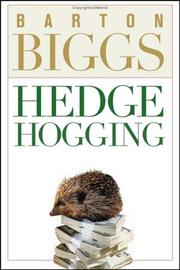
Barton Biggs · 2006

Essays and stories on the people and psychology of running a hedge fund.
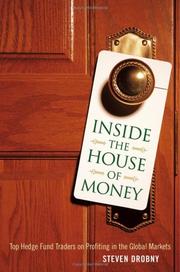
Steven Drobny · 2006

Global macro managers on how they build trades.
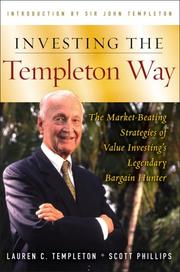
Lauren Templeton, Scott Phillips · 2008

How Templeton bought maximum pessimism across global markets.
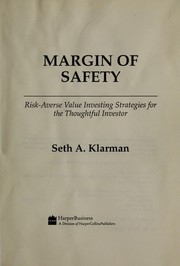
Seth Klarman · 1991

Avoid permanent loss: buy well below value and aim for absolute returns.

“Seth Klarman's 'Margin of Safety' is a good book about risk.” — Arnold Van Den Berg

Source: Van Den Berg on Margin of Safety as a book about risk

Recommended by: Arnold Van Den Berg, Frank Martin, Guy Spier and 6 others

Where it sits in the reference 7

Investors
Companies
Business models
Portfolio & risk
Investment styles
Investment styles
Investment styles

Topics

Investing