Updates

  1. Person pages list letters, writing, profiles and links as sortable tables with filters, and show each person's companies as links; Fund letters show each letter's description in its own column.
  2. Experts show a checked job title and a short description of each person; 30 more people have photographs.
  3. Every company, fund, university and publication the experts work for has a page listing the people there.
  4. Fund letters show each letter's thesis and filter by it; 225 person pages list the essays, columns and newsletter issues the person wrote.
  5. Person pages list every essay and newsletter issue a person wrote, and their own books as a table in List view.
  6. Recommends shows the five largest kinds of book and the rest under More; browse pictures load sooner.
  7. Podcasts and talks link the original episode, filter by Audio and video or Press, and list each publisher once.
  8. Pages are wider, Recommends has List and Grid, and a filter clicked again turns off.
  9. Book cards sit in a ruled grid with Open Library and Goodreads links and each book's one-line note.
  10. Funds is now Investors; each investor's styles are buttons that filter the table.
  11. Podcasts and talks on a person's page filter by year and publisher and show as a list or a grid of pictures.
  12. Quotes show only people's own words: 472 summaries written by list sites are gone.
  13. Country pages open from Browse again, and every link on the shelf lands on a page.
  14. Subject and person pages show their sections as tabs, and each book appears once on a person's page.
  15. Book cards show the quote, who said it and the source; grids show five cards to a row.
  16. On a phone, a menu holds the sections, search, Updates, Feedback and dark mode.
  17. Feedback takes a screenshot of the page with no browser prompt, opens a screenshot full size when you click it, and clears itself once sent.
  18. Book cards are centred, search names the topic each book sits in, and any text cut short shows whole on hover.
  19. Search groups its results by kind: people, companies, geographies, subjects, topics, books, funds, fund letters and papers.
  20. The Books table lists who recommended each book by name, and the browser tab names the section you are in.
  21. Feedback can take a screenshot of the page, or one you paste or choose, and opens in the corner beside Updates.
  22. Each rail button reopens its section where you left it, and Browse, Table and People show on every book and subject page.
  23. Filters grey out choices that hold nothing instead of hiding them, and Books › People filters by authors or recommenders.
  24. Feedback takes a subject line and up to three screenshots.
  25. Biographies are grouped by the person they are about: 41 new pages, from Abraham Lincoln to Lee Kuan Yew.
  26. Sport splits into 23 sports, and Religion into one topic per faith.
  27. Book lists show as cards: the cover, one recommendation quote and every recommender by name.
  28. Seventeen subjects that had two or three pages under different names now have one page each.
  29. Every page lists its Experts as authors and recommenders, with a link to them on the Experts tab.
  30. Economics, Financial history, Financial panics and Accounting are subjects of their own, with one page per financial crisis.
  31. Book, person and subject pages open inside the app, so the tabs stay in view.
  32. 996 more book covers, and photographs or logos for 227 more people and companies.
  33. Books › Browse shows every subject as cards, and the rail holds Fund letters, Papers, Experts, Books and Funds.
  34. Every topic over 150 books splits into narrower topics, each with a page of its own.

Send feedback

What is it?
Screenshots, up to 3 (optional)
or paste one with Ctrl+V

We use your email only to reply to you.

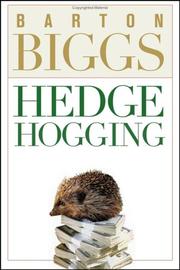
Hedgehogging

Hedgehogging

Barton Biggs
2006
T2 320 pages · about 5h 20m to read Open Librarygoodreads

Summary

Biggs spent decades at Morgan Stanley as its global strategist before starting a hedge fund in his seventies, and he wrote this as a collection of essays and stories about the people and the psychology of professional investing.

The material is anecdotal by design. Biggs writes about raising capital for a new fund and the humiliations involved, about the investors he met and the ones who redeemed at the worst moments, about managers who were brilliant and unstable, about the pressure of a drawdown, and about the social world of hedge funds. He also includes chapters on investment history, on Keynes as an investor and on the behaviour of markets in extreme conditions, particularly his account of markets during the Second World War, which he developed further in Wealth, War and Wisdom.

The substantive positions that recur are about temperament and about the difficulty of the business. He argues that investment skill and personal stability are often inversely related, that a manager's worst decisions come during drawdowns when clients are leaving, that the capital-raising process selects for salesmanship rather than for investment ability, and that almost no one sustains outperformance for long because the pressures compound. He is sceptical of forecasting including his own, and he documents his own errors.

The book has no framework and makes no systematic argument, which limits it as a source of method. It is dated in its market references and the hedge fund industry has changed substantially since 2006, becoming more institutional and more concentrated. Its durable use is as an honest account of what the job actually feels like, which few practitioners write down.

Key takeaways 7

  1. Investment performance and personal stability are frequently inversely related among successful managers.
  2. A manager's worst decisions are made during drawdowns, when client redemptions remove the ability to hold positions.
  3. Capital raising selects for salesmanship rather than for investment ability, so fund size is not evidence of skill.
  4. Almost no manager sustains outperformance over a full career, because the psychological and business pressures compound.
  5. Forecasting is unreliable and Biggs treats his own forecasts as evidence of that rather than as an exception.
  6. Equity markets during the Second World War turned at the points where military outcomes became clear to informed observers, before the news was public.
  7. Being right early is indistinguishable from being wrong for as long as clients are able to withdraw.

Who should read it

Professional investors and allocators who want an honest account of the psychology and business pressures of running money, rather than a method.

About Barton Biggs

Chief global strategist, Morgan Stanley 1973-2003; co-founder, Traxis Partners (1932-2012)

Thirty years of Morgan Stanley global strategy plus Hedgehogging, still the most candid insider account of how hedge fund managers actually behave.

Morgan Stanley, Traxis Partners

Similar books 6

Chosen by shared topics, the entries that hold them, and the people who recommended both.
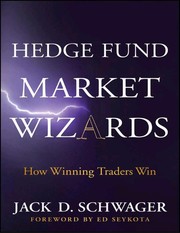
Jack D. Schwager · 2012

Includes a long Dalio interview predating the Principles publicity machine.
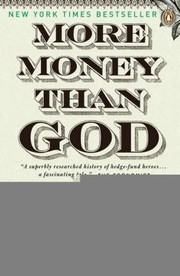
Sebastian Mallaby · 2010

Hedge funds from Alfred Winslow Jones in 1949 through Soros, Robertson and beyond.

“It's hard to imagine anyone will ever write a better book on the subject.” — Paul Graham

Source: Paul Graham on X (Apr 8, 2021)

Recommended by: Mohnish Pabrai, Paul Graham, Josh Wolfe and 1 other
Lasse Heje Pedersen · 2015

Markets pay skilled active managers; a survey of the strategies they run.

Where it sits in the reference 3

Investors
Business models
Investment styles

Topics

Investing