Updates

  1. Person pages list letters, writing, profiles and links as sortable tables with filters, and show each person's companies as links; Fund letters show each letter's description in its own column.
  2. Experts show a checked job title and a short description of each person; 30 more people have photographs.
  3. Every company, fund, university and publication the experts work for has a page listing the people there.
  4. Fund letters show each letter's thesis and filter by it; 225 person pages list the essays, columns and newsletter issues the person wrote.
  5. Person pages list every essay and newsletter issue a person wrote, and their own books as a table in List view.
  6. Recommends shows the five largest kinds of book and the rest under More; browse pictures load sooner.
  7. Podcasts and talks link the original episode, filter by Audio and video or Press, and list each publisher once.
  8. Pages are wider, Recommends has List and Grid, and a filter clicked again turns off.
  9. Book cards sit in a ruled grid with Open Library and Goodreads links and each book's one-line note.
  10. Funds is now Investors; each investor's styles are buttons that filter the table.
  11. Podcasts and talks on a person's page filter by year and publisher and show as a list or a grid of pictures.
  12. Quotes show only people's own words: 472 summaries written by list sites are gone.
  13. Country pages open from Browse again, and every link on the shelf lands on a page.
  14. Subject and person pages show their sections as tabs, and each book appears once on a person's page.
  15. Book cards show the quote, who said it and the source; grids show five cards to a row.
  16. On a phone, a menu holds the sections, search, Updates, Feedback and dark mode.
  17. Feedback takes a screenshot of the page with no browser prompt, opens a screenshot full size when you click it, and clears itself once sent.
  18. Book cards are centred, search names the topic each book sits in, and any text cut short shows whole on hover.
  19. Search groups its results by kind: people, companies, geographies, subjects, topics, books, funds, fund letters and papers.
  20. The Books table lists who recommended each book by name, and the browser tab names the section you are in.
  21. Feedback can take a screenshot of the page, or one you paste or choose, and opens in the corner beside Updates.
  22. Each rail button reopens its section where you left it, and Browse, Table and People show on every book and subject page.
  23. Filters grey out choices that hold nothing instead of hiding them, and Books › People filters by authors or recommenders.
  24. Feedback takes a subject line and up to three screenshots.
  25. Biographies are grouped by the person they are about: 41 new pages, from Abraham Lincoln to Lee Kuan Yew.
  26. Sport splits into 23 sports, and Religion into one topic per faith.
  27. Book lists show as cards: the cover, one recommendation quote and every recommender by name.
  28. Seventeen subjects that had two or three pages under different names now have one page each.
  29. Every page lists its Experts as authors and recommenders, with a link to them on the Experts tab.
  30. Economics, Financial history, Financial panics and Accounting are subjects of their own, with one page per financial crisis.
  31. Book, person and subject pages open inside the app, so the tabs stay in view.
  32. 996 more book covers, and photographs or logos for 227 more people and companies.
  33. Books › Browse shows every subject as cards, and the rail holds Fund letters, Papers, Experts, Books and Funds.
  34. Every topic over 150 books splits into narrower topics, each with a page of its own.

Send feedback

What is it?
Screenshots, up to 3 (optional)
or paste one with Ctrl+V

We use your email only to reply to you.

Mademoiselle: Coco Chanel and the Pulse of H

Mademoiselle: Coco Chanel and the Pulse of History

Rhonda K. Garelick
2014
T3 576 pages · about 9h 36m to read Open Librarygoodreads

Reads the brand as politics; the most intellectually serious account.

Summary

Rhonda Garelick, a scholar of French cultural history, writes about Gabrielle Chanel as a figure whose commercial and aesthetic decisions were continuous with the politics of her period rather than separate from them. This is a cultural biography rather than a business history or a fashion book.

Garelick's argument is that Chanel's design principles, particularly the simplification of women's clothing, the use of jersey, the standardisation of the little black dress, and the extension of a single name across clothing, perfume and accessories, constituted a coherent programme about identity and mass reproduction. She connects this to the period's politics, including Chanel's relationships with the Duke of Westminster and with Grand Duke Dmitri Pavlovich, her hostility to the Popular Front and her behaviour during the 1936 strikes, her wartime relationship with the German intelligence officer Hans Gunther von Dincklage, her attempt to use Nazi racial laws to take full ownership of the perfume business from the Wertheimer family, and her participation in the Modellhut mission.

The wartime material overlaps with Hal Vaughan's Sleeping with the Enemy, and Garelick treats it as part of a continuous political outlook rather than as opportunism. The book is long, densely written and engages with critical theory in ways that some readers will find unnecessary. For a business reader the useful content is the account of how Chanel constructed a personal brand that survived her, and how the ownership of the perfume business was structured and fought over.

Key takeaways 7

  1. Chanel built a single name into a licensed system spanning clothing, perfume and accessories, which was a commercial structure before it was an aesthetic one.
  2. The perfume business was owned largely by the Wertheimer family under a 1924 agreement Chanel spent decades trying to overturn.
  3. Chanel attempted to use Vichy racial legislation to seize the perfume company from its Jewish owners.
  4. Garelick argues that Chanel's design programme of simplification and standardisation was politically continuous with her authoritarian sympathies.
  5. Chanel's return to fashion in 1954 was financed by the Wertheimers, which shows the commercial value of the name outweighed her wartime record.
  6. The little black dress worked commercially because standardisation let a single design carry the brand across price points and reproductions.
  7. Chanel constructed and repeatedly revised her own biography, and most published accounts of her early life originate with her.

Who should read it

Readers interested in how a personal luxury brand was constructed and licensed, and in the political history that brand accounts usually omit.

Similar books 6

Chosen by shared topics, the entries that hold them, and the people who recommended both.

Edmonde Charles-Roux · 1975

The foundational biography; every later book argues with it.

Justine Picardie · 2009

House-access biography; good on the business, softer on the war.

Paul Morand · 2008

As-told-to: Morand's record of her 1946 conversations, published posthumously.

Hal Vaughan · 2011

Declassified files on her Abwehr connection; contested by the house.
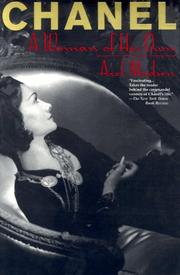
Axel Madsen · 1990

The standard biography before Chaney and Vaughan.

Lisa Chaney · 2011

Chanel's origins, her creative work and her private suffering, from new research.

Where it sits in the reference 2

Companies
Biographies

Topics

Biography and MemoirArt and DesignProduct, Fashion and Car DesignArtists, Writers and Musicians