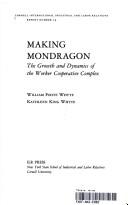
Making Mondragon
The Basque Mondragon cooperative group, studied as a working business model.
The Basque cooperative group studied as an actual operating model.
Summary
The Whytes describe the creation and growth of the Mondragon cooperatives, founded in 1956 in Spain's Basque region and since then a reference point for the international cooperative movement. The group's nearly three hundred companies and organisations range from finance to education, and its industrial firms have made furniture, kitchen equipment, machine tools and electronic components and worked in printing, shipbuilding and metal smelting.
The authors show how the cooperatives changed over decades of experience and how they balanced their social commitments against economic realities. Mondragon developed social inventions, structures and processes that let it overcome obstacles that had defeated earlier worker cooperatives. First published in 1988, the book appeared in a second edition in 1991 that covers the structural and strategic changes Mondragon made in 1990 to compete in the European common market. The authors argue that its lessons apply most directly to worker cooperatives and employee-owned firms, and also to regional development and to supporting entrepreneurship under any form of ownership.
Key takeaways 4
- Mondragon grew from a 1956 Basque cooperative into nearly three hundred companies and organisations.
- Its own social structures and processes let it overcome problems that sank earlier worker cooperatives.
- The cooperatives had to keep balancing social commitments against economic pressure.
- Mondragon restructured in 1990 to compete in the European common market.
Who should read it
Readers who want a detailed study of worker ownership as an operating business model, not a theory.
Similar books 6
Chosen by shared topics, the entries that hold them, and the people who recommended both.
A history of African American cooperatives and collective economic action.
The revival of co-operatives and member ownership, online platforms included.
The case for co-operatives as an alternative to state and investor ownership.
Broad employee ownership as an American tradition, and the case for reviving it.

How Banco Santander grew from a Spanish regional bank into a global one.
Amancio Ortega and Zara's fast-fashion model of short cycles and nearby factories.