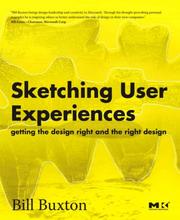
Sketching User Experiences
Design as its own discipline: sketching to find the right design before building.
Summary
Bill Buxton argues that design is a distinct discipline that designers and the people who work with them must understand if new products and systems are to succeed. He separates two concerns: getting the design right, through usability work and engineering, and getting the right design, through early sketching and ideation. Most organisations invest heavily in the first and too little in the second. His aim is informed design, in which emerging technology takes a form that serves society.
The book covers sketching and early prototyping methods suited to products with dynamic behaviour, such as mobile phones that talk to each other and to embedded systems, and networked appliances. Sketched experience prototypes cost little and are easy to abandon, unlike engineering prototypes. Buxton draws on practice and research, writes for interface and industrial designers, software and usability engineers, product managers and executives, and includes case studies, exercises, projects and video clips.
Key takeaways 4
- Choosing the right design is a separate problem from making a chosen design work well.
- Sketches are cheap and disposable, so teams can explore many ideas before committing to one.
- Engineering prototypes are expensive, and their cost makes teams reluctant to abandon them.
- Products whose behaviour unfolds over time need experience sketches, not only static drawings.
Who should read it
Product managers, designers and engineers who decide what to build and want a method for exploring options before committing engineering effort.
Who recommended it 1
Similar books 6
Chosen by shared topics, the entries that hold them, and the people who recommended both.
A do-it-yourself guide to usability testing and fixing what it finds.
Recommended by: Nir Eyal
How to design websites that people with disabilities can use.
Recommended by: Johnnie Gomez
How to build flexible websites with XHTML and CSS.
“When I first started MetaLab, Dan Cederholm was my hero. Bulletproof Web Design was the first book I read when I was learning the ropes.” — Andrew Wilkinson
Source: Essay
Recommended by: Andrew Wilkinson
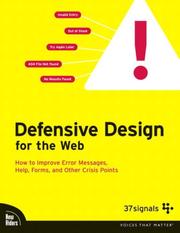
How to design websites that guard against user errors.
Recommended by: John Maeda
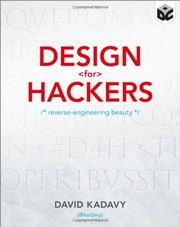
Principles of graphic and web design taught for programmers.
Recommended by: David Kadavy

Designing with compassion for users who arrive under stress.
Recommended by: Johnnie Gomez