
The Best Interface Is No Interface
Why good design should remove screens and interfaces rather than add them.
Summary
Golden Krishna, a designer, argues that the digital interface has taken over life: most people spend more than eight hours a day looking at screens, the average smartphone user checks the phone 150 times a day, and screens now sit in pockets, cars, appliances and on faces. Many apps are built as deliberately addictive distractions that take attention away from family, friends, sleep and oncoming traffic.
Krishna challenges what he calls screen-based bondage and the reflex of answering every problem with an app. He shows how the world can be technologically advanced without a screen for everything, and how products can serve people without the nagging that screen-based apps bring. His examples run from medical apps to prayer apps to apps for the dead, which he uses to mock the habit of building an app for every need. The book was published in 2015.
Key takeaways 4
- Adding a screen is often the wrong answer to a design problem.
- Many apps are designed to capture attention rather than to help.
- Good technology can do its work without demanding to be looked at.
- Constant phone checking is a result of design choices.
Who should read it
Product designers, engineers and founders building consumer technology.
Who recommended it 1
Similar books 6
Chosen by shared topics, the entries that hold them, and the people who recommended both.
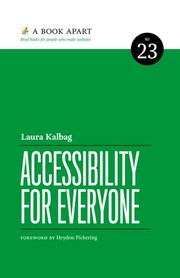
How to design websites that people with disabilities can use.
Recommended by: Johnnie Gomez
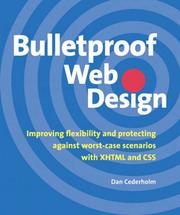
How to build flexible websites with XHTML and CSS.
“When I first started MetaLab, Dan Cederholm was my hero. Bulletproof Web Design was the first book I read when I was learning the ropes.” — Andrew Wilkinson
Source: Essay
Recommended by: Andrew Wilkinson
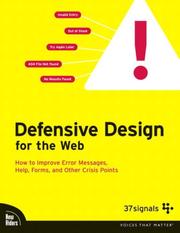
How to design websites that guard against user errors.
Recommended by: John Maeda

Principles of graphic and web design taught for programmers.
Recommended by: David Kadavy

Designing with compassion for users who arrive under stress.
Recommended by: Johnnie Gomez
How to design web applications that are obvious to use.
Recommended by: Melanie Perkins