The Great Game of Business
Open-book management: teach every worker to read the financials and share the gains.
Open-book management at SRC; the founding text of employee ownership practice.
Summary
Jack Stack led a management buyout of a failing Springfield, Missouri engine remanufacturing plant from International Harvester in 1983, at a debt to equity ratio of about eighty-nine to one, and built it into Springfield Remanufacturing Corporation. This book describes the management system he developed, which came to be called open-book management.
The system has three components. Teach every employee to read the company's financial statements, so that a machinist understands gross margin and the effect of scrap on it. Give them the numbers, including the actual income statement and balance sheet, updated weekly and discussed in meetings where each department forecasts its own line. And give them a stake in the outcome through bonuses tied to specific measures and through equity ownership.
Stack's argument is that people make better decisions when they know what the decisions affect, and that most employees have never been shown how their work connects to the company's results. He describes the great huddle, the weekly meeting at which the whole company reviews the numbers, and the practice of having employees forecast their own results and then explain variances. He also covers what he calls the higher laws of business, including that you get what you give and that change begins at the top. The book is a practitioner account and the system requires genuine commitment to disclose real numbers, which most managements will not do. It has been implemented successfully in many companies since.
Key takeaways 7
- Employees make better operating decisions when they can read the company's financial statements and see how their work affects them.
- Stack teaches every employee financial literacy first, because the numbers are useless to people who cannot interpret them.
- Departments forecast their own results weekly and explain variances, which transfers ownership of the numbers to the people producing them.
- Bonuses tied to specific measurable outcomes, combined with equity ownership, give employees a reason to act on what they see.
- Disclosing real financial results to all employees requires management to accept scrutiny it usually avoids.
- Stack argues that a company's most underused asset is the judgement of people who are never told what is going on.
- The system works only where the numbers disclosed are genuine and where employees can affect them.
Who should read it
Operators looking for a tested system for engaging a whole workforce in financial performance, from someone who built it in a distressed manufacturing business.
Who recommended it 1 · 1 direct
Similar books 6
Chosen by shared topics, the entries that hold them, and the people who recommended both.
Building an ownership culture in which employees think and act like owners.

How employee ownership works, and what it does for the towns around such firms.
Evidence that employee ownership raises performance when paired with participation.
Why companies do better granting stock options to all staff, not just executives.
“Joseph Blasi, Douglas Kruse, and Aaron Bernstein, In the Company of Owners: The Truth About Stock Options (New York: Basic Books, 2003), 88” — Michael Mauboussin
Source: Employee Stock Options: Theory and Practice, page 10
Recommended by: Michael Mauboussin

The case for broad employee ownership: ESOPs, worker co-ops and employee trusts.
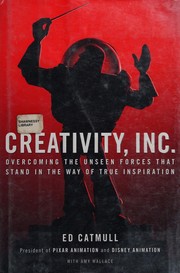
How Pixar kept a creative company working after success, and the habits it used.
“His book, Creativity, Inc.; an amazing, amazing book.” — Ezra Klein
Source: The Tim Ferriss Show Transcripts: Ezra Klein (#208)
Recommended by: Ezra Klein, Jim Collins, Michael Mauboussin and 12 others