
Management and Organisational Design
How large organisations are actually held together, and why structure and culture show up in the numbers.
Start here
- High Output ManagementAndrew S. Grove, 1983
- The Effective ExecutivePeter F. Drucker, 1967
- The Practice of ManagementPeter F. Drucker, 1954
A working executive's theory of organisation, where authority rests on acceptance.
Management as a discipline: business purpose, objectives and managing managers.
Recommended by: Jim Collins
How DuPont, GM, Standard Oil and Sears built the multidivisional firm.
Effectiveness is learned practice: manage time, pick priorities, decide well.
“The second is The Effective Executive by Peter Drucker, and the central core of that book is really about it's very easy to mistake effort for effectiveness.” — Drew Houston
Source: The Tim Ferriss Show Transcripts: Drew Houston (#334)
Recommended by: Drew Houston, Ev Williams, Jim Collins and 6 others
How large corporations run by a technostructure of experts plan rather than compete.
Recommended by: Paul Graham
How the wish for agreement in close groups led to fiascos like the Bay of Pigs.
“Irving Janis, Groupthink: Psychological Studies of Policy Decisions and Fiascoes, 2nd ed. (Boston, MA: Houghton Mifflin, 1982)” — Michael Mauboussin
Source: Building an Effective Team: How to Manage a Team to Make Good Decisions, page 17
Recommended by: Adam Weiss, Barton Biggs, Michael Mauboussin
Management as production: a manager's output is the output of the team they lead.
“Also read and re-read High Output Management by Andy Grove.” — Andrew Chen
Source: What do you look for an investment? How long should a founder be without salary? And other Q&A
Recommended by: Andrew Chen, Ben Horowitz, David Cancel and 24 others
Set prices from the value customers get, not from cost or rivals' prices.
“For more on pricing strategy, see Thomas T. Nagle and Georg Müller, The Strategy and Tactics of Pricing: A Guide to Growing More Profitably, Sixth Edition (New York: Routledge, 2018) and Alan S” — Michael Mauboussin
Source: The Economics of Customer Businesses: Calculating Customer-Based Corporate Valuation, page 35
Recommended by: Michael Mauboussin

The founder's account of just-in-time and automation with a human touch.
Why big industrial firms in the US, Britain and Germany rose or lagged, 1880 to 1940.
An MIT study of car plants worldwide that showed why Japanese lean production won.
How firms that sell expertise set their ratio of juniors to partners, and price.

How family firms develop, seen as three overlapping circles: family, owners, firm.
How Lyndon Johnson mastered the Senate's rules and became its majority leader.
Recommended by: Jim Collins, Marc Andreessen and 1 other
How Pixar kept a creative company working after success, and the habits it used.
“His book, Creativity, Inc.; an amazing, amazing book.” — Ezra Klein
Source: The Tim Ferriss Show Transcripts: Ezra Klein (#208)
Recommended by: Ezra Klein, Jim Collins, Michael Mauboussin and 12 others
How multi-sided platforms such as card networks get both sides on board at once.
“David S. Evans and Richard Schmalensee, Matchmakers: The New Economics of Multisided Platforms (Boston, MA: Harvard Business Review Press, 2016)” — Michael Mauboussin
Source: Measuring the Moat: Assessing the Magnitude and Sustainability of Value Creation
Recommended by: Michael Mauboussin
A portrait of Canada's business elite in 1975, from hundreds of interviews.
Fifty-two laws of management and defence spending, each backed by data.
What organisational culture is, how it forms, and how it bears on leadership.
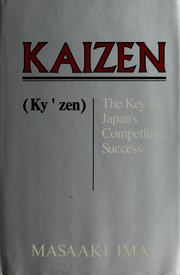
Continuous small improvement as the core of Japanese manufacturing success.
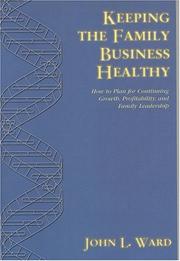
How family-owned firms can plan for growth, ownership and succession.
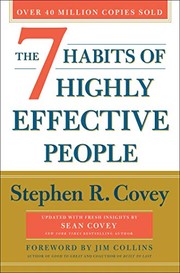
Seven habits, from being proactive to win-win, that build personal effectiveness.
“…books I've recommended, highlighted to death, or forced on friends.” — Andrew Wilkinson
Source: Andrew Wilkinson's Bookshelf, neverenough.com
Recommended by: Andrew Wilkinson, Jim Collins and 10 others
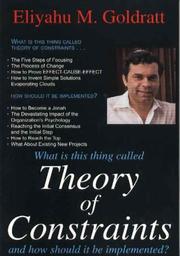
Every system has one constraint; find it, exploit it, and subordinate all else to it.

A life across economics, psychology, organisations and artificial intelligence.
Recommended by: Charlie Munger, Mohnish Pabrai
How firms are organised, using agency, contracts and transaction-cost economics.
Little-known mid-sized firms, mostly German, that lead world niche markets.
How Southwest Airlines built its low-cost model and its culture under Herb Kelleher.

The triple bottom line: report on economic, environmental and social results.

A novel applying the theory of constraints to finishing projects on time.
How Nucor became a steel giant with minimills, flat structure and incentive pay.
Recommended by: Francois Rochon, Jim Collins
Essays on what makes professional work truly professional, beyond competence.
Fast-moving industries reveal supply-chain dynamics slow ones take decades to show.
A theory of modularity in design, applied to the history of the computer industry.
“Carliss Y. Baldwin and Kim B. Clark, Design Rules: The Power of Modularity (Cambridge, MA: MIT Press, 2000)” — Michael Mauboussin
Source: Cultivating Your Judgment Skills: A Framework for Improving the Quality of Decisions, page 12
Recommended by: Michael Mauboussin

Treat patents as financial and strategic assets, not legal defences.
What eleven companies did to turn fifteen ordinary years into fifteen great ones.
“(We invite you to read the chapter devoted to the company in the book “Good to Great”).” — Francois Rochon
Source: Giverny Capital Annual Letter to Partners 2006, page 7
Recommended by: Brian Armstrong, Francois Rochon and 20 others
Building an ownership culture in which employees think and act like owners.
Execution is a discipline the CEO must lead, linking people, strategy and operations.
“In-depth look at the dirty discipline of getting things done in a large organization.” — Derek Sivers
Source: Derek Sivers book notes (primary, rated list) · Rating: 3/10
Recommended by: Derek Sivers, Michael Mauboussin and 2 others
Why the annual budget harms firms, and how some run without one.
Data showing big infrastructure projects run over cost and under demand by design.
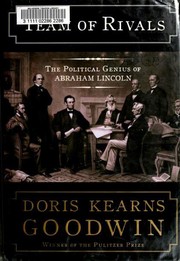
How Lincoln brought his three rivals for the 1860 nomination into his cabinet.
Recommended by: Bill Gates, Jim Collins, Mohnish Pabrai and 2 others
Lessons on why some family firms survive across generations and others do not.
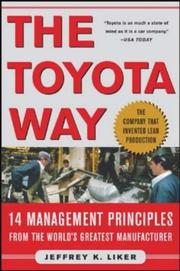
Toyota's management system as fourteen principles in four groups.
How Hollywood really makes money, mostly away from the box office.
How firms recovered from disruptions such as 9/11 and a chip-plant fire.
The deal is shaped before the table: set up the parties, interests and options first.
People who think ability grows with effort learn more than those who think it fixed.
“One of the reasons I loved Mindset is because it's solutions-oriented.” — Bill Gates
Source: Gates Notes review of Mindset
Recommended by: Bill Gates, Derek Sivers, Michael Mauboussin and 16 others
Enlightened hospitality: put employees first, then guests, community and investors.
Recommended by: Patrick Collison, Fred Wilson, Niki Scevak and 2 others
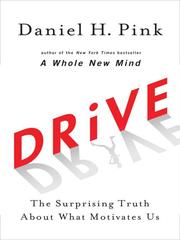
Rewards work for routine tasks; creative work runs on autonomy, mastery and purpose.
“Essential for all managers. Deep surprising study of motivation at work. Extrinsic vs intrinsic. Work vs play. When money is used as an external reward for some activity, the subjects lose intrinsic interest for the activity.” — Derek Sivers
Source: Derek Sivers book notes (primary, rated list) · Rating: 8/10
Recommended by: Derek Sivers, Michael Mauboussin and 4 others
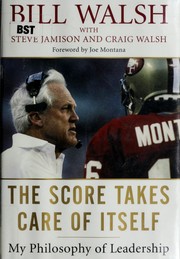
How a coach took the 49ers from 2 and 14 to three Super Bowls with set standards.
“The 49ers coach who took one of the worst teams to one of the best.” — Noah Kagan
Source: The 25 Best Business Books I Ever Read (Out of 697)
Recommended by: David Cancel, Keith Rabois, Nat Eliason and 9 others
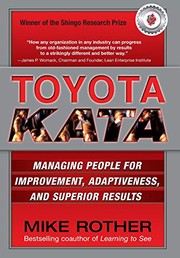
The routines Toyota managers use to coach steady improvement, beyond the tools.
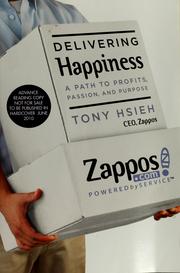
From LinkExchange to Zappos, and the case for building a company on its culture.
Recommended by: Mohnish Pabrai, Tony Hsieh, Ev Williams and 2 others
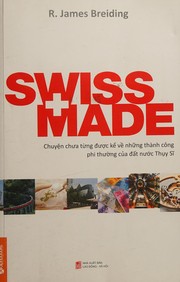
Why a small country without resources produces so many world-leading companies.
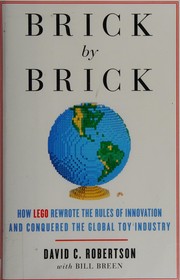
How LEGO nearly failed from overexpansion and how it recovered.
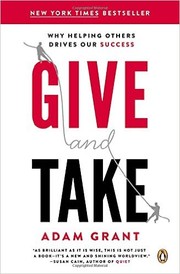
Givers, takers and matchers, and why givers end up both at the bottom and the top.
“If you feel you are too generous, or too greedy, or are wary and insist on reciprocation, consider reading this research-based look at the subject of these different personality types. Counter-intuitive findings.” — Derek Sivers
Source: Derek Sivers book notes (primary, rated list) · Rating: 6/10
Recommended by: Derek Sivers, Mohnish Pabrai, Alex Lieberman and 4 others
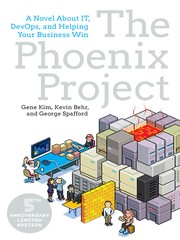
A novel in which an IT manager rescues a failing project using lessons from The Goal.
How the way organisations divide work blinds them, and how some break down silos.
Recommended by: Seth Klarman
Set the price before you design the product, since most failures are pricing ones.
Recommended by: Alfred Lin, Bill Gurley, Leo Polovets
Media firms fail by fixating on content when value lies in the connections around it.
Objectives and key results, the goal system Grove built at Intel and Google adopted.
Recommended by: Bill Gates, Amy Hood, Craig Blair and 4 others
AI as a fall in the cost of prediction, and what that does to decisions and jobs.
Why firms are moving from selling units to selling ongoing subscriptions, and how.
“See www.zuora.com/resource/ subscription-economy-index/ and Tien Tzuo and Gabe Weisert, Subscribed: Why the Subscription Model Will Be Your Company's Future–and What to Do About It (New York: Portfolio/Penguin, 2018)” — Michael Mauboussin
Source: The Economics of Customer Businesses: Calculating Customer-Based Corporate Valuation, page 31
Recommended by: Michael Mauboussin
How fixation on measured performance damages the work it is meant to improve.
Nokia's chairman on selling the phone unit to Microsoft and buying Alcatel-Lucent.
A defence of American business on fraud, CEO pay, monopoly and tech, issue by issue.
Innovation platforms and transaction platforms, and what each needs to succeed.
“See Michael A. Cusumano, Annabelle Gawer, and David B. Yoffie, The Business of Platforms: Strategy in the Age of Digital Competition, Innovation, and Power (New York: Harper Business, 2019), 107-138” — Michael Mauboussin
Source: Market Share: Understanding Competitive Advantage Through Market Power, page 42
Recommended by: Michael Mauboussin
Disruptors win by breaking one link in the customer's chain of activities.
Japanese firms after 1990 moved into hidden upstream niches rather than stagnate.
Why building a new airliner is a bet-the-company gamble for its maker.

Mary Kay Cosmetics' founder on managing a sales force of independent women.
How Xerox fought Japanese copier makers with a quality programme.
The Toyota Production System's creator on the shop floor, in short, blunt essays.

How Xerox fought back against Japanese copier makers, told by its chief executive.
Jack Welch's first decade remaking General Electric, written with the company's help.
A reference on how money moves in the music business: royalties and licensing.
The American airline industry's upheaval in the years after deregulation.
Profiles of India's leading business families, from interviews.
Recommended by: Mohnish Pabrai
The standard account of New Zealand's sweeping public sector reforms.
The case that many conglomerates destroy value and should break themselves up.
Why acquirers overpay: the premium is a promise of gains most never deliver.
“Mark L. Sirower, The Synergy Trap: How Companies Lose the Acquisition Game (New York: Free Press, 1997)” — Michael Mauboussin
Source: Cost of Capital and Capital Allocation: Investment in the Era of "Easy Money", page 15
Recommended by: Michael Mauboussin
The costs behind Jack Welch's profits at General Electric, reported at his peak.
The management methods Jack Welch brought to General Electric, chapter by chapter.
Corruption, cronyism and family control in Asian firms, exposed by the Asian crisis.

A practical guide to diagnosing, stabilising and reviving companies in distress.
A catalogue of the recurring patterns by which profit moves between firms.
How McKinsey consultants approach problems, described by a former associate.
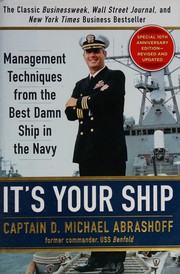
How a naval captain turned around his ship by handing authority to his crew.
Recommended by: Jim Collins
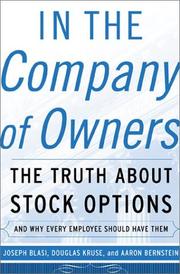
Why companies do better granting stock options to all staff, not just executives.
“Joseph Blasi, Douglas Kruse, and Aaron Bernstein, In the Company of Owners: The Truth About Stock Options (New York: Basic Books, 2003), 88” — Michael Mauboussin
Source: Employee Stock Options: Theory and Practice, page 10
Recommended by: Michael Mauboussin
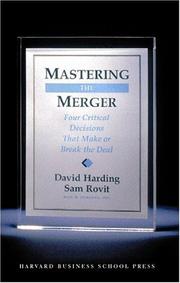
Bain's study of 1,700 companies on the four decisions that make acquisitions work.
Why American executive pay is not set by arm's-length bargaining for shareholders.
“For the negative case see Lucian A. Bebchuk and Jesse M. Fried, Pay Without Performance: The Unfulfilled Promise of Executive Compensation (Cambridge, MA: Harvard University Press, 2004) and Lucian A” — Michael Mauboussin
Source: Capital Allocation: Results, Analysis, and Assessment, page 65
Recommended by: Michael Mauboussin
Post-mortems on value-destroying mergers, from AOL Time Warner to Quaker and Snapple.
“Robert F. Bruner, Deals from Hell: M&A Lessons That Rise Above the Ashes (Hoboken, N.J.: John Wiley & Sons, 2005)” — Michael Mauboussin
Source: Share Repurchase from All Angles: Assessing Buybacks, No Matter Where You Sit, page 14
Recommended by: Michael Mauboussin
Evidence that employee ownership raises performance when paired with participation.

The standard text on airline economics and the industry's changes since the nineties.
Why globalisation matters less than the shift from manufacturing to services.
“A terrific resource for this argument is Bruce C. Greenwald and Judd Kahn, Globalization: The Irrational Fear That Someone in China Will Take Your Job (Hoboken, NJ: John Wiley & Sons, 2008)” — Michael Mauboussin
Source: Blaming the Rat: Incentives, Motivation, and How They Interact, page 13
Recommended by: Michael Mauboussin
How Procter and Gamble made innovation a systematic, repeatable process.
Why luxury brands run on their own rules, and how standard marketing ruins them.

A restructuring executive's memoir, from the Chrysler rescue onward.
How to make intellectual property a source of competitive advantage.

A business history of the global beauty industry, from Avon and Coty to Shiseido.

How firms invent new business models to reach markets their current one cannot.
How Bruce Henderson and three others invented corporate strategy as a discipline.
“Kiechel, Walter, The Lords of Strategy: The Secret Intellectual History of the New Corporate World (Boston, MA: Harvard Business Press, 2010)” — Michael Mauboussin
Source: Measuring the Moat: Assessing the Magnitude and Sustainability of Value Creation, page 64
Recommended by: Michael Mauboussin
Why power has shifted to consumers, and the three things retailers need to survive.

How Nokia expanded abroad and the model of global growth it offers.

How employee ownership works, and what it does for the towns around such firms.
How IKEA is managed and why it works, told by its chief executive of ten years.
How Toyota handled its recall crisis and the tsunami, tested against its lean model.
Mathematical models of when renting cloud computing beats owning capacity.
Why media firms do best by betting heavily on a few large hits, not the long tail.
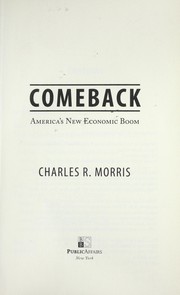
Why cheap shale gas and rising Chinese wages set up an American industrial revival.
Recommended by: Mohnish Pabrai
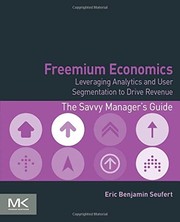
The arithmetic of freemium businesses: conversion, lifetime value and whales.
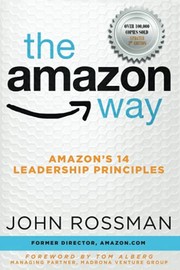
Amazon's leadership principles, from the executive who launched its marketplace.
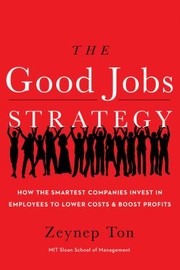
How Costco, Trader Joe's and QuikTrip pay well and still undercut their rivals.
The management system behind Samsung's transformation, from inside access.
Combat leadership lessons from the battle of Ramadi, applied to running teams.
Recommended by: Nat Eliason, Tom Bilyeu, Alfred Lin and 9 others
How Fujifilm's chief executive moved the company beyond film as demand collapsed.

A design guide for founders building marketplaces and networks.
How the US special operations command was rebuilt to make decisions faster.
“You need to understand what you're up against. But Team of Teams has been huge. I'm still giving that one out.” — Doug McMillon
Source: The Tim Ferriss Show Transcripts: Doug McMillon (#345)
Recommended by: Doug McMillon, Patrick Collison and 2 others
Why firms should treat customers as members in an ongoing relationship.
How companies prepare their supply chains for disruption, from a decade of cases.
How platform businesses connecting users differ from firms that make products.
“Alex Moazed and Nicholas L. Johnson, Modern Monopolies: What It Takes to Dominate in the 21st Century (New York: St. Martin’s Press, 2016)” — Michael Mauboussin
Source: Measuring the Moat: Assessing the Magnitude and Sustainability of Value Creation
Recommended by: Michael Mauboussin
Data on how digital distribution shifted power from studios to streamers.
Why most companies stall for internal reasons as they grow.
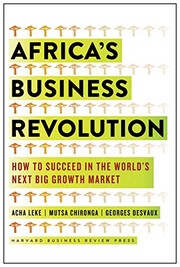
Africa's 400 companies with over a billion dollars in revenue, and the market ahead.
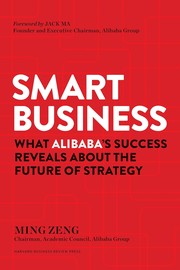
Alibaba's former strategy chief on network coordination and data as strategy.
How Berkshire runs on trust instead of the controls other large firms use.
“(The value of this culture is explored in Margin of Trust, a new book by Larry Cunningham and Stephanie Cuba that will be available at our annual meeting.)” — Warren Buffett
Source: Berkshire Hathaway Chairman’s Letter 2019, page 10
Recommended by: Warren Buffett
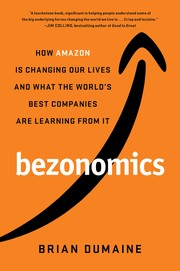
Amazon's business model and its flywheel, from interviews with staff and rivals.
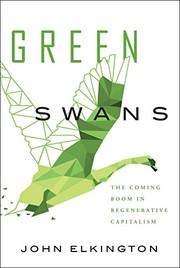
The inventor of the triple bottom line revises it and argues for faster change.
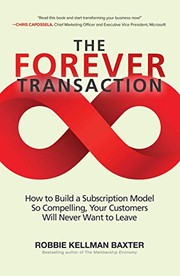
How to build subscription businesses: retention, pricing tiers and renewal.
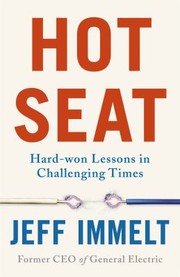
General Electric's chief executive from 9/11 onward defends his sixteen years.
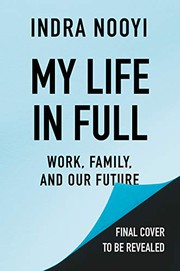
PepsiCo's former chief executive on her career and on how to combine work and family.

The case that companies should give back more than they take, from Unilever's record.

The case for broad employee ownership: ESOPs, worker co-ops and employee trusts.
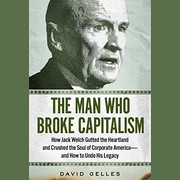
How Jack Welch's General Electric spread a damaging model across American business.
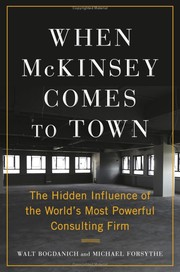
What McKinsey did for its clients and what followed, from internal documents.
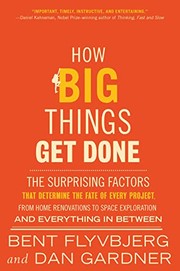
What 16,000 projects show about why big ones overrun, and how to plan them.
“Bent Flyvbjerg and Dan Gardner, How Big Things Get Done: The Surprising Factors That Determine the Fate of Every Project, from Home Renovations to Space Exploration and Everything In Between (New York: Crown Currency, 2023)” — Michael Mauboussin
Source: Pattern Recognition: Opportunities and Limits, page 14
Recommended by: Michael Mauboussin
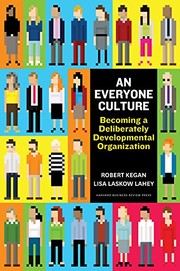
How firms can make developing people their work, so no one has to hide weaknesses.
Recommended by: Tony Hsieh, Ray Dalio
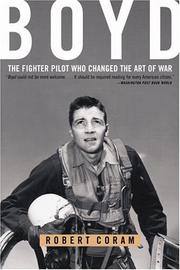
The life of John Boyd, the pilot behind the OODA loop and the F-15 and F-16.
Recommended by: Morgan Housel, Patrick O'Shaughnessy and 2 others

Career and product advice from the leader of the iPod team and founder of Nest.
The five forces model for analysing an industry and a firm's place in it.
“For example, I read Competitive Strategy and Competitive Advantage by Michael Porter.” — Michael Mauboussin
Source: Thirty Years: Reflections on the Ten Attributes of Great Investors, page 3
Recommended by: Jim Collins, Michael Mauboussin and 3 others
How product teams build a weekly habit of customer interviews and assumption tests.
Why brave leadership means facing vulnerability rather than armouring against it.
Recommended by: Sheryl Sandberg
How leaders turn feature teams into empowered product teams.
Why firms that count features shipped fail, and how product teams aim at outcomes.
Why most so-called strategies are not, and the three-part kernel real ones need.
“Rumelt, Richard P., Good Strategy Bad Strategy: The Difference and Why It Matters (New York: Crown Business, 2011)” — Michael Mauboussin
Source: Measuring the Moat: Assessing the Magnitude and Sustainability of Value Creation, page 65
Recommended by: Michael Mauboussin, Ann Handley and 3 others
A four-step model for habit-forming products: trigger, action, reward, investment.
Recommended by: David Cancel, Nat Eliason, Nir Eyal and 6 others
How to discover products that are valuable, usable and feasible before building.
Recommended by: Anna Cheng, Marty Cagan
Why teams perform when leaders give up their own interest to keep people safe.
Recommended by: Alfred Lin, Julie Stevanja, Tom Bilyeu and 1 other
Why leaders fail when adaptive challenges require people to change their beliefs.
How to choose a startup's metrics by its business model and its stage.
Recommended by: Marty Cagan, Michael Batko, Sean Ellis
Why some leaders bring out their teams' intelligence while others suppress it.

War as a continuation of politics, shaped by friction and the fog of uncertainty.
Recommended by: Ryan Holiday, Elon Musk, Marc Andreessen and 1 other
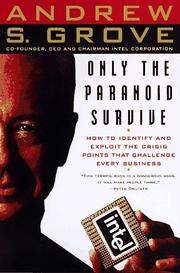
How to spot a strategic inflection point, when a tenfold force changes a business.
“There's also a number of great books that just tell the narrative of one company, such as The New New Thing, Startup, eBoys, Only the Paranoid Survive, Breaking Windows, but I've left those off the list even though they are very fun to read.” — Andrew Chen
Source: Ten classic books that define tech
Recommended by: Andrew Chen, Charlie Munger, Jim Collins and 12 others
Strategy as five linked choices, including where to play and how to win.
Recommended by: Drew Houston, Justin Kan, Meg Whitman
A framework for feedback built on caring personally and challenging directly.
Recommended by: Aileen Lee, Brett Adcock, David Cancel and 7 others
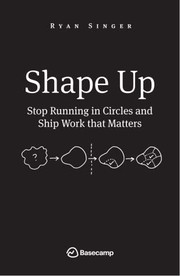
Basecamp's method: fixed time, variable scope, and work shaped before building.
Recommended by: George Hatzis, Jason Fried, Jenny Chu
A five-day process for answering a business question by prototyping and testing.
Recommended by: Andy Budd, Jessica Hische, Marty Cagan and 1 other
Why leaders who state their purpose before their product earn loyalty.
Recommended by: Richard Branson, Tom Bilyeu, Tony Hsieh and 4 others
Campaigns showing that striking an enemy's balance beats meeting its strength.
Recommended by: Ryan Holiday
An ancient Chinese treatise on war: position, deception and choosing when to fight.
Recommended by: Mohnish Pabrai, Evan Spiegel, Fred Wilson and 4 others
Three skills strong groups share: building safety, sharing vulnerability, purpose.
“We can go into it if it's of interest. Culture Code by Daniel Coyle I give people.” — Graham Duncan
Source: The Tim Ferriss Show Transcripts: Graham Duncan (#362)
Recommended by: Graham Duncan, Changpeng Zhao, David Cancel and 2 others
A fable of a failing executive team and a five-level model of what goes wrong.
Recommended by: Alfred Lin, Chris Powers, Sarah Pritula and 1 other
How to lead a company through layoffs, near-death crises and the decision to sell.
“…books I've recommended, highlighted to death, or forced on friends.” — Andrew Wilkinson
Source: Andrew Wilkinson's Bookshelf, neverenough.com
Recommended by: Andrew Wilkinson, Balaji S. Srinivasan and 34 others
A practical guide to applying lean methods to build products customers want.
Recommended by: Nir Eyal
Build, measure, learn: test what customers want with small experiments.
“There's a bunch of - I think if it's a little company, Eric Ries's book is great, The Lean Startup.” — Ben Horowitz
Recommended by: Ben Horowitz, Derek Sivers, Kathryn Minshew and 19 others
How founders can ask customers questions that get true answers, not polite praise.

How rulers acquire and hold power, judged by effect rather than by morality.
Recommended by: Jim Collins, Ryan Holiday, Stewart Brand and 5 others
How a submarine captain replaced leader-follower command with leader-leader.
Recommended by: Brian Armstrong, Jason Fried, Simon Sinek
Porter's frameworks on competition and strategy, restated with misuses corrected.
“Joan Magretta, Understanding Michael Porter: The Essential Guide to Competition and Strategy (Boston, MA: Harvard Business Review Press, 2012), 114-115” — Michael Mauboussin
Source: ROIC and the Investment Process: ROICs, How They Change, and Shareholder Returns, page 28
Recommended by: Michael Mauboussin, Mohnish Pabrai
Fictional letters from a merchant to his son on business and the conduct of life.
Recommended by: Mohnish Pabrai, Ryan Holiday
Eighteen months inside General Motors: the large corporation as a social institution.

The third of the early books on industrial society: work, management and labour.
Valuable work now needs people who do what can't be written into a job description.
“For someone who has a job at a company, I would call this essential reading with my highest recommendation. Since I haven't had a job since 1992, I couldn't apply many of his great points to my life. Still I loved his reminder of the value of the brilliant workers instead of systemized workers. The opposite of E-Myth (another book reviewed here).” — Derek Sivers
Source: Derek Sivers book notes (primary, rated list) · Rating: 5/10
Recommended by: Derek Sivers, Tom Bilyeu, Ann Handley and 3 others
The decentralised structure and financial controls that ran General Motors.
“Alfred P. Sloan Jr., My Years With General Motors (New York: Doubleday & Company, 1964)” — Michael Mauboussin
Source: Market-Expected Return on Investment: Bridging Accounting and Valuation, page 19
Recommended by: Michael Mauboussin, Mohnish Pabrai and 2 others
How a business focuses on opportunities, not problems, to produce economic results.
Recommended by: Jim Collins

Four breaks with the postwar world, from a global economy to knowledge as capital.
Recommended by: Patrick Collison
A warning that American corporations were taking over European industry.
Recommended by: Patrick Collison, Peter Thiel
Twelve New Yorker stories of business, from the Edsel's failure to the 1962 crash.
“Business Adventures remains the best business book I've ever read.” — Bill Gates
Source: Gates Notes review of Business Adventures
Recommended by: Bill Gates, Mohnish Pabrai, Patrick Collison and 1 other
Interviews with working people in a wide range of jobs.
Recommended by: Ev Williams
An 800-page treatise on management, meant as the field's standard work.
Recommended by: Jim Collins, Tobi Lütke
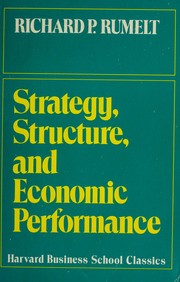
Whether a firm's diversification strategy predicts its financial results.
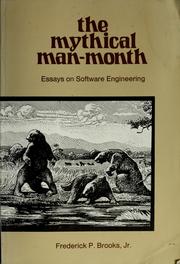
Lessons from IBM's OS/360: why adding people to a late software project slows it.
“Arguably the only classic book in our field. If you haven't read it, shame on you.” — Jeff Atwood
Source: Recommended Reading for Developers — Coding Horror
Recommended by: Jeff Atwood, Mohnish Pabrai, Paul Graham and 4 others

A condensed teaching version of Management: Tasks, Responsibilities, Practices.
An anthology of management writing on people, decisions and performance.
“Peter F. Drucker, People and Performance: The Best of Peter Drucker on Management (Boston, MA: Harvard Business School Press, 2007), 56” — Michael Mauboussin
Source: A Long Look at Short-Termism: Questioning the Premise, page 21
Recommended by: Michael Mauboussin

How salaried managers replaced markets in coordinating US business, 1840 to 1920.
“Chandler, Alfred. The Visible Hand. Harvard, 1977.” — Paul Graham
Source: The Refragmentation — Paul Graham (bibliography)
Recommended by: Paul Graham

A memoir told through portraits of the people the author knew, from Vienna on.
Recommended by: Mohnish Pabrai, Stewart Brand
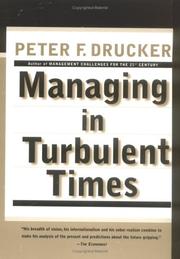
How to manage through inflation, oil shocks and slowing productivity.
Eight practices shared by well-run companies.
Recommended by: Jim Collins, Mohnish Pabrai, Ev Williams
Fourteen points for managing quality by improving the system and driving out fear.
Recommended by: Jim Collins, Patrick Collison

Columns on the changing conditions of executive work.
Teaching cases for applying the framework of Competitive Strategy.
A plant manager learns that a system's output is set by its bottleneck.
Recommended by: Jim Collins, Mohnish Pabrai, Nat Eliason and 6 others
Street-smart business advice from the founder of modern sports marketing.
Recommended by: Ramit Sethi
Why managers are rethinking the principles that have run their institutions.
Recommended by: Mohnish Pabrai
The value chain: how to find where a firm's cost or differentiation advantage lies.
“For example, I read Competitive Strategy and Competitive Advantage by Michael Porter.” — Michael Mauboussin
Source: Thirty Years: Reflections on the Ten Attributes of Great Investors, page 3
Recommended by: Michael Mauboussin, Li Lu
Innovation as a learnable discipline, with seven sources of opportunity to search.
Recommended by: Patrick Collison, Patrick O'Shaughnessy and 1 other
Research on how firms compete internationally, from a Harvard colloquium.
Value is discounted future cash flow, not earnings per share or return on equity.
“Alfred Rappaport, a professor emeritus at the Kellogg School of Management at Northwestern University, made this point clearly in his seminal book, Creating Shareholder Value.” — Michael Mauboussin
Source: Market Share: Understanding Competitive Advantage Through Market Power, page 1
Recommended by: Michael Mauboussin, Mohnish Pabrai

The biases that distort managers' decisions, with exercises that show them.
“Max Bazerman, Judgment in Managerial Decision Making, 4th ed. (New York: John Wiley & Son, 1998), 6-17” — Michael Mauboussin
Source: The Janitor’s Dream: Why Listening to Individuals Can be Hazardous to Your Wealth, page 3
Recommended by: Michael Mauboussin, Mohnish Pabrai and 1 other
Essays on new economic forces, the workplace and management concepts.
Managing people, teams and projects for an effective organisation.
“If you've ever seen the performance of an all-star sports team suffer due to poor coaching, you'll appreciate this book. It doesn't matter how many "coding superstars" you've got when none of them can talk to each other, or agree on anything. No developer, however talented, can work effectively when constantly being barraged with minor interruptions.” — Jeff Atwood
Source: Recommended Reading for Developers — Coding Horror
Recommended by: Jeff Atwood, Drew Houston, Marc Andreessen
Forty-five prescriptions for managers in a chaotic economy.
Recommended by: Mohnish Pabrai
How bureaucratic corporations shape managers' personal ethics.
Recommended by: Patrick Collison
Readings and cases on managing technology, innovation and new products.
Recommended by: Mohnish Pabrai
Plain talk on values, American business and economics, and family.
Recommended by: Mohnish Pabrai
A chief executive's advice on the art of leadership.
Recommended by: Jim Collins, Mohnish Pabrai, David Cancel
Applies the Seven Habits to organisations: lead by fixed principles, not by values.
Recommended by: Mohnish Pabrai
How companies win by building their strategy around customer service.
Recommended by: Mohnish Pabrai
Why managing time in production, development and sales is a source of advantage.
Recommended by: Tim Cook
How to manage non-profit institutions, with interviews with their leaders.
Why certain countries become home to world-leading firms in certain industries.
“Porter, Michael E., The Competitive Advantage of Nations (New York: Free Press, 1990)” — Michael Mauboussin
Source: Public to Private Equity in the United States: A Long-Term Look, page 67
Recommended by: Michael Mauboussin
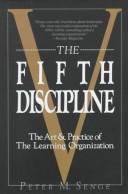
Five disciplines, led by systems thinking, that let an organisation learn.
Recommended by: Jim Collins, Mohnish Pabrai, Sahil Lavingia and 1 other
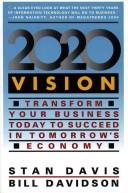
Forecasts of how information technology and biotechnology will change business.
Recommended by: Mohnish Pabrai
Recommended by: Mohnish Pabrai
Peter Drucker's Harvard Business Review articles across twenty-six years.
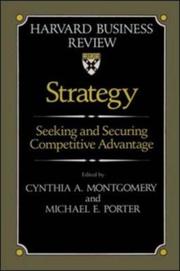
Harvard Business Review readings on strategy and competitive advantage.
“Michael E. Porter, “The Internet and Strategy”, Harvard Business Review, February 2001. Jeff Bezos at the 1999 Internet Summit, quoted in Julie Rawe, “Doom Stalks the Dotcoms,” Time, April 17, 2000. 3 See Extinction: Bad Genes or Bad Luck by David M. Raup, W.W. Norton, 1991, pp” — Michael Mauboussin
Source: Fill and Kill: Succeeding with Survivors is Nothing New, page 11
Recommended by: Jim Collins, Michael Mauboussin
How to sell to and manage a company's largest key accounts.
Recommended by: Mohnish Pabrai
Scenario planning: building strategic vision for business and life amid uncertainty.
Recommended by: Stewart Brand
Game theory without maths: look forward, reason back, and make threats credible.
“Avinash K. Dixit and Barry J. Nalebuff, Thinking Strategically (New York: W. W. Norton & Co., 1991)” — Michael Mauboussin
Source: Measuring the Moat: Assessing the Magnitude and Sustainability of Value Creation, page 47
Recommended by: Jim Collins, Michael Mauboussin
A study of over two hundred companies on whether culture drives performance.
Recommended by: Mohnish Pabrai
Leadership as an art like jazz, attuned to people's needs and ideas.
Recommended by: Mohnish Pabrai
Essays on management and organisations from the late eighties and early nineties.
Open-book management: teach every worker to read the financials and share the gains.
Recommended by: Jim Collins
Seventy-eight short rules for raising profit fast by cutting costs.
Recommended by: Mohnish Pabrai, Patrick O'Shaughnessy and 1 other
How Semco, a Brazilian manufacturer, dismantled its hierarchy, and what followed.
Recommended by: Andrew Wilkinson, Jason Fried, Ryan Peterson

How Kodak's black and white film division was turned around.
Rewards of every kind for employees, gathered from American businesses.
Recommended by: Mohnish Pabrai
Gandhi's life and principles restated as a standard for executives.
Recommended by: Mohnish Pabrai
What eighteen long-lived companies did differently from close rivals in their fields.
“Drucker), Commander Watson noted that “people are driven by an intrinsic need to connect with a purpose larger than themselves,” and even quotes the authors of two best-selling business books: First hear Jim Collins, author of Built To Last: “The best executives aspire to create something bigger and more lasting than themselves—an on-going institution rooted in a set of timeless core values that exists for a purpose beyond …” — John C. Bogle
Source: Helping Others, page 4
Recommended by: John C. Bogle, Mohnish Pabrai, Drew Houston and 4 others
The decline and recovery of Detroit's carmakers, and the GM boardroom coup.
Recommended by: Mohnish Pabrai
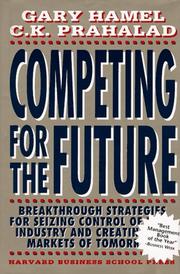
How firms lead future industries by seeing tomorrow's chances and building skills.
Recommended by: Mohnish Pabrai

Strategies for firms that imitate other companies' innovations.
Recommended by: Mohnish Pabrai
How information technology makes continuous training of employees a business need.
Recommended by: Mohnish Pabrai
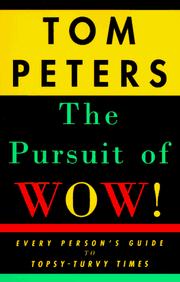
210 short pieces of business advice for a fast-changing early-1990s economy.
Recommended by: Mohnish Pabrai

The Marine Corps' philosophy for action: maneuver warfare to shatter enemy cohesion.
Recommended by: Keith Rabois

US airlines after 1978 deregulation through Crandall, Lorenzo and Kelleher.
Recommended by: Patrick Collison
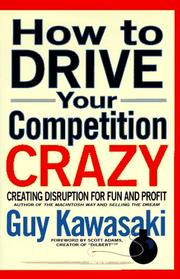
Tactics for competing against larger rivals through service and speed.
“Awesome book. On my Top Ten List. CEO of garage.com and a friend.” — Mohnish Pabrai
Source: Mohnish's Bookshelf — Books on Sales & Marketing, entry 27
Recommended by: Mohnish Pabrai
Essays on the information age, organisations and management practice.
Recommended by: Jim Collins
How companies lead markets by producing a steady stream of new products.
Recommended by: Mohnish Pabrai
Why market leaders excel at one of low cost, best product or closest service.
Recommended by: Mohnish Pabrai
Small firms fail when technicians run them; build systems that run the business.
“Absolutely everyone who is an entrepreneur or wants to be one needs to read this book. I first read it after 10 years of successfully running my company, and was still blown away and totally humbled by its wisdom. Re-reading it today, I'm amazed how my view of business was completely changed by this one little book.” — Derek Sivers
Source: Book notes by Derek Sivers
Recommended by: Derek Sivers, Tim Ferriss, Tom Bilyeu and 6 others
How two Stanford friends founded Hewlett-Packard and the way they ran it.
Recommended by: Mohnish Pabrai
How to build and manage a brand, using the four parts of brand equity.
Recommended by: Jim Collins
Sixteen major trends, from Pleasure Revenge to Icon Toppling, and how to use them.
Recommended by: Mohnish Pabrai
Game theory applied to business, which is cooperative and competitive at once.
“Adam M. Brandenburger and Barry J. Nalebuff, Co-opetition (New York: Currency Doubleday, 1996)” — Michael Mauboussin
Source: The Ecosystem Edge, page 10
Recommended by: Michael Mauboussin, Mohnish Pabrai
A manager's guide to electronic commerce and the technology behind it.
Recommended by: Mohnish Pabrai
How firms can learn what each customer wants and serve them one by one.
Recommended by: Mohnish Pabrai
Companies lose their position by broadening; narrowing the focus wins it back.
Recommended by: David Cancel, Mohnish Pabrai and 3 others
Case studies of the most successful entrepreneurs and businesses in history.
Recommended by: Mohnish Pabrai
An eight-stage process for organisational change, starting with urgency.
Recommended by: Mohnish Pabrai
Toyota's methods as five principles: value, value stream, flow, pull, perfection.
Recommended by: Mohnish Pabrai, Jeff Bezos
Harvard Business Review articles that won the journal's annual McKinsey Award.
Recommended by: Mohnish Pabrai
Short internal memos from Bear Stearns's chairman on costs and conduct.
Recommended by: Mohnish Pabrai, Jeff Bezos
How to stay creative inside a large corporation, from thirty years at Hallmark.
Recommended by: John Maeda
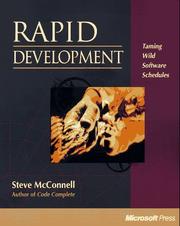
How to plan and run software development to keep schedules under control.
Recommended by: Mohnish Pabrai
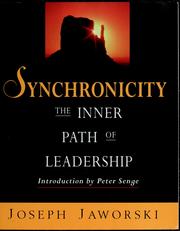
A lawyer's journey from a career without meaning to a path of inner leadership.
Recommended by: Mohnish Pabrai
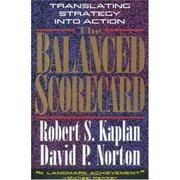
Measure a firm on finance, customers, internal processes, and learning and growth.
Recommended by: Mohnish Pabrai
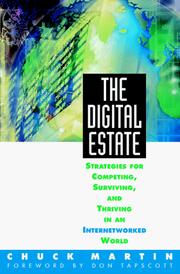
How the internet and the web will change how businesses work.
Recommended by: Mohnish Pabrai
Keeping customers, employees and investors is what drives profit and growth.
“In his seminal book, The Loyalty Effect, Fred Reichheld shows that a 5 percentage point improvement in retention rate (a reduction in churn) increases customer NPVs more than 75 percent for a host of industries including advertising agencies, auto insurance, credit cards, life 12 insurance, and publishing.” — Michael Mauboussin
Source: The Economics of Customer Businesses, page 6
Recommended by: Michael Mauboussin
Ideas for empowering employees: self-directed teams, initiative and risk.
Recommended by: Mohnish Pabrai
A dialogue by letter between Peter Drucker and Daiei's founder on Asia's economies.
Konosuke Matsushita's rise from childhood poverty to a great company, and how he led.
Recommended by: Mohnish Pabrai
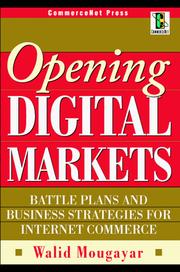
Why and how to take a business onto the Internet, from websites to digital payments.
Recommended by: Mohnish Pabrai
Why some groups of talented people achieve greatness and others never do.
Recommended by: Mohnish Pabrai, Patrick Collison
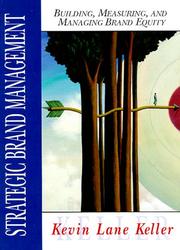
The textbook on building, measuring and managing a brand's equity.
Recommended by: Mohnish Pabrai
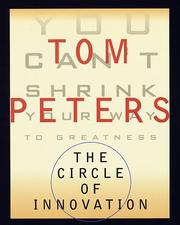
Cost-cutting can't produce growth; a company must stand out to win.
Recommended by: Mohnish Pabrai
Berkshire's shareholder letters arranged by topic: governance, valuation, mergers.
“The resource is as valuable as Larry Cunningham's The Essays of Warren Buffett, which similarly organizes by subject matter” — Christopher Bloomstran
Source: Semper Augustus 2024 Letter to Clients, 'Books and Tunes for Walking', p. 96
Recommended by: Christopher Bloomstran, Francois Rochon and 11 others
Why well-run firms lose to cheaper, worse products that enter at the market's bottom.
“Clayton Christensen's big "aha" in Innovator's Dilemma is that eventually a product will become over-featured and as a result feature growth will slow, and along with it innovation.” — Bill Gurley
Source: Picture Proof of the Innovator’s Dilemma: SlideRocket
Recommended by: Bill Gurley, Drew Houston, Jim Collins and 29 others
What companies that lasted over a century have in common, from a Shell planner.
“Recently, I came across two books on long lived companies: ‘‘The Living Company, Habits for Survival in a Turbulent Business Environment’’ by Arie de Geus, and ‘‘Lessons from Century Club Companies, Managing for Long Term Success’’ by Vicki Tenhaken.” — Prem Watsa
Source: Chairman's Letter to Shareholders 2020, page 27
Recommended by: Mohnish Pabrai, Prem Watsa
Strategy as constant reshaping of advantage in fast, unpredictable markets.
Recommended by: Mohnish Pabrai
How to lead a team when you are not the one in charge.
Recommended by: Mohnish Pabrai
Hire by defining the results a role must deliver, not the skills on a CV.
“Great advice on hiring, but insanely repetitive. Maybe this was an editing mistake - that the exact same points are made over and over and over and over - often with the exact same words, sentences, even paragraphs. But those key points are great.” — Derek Sivers
Source: Derek Sivers book notes (primary, rated list) · Rating: 2/10
Recommended by: Derek Sivers, Patrick Collison
Economics for information goods: pricing, versioning, lock-in and network effects.
“Carl Shapiro and Hal R. Varian, Information Rules (Boston, MA: Harvard Business School Press, 1999), 174” — Michael Mauboussin
Source: The Ecosystem Edge, page 10
Recommended by: Michael Mauboussin, Mohnish Pabrai and 1 other
Jack Welch's quotations on management, arranged by topic.
Recommended by: Mohnish Pabrai
Harvard Business Review articles on competitive strategy across two decades.
Harvard Business Review articles across three decades on management as a profession.
A fable of five temptations, starting with status over results, that sink CEOs.
Recommended by: Cindy Eckert
Digital strategies for using information technology to dominate a market.
“Downes, Larry, and Chunka Mui, Unleashing the Killer App: Digital Strategies for Market Dominance (Boston: Harvard Business School Press, 1998)” — Michael Mauboussin
Source: Exploring Network Economics, page 15
Recommended by: Michael Mauboussin, Mohnish Pabrai
Recommended by: Tony Hsieh, Daymond John
How the new economics of information ends the trade-off between richness and reach.
“Evans, Philip, and Thomas S. Wurster, Blown to Bits: How the New Economics of Information Transforms Strategy (Boston: Harvard Business School Press, 1999)” — Michael Mauboussin
Source: Measuring the Moat: Assessing the Magnitude and Sustainability of Value Creation, page 48
Recommended by: Michael Mauboussin, Mohnish Pabrai
Harvard Business Review articles on doing business in networked markets.
Recommended by: Mohnish Pabrai
How the best managers break conventional rules by building on employees' strengths.
Recommended by: Patrick Collison, Drew Houston, Simon Sinek

Harvard teaching cases on managing innovation and new products.
Which management assumptions had stopped being true at the century's end.
Why buyers will hire agents to bargain for them online, and what sellers should do.
Recommended by: Mohnish Pabrai
How to create and launch new products, from the Macintosh years onward.
Recommended by: Mohnish Pabrai
Get more with less by finding the 20% of effort that yields 80% of results.
Recommended by: Keith Rabois, Tim Ferriss, Ana Fabrega
A commonsense guide to value investing, drawn from Buffett, Graham and Fisher.
Recommended by: Mohnish Pabrai
How self-deception undermines leaders, told as a story set at a company.
Recommended by: Mohnish Pabrai, Girish Mathrubootham and 2 others
Run a tech company for shareholder value by funding its core advantage.
“Moore’s forthcoming book, Living on the Fault Line: Managing for Shareholder Value in the Age of the Internet, is terrific and highly recommended.” — Michael Mauboussin
Source: Network to Net Worth: Exploring Network Dynamics, page 29
Recommended by: Michael Mauboussin
A fable of two rival firms showing why organisational health beats clever strategy.
Recommended by: Mohnish Pabrai, Ali Abdaal, Brian Armstrong
Why long-lived companies underperform the market, and how to transform them.
“Richard Foster and Sarah Kaplan, Creative Destruction (New York: Doubleday, 2001)” — Michael Mauboussin
Source: Innovation and Markets: How Innovation Affects the Investing Process, page 20
Recommended by: Michael Mauboussin, Mohnish Pabrai
Running General Electric from 1981 to 2001, as told on retiring.
“Last fall, Charlie and I read Jack Welch’s terrific book, Jack, Straight from the Gut (get a copy!).” — Warren Buffett
Source: Berkshire Hathaway Chairman’s Letter 2001, page 8
Recommended by: Mohnish Pabrai, Warren Buffett, Jamie Dimon
How a firm can turn a competitor's strengths to its own advantage.
Recommended by: Mohnish Pabrai

Recommended by: Sheryl Sandberg
Personal accountability: asking better questions instead of blaming and complaining.
Recommended by: The Barefoot Investor
Twenty-six chapters chosen as a one-book introduction to management.
Extraordinary results come from narrowing focus to the one thing that matters most.
Recommended by: David Cancel, Alexis Ohanian, Austen Allred and 3 others
How POSCO, the Korean steelmaker, was built from nothing into a world producer.
Recommended by: Mohnish Pabrai
Psychology and counselling methods applied to coaching executives.
Recommended by: Michael Batko
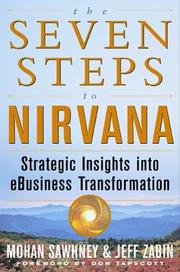
Seven steps for senior executives taking a firm into e-business.
Recommended by: Mohnish Pabrai
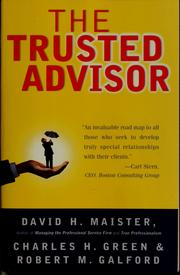
The trust equation: credibility, reliability and intimacy over self-orientation.
Recommended by: Nat Eliason
Bogle's speeches to Vanguard staff over its first 25 years, with commentary.
Recommended by: Mr. Money Mustache
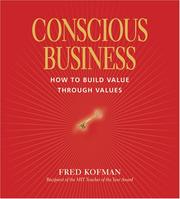
Seven qualities, such as unconditional responsibility, of people who make firms work.
Recommended by: Sheryl Sandberg, Reid Hoffman
Reading company reports and accounts for ethics as well as profit.
Recommended by: Mohnish Pabrai
How a postman's extraordinary service shows anyone how to excel at work.
Recommended by: Tony Hsieh
Essays on the internet boom's aftermath and the demographic changes ahead.
How Intel and others became and stayed leaders of technology platforms.
“Annabelle Gawer and Michael A. Cusumano, Platform Leadership (Boston, MA: Harvard Business School Press, 2002)” — Michael Mauboussin
Source: The Ecosystem Edge, page 10
Recommended by: Michael Mauboussin
Why boards' search for charismatic chief executives is irrational.
Recommended by: Mohnish Pabrai
The history of Shaw Industries, the world's largest carpet maker.
Recommended by: Mohnish Pabrai
How to get past burnout, busywork and the myth of total efficiency at work.
Recommended by: Patrick Collison, Ev Williams
Twenty-three profit models taught as weekly lessons from a mentor to an analyst.
“25 different models of profitability presented in examples you can relate to your own business, making you realize profit-sources you’d never thought of before.” — Derek Sivers
Source: Derek Sivers book notes (primary, rated list) · Rating: 9/10
Recommended by: Derek Sivers, Mohnish Pabrai
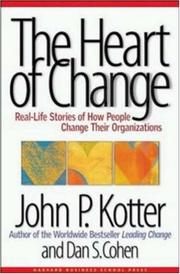
Real stories of how people changed their organisations.
Recommended by: Mohnish Pabrai
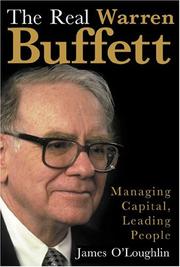
How Warren Buffett manages capital and leads the people who run his businesses.
Recommended by: Mohnish Pabrai
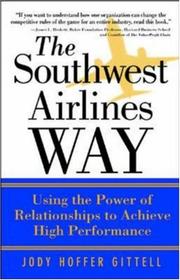
Why Southwest turns aircraft around faster: relational coordination among staff.
Recommended by: Ryan Peterson
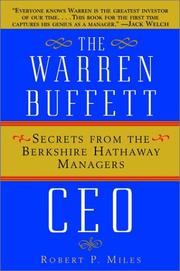
How Berkshire's subsidiary heads run their businesses, in their own words.
“If you are a Warren Buffett fan like I am, then you’ll enjoy The Warren Buffett CEO: Secrets From The Berkshire Hathaway Managers.” — Brad Feld
Source: Book Review: The Warren Buffett CEO — Feld Thoughts
Recommended by: Brad Feld, Francois Rochon and 2 others
How IBM was kept whole in 1993 and turned from hardware toward services.
Recommended by: Jim Collins, Mohnish Pabrai, Aaron Levie
Essays from five decades on community, society and how they function.
Leadership and strategy lessons drawn from Alexander the Great's campaigns.
Recommended by: Mohnish Pabrai
How exceptional companies beat the competition by standing in a class of their own.
Recommended by: Tim Ferriss
Profiles of business leaders from Investor's Business Daily's column.
The forty-year story of Digital Equipment Corporation's rise, fall and legacy.
Recommended by: David Kadavy
How the idea of flow applies to business and leadership.
Recommended by: Mohnish Pabrai
How investment firms build the culture and leadership for long-term success.
Recommended by: Mohnish Pabrai
How the Oakland A's won on a small payroll by buying players the market undervalued.
“Moneyball by Michael Lewis was a great example of how a baseball team could be successfully constructed using principles that were very similar to those used by value investors.” — Bill Nygren
Source: Bill Nygren Market Commentary | 1Q14
Recommended by: Bill Nygren, Jim Collins, Joel Greenblatt and 5 others
A manifesto to rebuild firms for an age of automated white-collar work and design.
“Too many great Tom Peters books, start with this one.” — David Cancel
Source: The Books Every Startup CEO Should Read — David Cancel, Medium
Recommended by: David Cancel
A short history of the joint stock company, from trading charters to multinationals.
“Mickelthwaite, John, and Adrian Wooldridge. The Company. Modern Library, 2003.” — Paul Graham
Source: The Refragmentation — Paul Graham (bibliography)
Recommended by: Paul Graham
Why the line between work and free time should go, from Semco's practice.
“Semler, Ricardo, The Seven-Day Weekend: Changing the Way Work Works (New York: Portfolio, 2004)” — Michael Mauboussin
Source: Blaming the Rat: Incentives, Motivation, and How They Interact, page 16
Recommended by: Michael Mauboussin, Ev Williams
Advice on building a solid company, from growing a family jewellery business.
Recommended by: Mohnish Pabrai
Why admired companies and their chief executives fail, and the lessons.
Recommended by: Mohnish Pabrai

An entrepreneur's successes and failures, with advice on starting a business.
“I read You Need to Be a Little Crazy : The Truth about Starting and Growing Your Business over the holiday break. Barry Moltz’s marketing and PR Director Sarah Moore sent me Barry’s book after sending me an email suggesting my blog fit with Barry’s writing. While I probably have read my lifetime supply of “entrepreneur / startup books” I decided I’d give this a try since (a) Sarah asked nicely and (b) I once had the domain “entrepreneursarecrazy.com” (with some weird idea of writing something …” — Brad Feld
Source: Book Review: You Need To Be A Little Crazy — Feld Thoughts
Recommended by: Brad Feld, Mohnish Pabrai

The story of the Walgreens drugstore chain and the American history around it.
Recommended by: Mohnish Pabrai

Aldi's hard-discount method: radical simplicity as the way to keep costs low.
How customer service can carry and build a company's brand.
Recommended by: Alfred Lin
John Boyd's military strategy, including the OODA loop, applied to business.
Recommended by: Ryan Peterson
Essays on software development from a popular programming blog.
Recommended by: Ev Williams

Habits that hold women back at work, and how to change them.
Recommended by: Noah Kagan
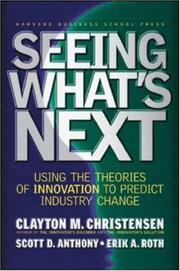
Disruption theory used to forecast how industries will change.
“also Clayton M. Christensen, Scott D. Anthony, and Erik A. Roth, Seeing What’s Next: Using the Theories of Innovation to Predict Industry Change (Boston, MA: Harvard Business School Press, 2004)” — Michael Mauboussin
Source: Untangling Skill and Luck: How to Think About Outcomes - Past, Present, and Future, page 31
Recommended by: Michael Mauboussin, Ev Williams
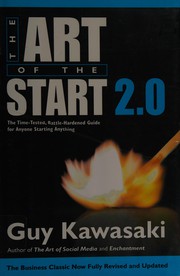
Practical instructions for starting a company or another organisation.
Recommended by: Mohnish Pabrai, Ev Williams, Keith Rabois and 1 other
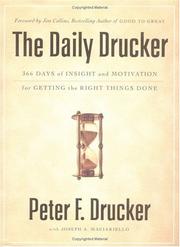
366 daily readings from management writing, each with an action point.
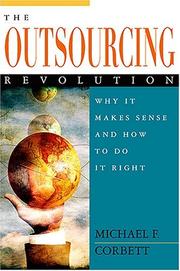
A practitioner's guide to outsourcing decisions and their economics.
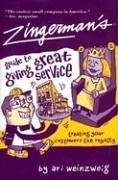
How a delicatessen business gives great customer service.
Recommended by: David Cancel
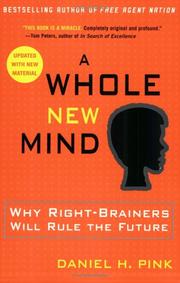
Why creative, holistic right-brain thinkers will lead the future economy.
Recommended by: Ray Dalio
How to create new market space instead of fighting rivals over existing demand.
“It's the epitome of Blue Ocean Strategy. To find a breakthrough angle in commerce, it's as important to decide where you will not compete, as it is to decide where you will compete.” — David Heinemeier Hansson
Source: Turns out nobody cared about panel gaps
Recommended by: David Heinemeier Hansson, Mohnish Pabrai and 6 others
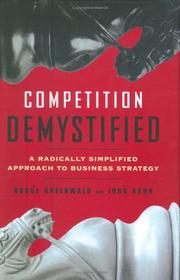
Why barriers to entry are the one force that matters in business strategy.
“Bruce Greenwald and Judd Kahn, Competition Demystified: A Radically Simplified Approach to Business Strategy (New York: Portfolio, 2005), 52-76” — Michael Mauboussin
Source: New Business Boom and Bust: How Capitalism Experiments, page 9
Recommended by: Li Lu, Michael Mauboussin, Mohnish Pabrai
Michael Eisner's twenty years running Disney, from turnaround to shareholder revolt.
Recommended by: Kara Swisher
Why businesses innovate best by deepening what they already do well.
Recommended by: Ev Williams, Keith Rabois
Good to Great's principles applied to non-profits and the public sector.
Recommended by: Mohnish Pabrai
How Southwest Airlines hires and keeps its people, by its former employment director.
Case studies and advice on doing business in China.
Recommended by: Mohnish Pabrai
Fourteen companies, such as Anchor Brewing and Zingerman's, that chose to stay small.
Recommended by: Mohnish Pabrai, Noah Kagan, Tom Peters and 1 other
How psychopaths get hired and rise in companies, and how to spot them.
Recommended by: Mohnish Pabrai
How managers and middlemen took value from the owners of American companies.
“Bogle, John C., The Battle for the Soul of Capitalism (New Haven: Yale University Press, 2005)” — Michael Mauboussin
Recommended by: Michael Mauboussin, Mohnish Pabrai and 1 other
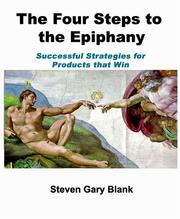
Customer development: how startups find customers before building the full product.
“Buy it, read it, keep it under your pillow and absorb it via osmosis.” — Marc Andreessen
Source: Book of the week: Best book for tech entrepreneurs this year, blog.pmarca.com
Recommended by: Andrew Chen, Marc Andreessen, Brad Feld and 2 others
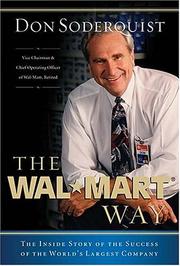
How Wal-Mart works, from its long-serving chief operating officer.
Recommended by: Mohnish Pabrai
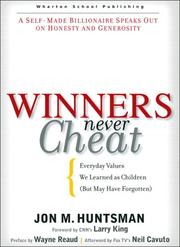
The case that business can be done ethically, without cutting corners.
Recommended by: Mohnish Pabrai
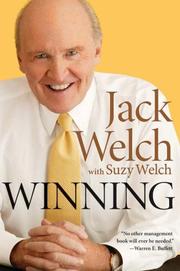
Lessons on management and competition from four decades at General Electric.
Recommended by: Mohnish Pabrai, Ev Williams, Sam Altman and 1 other
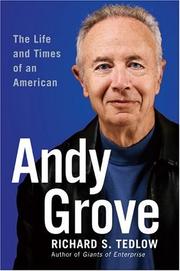
The life of Andy Grove, from Nazi-occupied Hungary to running Intel.
Recommended by: Keith Rabois, Patrick Collison
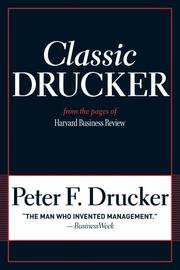
Fifteen of Peter Drucker's Harvard Business Review articles.
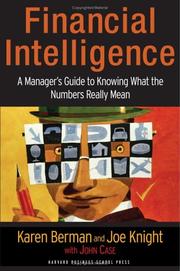
How non-financial managers can read income statements, balance sheets and cash flow.
Recommended by: Nat Eliason
How top investment firms build collaborative, synchronised teams.
Recommended by: Mohnish Pabrai
Why American health care competes on the wrong things, and value-based competition.
Why the biotechnology industry fell short of its promise.
“Pisano, Gary P., Science Business: The Promise, The Reality, and the Future of Biotech (Boston, MA: Harvard Business School Press, 2006)” — Michael Mauboussin
Source: Capital Allocation: Evidence, Analytical Methods, and Assessment Guidance, page 64
Recommended by: Michael Mauboussin, Bill Gates

Without shelf limits, sales of many niche products add up to rival the hits.
“also Chris Anderson, The Long Tail: Why the Future of Business Is Selling Less of More (New York: Hyperion, 2006), 121” — Michael Mauboussin
Source: Was Harry Potter Inevitable? Cumulative Advantage, Counterfactuals, and the Halo Effect, page 10
Recommended by: Jim Collins, Michael Mauboussin, Ev Williams and 2 others
Trust as an economic variable: low trust adds cost and slows everything.
Recommended by: John Maeda
Five principles behind Starbucks' customer experience, drawn by a consultant.
Leaderless organisations, from Alcoholics Anonymous to file sharing, and their power.
Recommended by: Mohnish Pabrai, Changpeng Zhao, Simon Sinek

The football coach's speeches and maxims on leadership and motivation.
Recommended by: Alfred Lin
How cheap coordination lets crowds outside a firm do work firms once did.
“Lessons learned from Wikipedia can be applied to most other businesses. How can you harness the spare-time or self-interest of thousands to build something better for everyone?” — Derek Sivers
Source: Derek Sivers book notes (primary, rated list) · Rating: 7/10
Recommended by: Derek Sivers, Michael Mauboussin and 1 other

Teledyne and its founder Henry Singleton, from inside the conglomerate.
“This is a great history of Henry Singleton and the conglomerate, Teledyne... I've recommended this several times as well.” — Christopher Bloomstran
Source: Semper Augustus 2023 Letter to Clients, 'Worldly Wisdom', p. 81
Recommended by: Christopher Bloomstran, Mohnish Pabrai
A chief executive's method for getting results, from his years running Gillette.
Recommended by: Mohnish Pabrai
How to manage and plan the growth of a small business.
Recommended by: Sophia Amoruso
Unpublished essays and lectures on leading by serving others.
Recommended by: Mohnish Pabrai
How a hotelier rebuilt his company after the dot-com crash left it exposed.
Recommended by: Tony Hsieh
How to find, interview and hire good software programmers.
Recommended by: Ev Williams
When to push through a hard stretch and when to quit a dead end.
“Tiny quick read with a punchy point: Anything worth doing has a painfully-hard middle period, which is where most people quit. But knowing this in advance, ask yourself seriously if you really have the dedication to stick it through that hard time. If not, then don’t begin! Quit in advance! But if so, then expect that dark dip, and don’t quit when you’re in it. Read the whole book if this applies to you. There’s not a wasted page.” — Derek Sivers
Source: Derek Sivers book notes (primary, rated list) · Rating: 8/10
Recommended by: Brian Armstrong, Derek Sivers, Nat Eliason and 2 others

How private foundations work and drive social change.
Recommended by: Bill Gates, Peter Thiel
How judging firms by their results corrupts most business research and advice.
“Phil Rosenzweig’s must-read book, The Halo Effect, shows this idea is alive and well in the business world.” — Michael Mauboussin
Source: Was Harry Potter Inevitable? Cumulative Advantage, Counterfactuals, and the Halo Effect, page 7
Recommended by: Michael Mauboussin, Ev Williams and 1 other
How to deal with workplace bullies and keep them out of an organisation.
Recommended by: Safi Bahcall
Market-based management, the system behind Koch Industries.
Recommended by: Mohnish Pabrai
How to rate an organisation's tribal culture on five stages and raise it.
“Tribal Leadership by Dave Logan. Dave Logan has looked at thousands of organizations and puts them into categories.” — Graham Duncan
Source: The Tim Ferriss Show Transcripts: Graham Duncan (#362)
Recommended by: Graham Duncan, Tony Hsieh, Sahil Lavingia
The small flaws in behaviour that keep capable executives from reaching the top.
“Aimed at already-successful people. The personality traits that brought you to success (personal discipline, saying yes to everything, over-confidence) are the same traits that hold you back from going further! (Where you need to listen to lead, and don't let over-confidence make you over-commit.) Stinging counter-intuitive insights that hit very close to home for me. Great specific suggestions for how to improve.” — Derek Sivers
Source: Derek Sivers book notes (primary, rated list) · Rating: 9/10
Recommended by: Derek Sivers, Alfred Lin
How to create products and experiences people love to talk about.
Recommended by: Ran Segall
How the internet lets organisations draw on the talent of the crowd.
“Great look at a different way of getting a project done: not outsourcing it to a person, but developing a system where thousands of people can contribute a little bit.” — Derek Sivers
Source: Derek Sivers book notes (primary, rated list) · Rating: 7/10
Recommended by: Derek Sivers, Marc Benioff

Six years inside Toyota, arguing that it runs on deliberate contradictions.
How network culture is changing business and creating a new economy.
Recommended by: Mohnish Pabrai
Short management cases, the companion to Management.

Knowledge workers must run their own careers by knowing their strengths and values.
Recommended by: Nat Eliason, Patrick Collison and 4 others
How foundations and donors can design strategy for effective giving.
Recommended by: Bill Gates
Deliberate practice, not innate talent, explains world-class performance.
“Talent is not innate - it comes from thousands of hours of deliberate practice: focused improving of your shortcomings. That's it. If you can get past the first 20% of the book that just asks questions, the next 60% is quite good.” — Derek Sivers
Source: Derek Sivers book notes (primary, rated list) · Rating: 6/10
Recommended by: Derek Sivers, Michael Mauboussin and 3 others
How general managers can achieve breakthroughs in their units' performance fast.
Recommended by: Mohnish Pabrai
A dialogue on thinking clearly: reality is simple, conflicts can be resolved.
Recommended by: Mohnish Pabrai
How to spot a durable economic moat from public information, and what isn't one.
Recommended by: Mohnish Pabrai
The leadership and service practices of the Ritz-Carlton.
Recommended by: David Cancel
How open-source and pirate culture are changing control of information.
Recommended by: Ryan Holiday

The habits of leaders that make businesses fail.
Recommended by: Mohnish Pabrai, Warren Buffett
The internet makes it cheap to gather people around a shared interest; lead them.
“Inspiring look at what it takes to organize and mobilize groups of people.” — Derek Sivers
Source: Derek Sivers book notes (primary, rated list) · Rating: 8/10
Recommended by: Derek Sivers, Catriona Wallace

A method for hiring the right people, built on interviews with wealthy executives.
Recommended by: Nat Eliason, Alexis Ohanian, Noah Kagan

An eyewitness account of how Ford and the American car industry undid themselves.
Recommended by: Mohnish Pabrai
How to find well-managed companies that respect their shareholders.
Recommended by: Mohnish Pabrai
Mittal Steel's 2006 hostile takeover of Arcelor, creating the largest steelmaker.
Recommended by: Mohnish Pabrai
Little-known firms that lead the world in narrow product markets, and how they do it.
Recommended by: Mohnish Pabrai, Tom Peters
How brief daily interactions affect relationships, productivity and health.
Recommended by: Peter Mallouk
The stages by which great companies decline, and how to spot and reverse them early.
Recommended by: Alfred Lin
How a few businesses turn customers into passionate, vocal advocates.
Recommended by: Tony Hsieh

Fifteen lessons on life and leadership from Nelson Mandela's example.
Recommended by: Richard Branson
Gallup's research on how leaders use their strengths and those of their teams.
Recommended by: Brian Armstrong
Why most media companies destroy shareholder value: few have barriers to entry.
Recommended by: Keith Rabois
Disruptive innovation applied to health care.
How the future people expect shapes how they perform, and how to change it.
Recommended by: Tony Hsieh
Warren Buffett's principles of business and management, in his words.
Recommended by: Mohnish Pabrai
Inside General Motors on three continents as it tries to transform itself.
Recommended by: Mohnish Pabrai
How the managers of Berkshire's businesses run them, and what that shows.
Recommended by: Mohnish Pabrai
How to build a business that runs without its owner, so that it can be sold.
Recommended by: Mohnish Pabrai, Nat Eliason, Nick Huber
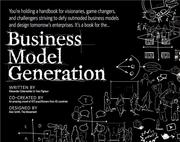
The Business Model Canvas: nine blocks for how a firm creates and captures value.
Recommended by: Nir Eyal
Why imitating others' innovations matters as much as innovating.
Recommended by: Mohnish Pabrai
How Detroit fell from postwar dominance to the 2009 bankruptcies of GM and Chrysler.
Recommended by: Mohnish Pabrai
Fifteen metrics that show which marketing spending works and which does not.
Recommended by: Mohnish Pabrai, Jeff Bezos
Why competing to be the best makes firms mediocre, and how to escape the herd.
Recommended by: Mohnish Pabrai, Nat Eliason, Andrew Chen
Gender, emotion and power at work, and how to be rational about emotions.
Recommended by: Diana Kimball
Southwest Airlines' management, in a dialogue with its long-serving president.
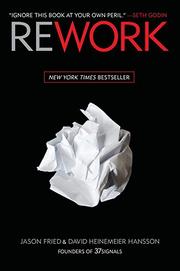
Contrarian rules for running a small, profitable company without venture capital.
“Jason Fried has written Rework with David Heinemeier Hansson, his co-founder at 37signals. The back of the book states, in part, that "planning is guessing," and "inspiration is perishable.” — Tom Peters
Source: Link Roundup #14
Recommended by: Andrew Wilkinson, Tom Peters, Jason Fried and 6 others

How a doctor's checklist can cut harm to patients in hospitals.
Recommended by: Mohnish Pabrai

General Motors' decline and bankruptcy, seen by a long-time industry reporter.
Recommended by: Mohnish Pabrai
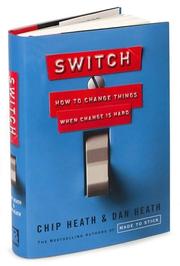
Change made easier: direct the rational rider, motivate the emotional elephant.
“Great great great great GREAT psychology book about real ways to make change last - both personal and organizational. So many powerful insights, based on fact not theory. Inspiring counterintuitive stories of huge organizational change against all odds. Highly recommended for everyone.” — Derek Sivers
Source: Derek Sivers book notes (primary, rated list) · Rating: 9/10
Recommended by: Andrew Wilkinson, Derek Sivers and 3 others
Why the widest distribution damages new products, and how to be selective.
163 short chapters, each one practical idea about work, hiring and service.
Recommended by: Michael Batko
How to get customers to do a small business's marketing through referrals.
Recommended by: Tony Hsieh
Why great professional partnerships succeed, from a former Disney chief.
“The Magical Sergio Marchionne/John Elkann Team A few years back Michael Eisner (former CEO of Disney) wrote a wonderful book entitled Working Together. https://www.amazon.com/Working-Together-Michael-DEisner/dp/0061732362/ref=tmm_hrd_swatch_0?_encoding=UTF8&qid=1468046596&sr=8-1 Michael Eisner was the CEO of Disney for twenty years.” — Mohnish Pabrai
Source: Pabrai Investment Funds letter to partners (070116), page 17
Recommended by: Mohnish Pabrai
Complex problems yield to trial and error, not expert plans, and how to run it.
“There is a book I recently ran into by Tim Hartford called Adapt. That’s another kind of fun read; I thought that was pretty good.” — Mohnish Pabrai
Source: Pabrai Investment Funds Annual Meeting Transcript 2011, page 48
Recommended by: Mohnish Pabrai, Patrick O'Shaughnessy
How General Motors succeeded in China: its people, decisions and breaks.
Recommended by: Mohnish Pabrai
What went wrong at General Motors when finance overruled product.
Recommended by: Mohnish Pabrai
A step-by-step playbook for growing a small business, from Ramsey's own company.
“If you want to learn how to work on your business, not in it, read this.” — David Cancel
Source: The Books Every Startup CEO Should Read — David Cancel, Medium
Recommended by: David Cancel, Nick Huber
A guide for donors on giving to charities and nonprofits well.
Recommended by: Andrew Wilkinson, Bill Gates
What companies that beat their industries tenfold in turbulent times did differently.
Recommended by: Mohnish Pabrai, Tony Hsieh, Alfred Lin
Why companies built around a higher ideal grow faster, from fifty top performers.
The fall and recovery of America's Big Three carmakers, from inside.
Recommended by: Mohnish Pabrai
Changing the rules of business as an entrepreneur, from Virgin's founder.
Recommended by: Brett Adcock, Elon Musk
A few financial rules for owner-run businesses, starting with labour efficiency.
Recommended by: Nat Eliason
What innovative entrepreneurs and executives do differently from other managers.
How organisations find exceptional talent before others do.
Recommended by: Mohnish Pabrai
How work, work-life balance and careers are changing.
Recommended by: Mohnish Pabrai

A novel of a fund manager who buys a ship and learns how shipping finance works.
Recommended by: Mohnish Pabrai
An introduction to service design and its methods for creative customer service.
Recommended by: Andy Budd
How Alan Mulally turned Ford around and saved it without bankruptcy.
Recommended by: Mohnish Pabrai
Tech firms' puzzle interview questions, and whether they pick good hires.
Recommended by: Sophie Bakalar
How leaders can grow to solve more complex problems.
Recommended by: Graham Duncan
Research on shame and vulnerability, and why vulnerability comes before connection.
“I think it's Brene Brown's book, Daring Greatly, talks about this really well. Or Krista Tippett on Becoming Wise, another great book.” — Matt Mullenweg
Recommended by: Matt Mullenweg, Tom Bilyeu, Tony Hsieh and 4 others

Simple equations for understanding and handling emotions in work and life.
Recommended by: Tony Hsieh
How game design can be used in marketing and business.
Recommended by: Nir Eyal
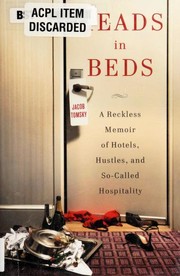
A decade working in hotels, from valet to front desk, and the hustles behind them.
Recommended by: Mohnish Pabrai
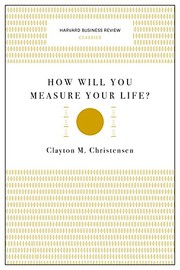
Business strategy theories applied to career, family and integrity.
“A copy of Clay Christensen’s new book How Will You Measure Your Life? ended up finding its way to me. It’s signed by Clay and his co-authors James Allworth and Karen Dillon so I assume someone sent it to me.” — Brad Feld
Source: Book: How Will You Measure Your Life? — Feld Thoughts
Recommended by: Ali Abdaal, Brad Feld, Bruce Flatt and 8 others
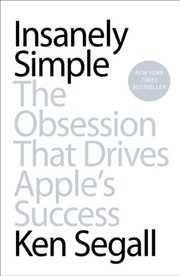
Simplicity as Apple's operating principle, from the adman who worked with Jobs.
Recommended by: Andrew Wilkinson, Keith Rabois and 1 other
Rules and principles from a life in public service and leadership.
Recommended by: Mohnish Pabrai
Seven principles of servant leadership from a chief executive.
Recommended by: Johnnie Gomez
Ten words on management from the man who made Tesco the UK's largest grocer.
Recommended by: Mohnish Pabrai
How the chase for short-term share prices corrupted shareholder value, and fixes.
“Alfred Rappaport, Saving Capitalism from Short-Termism: How to Build Long-Term Value and Take Back Our Financial Future (New York: McGraw Hill, 2011), 69-88” — Michael Mauboussin
Source: The Importance of Expectations: The Question that Bears Repeating: What’s Priced in?, page 14
Recommended by: Michael Mauboussin, Patrick O'Shaughnessy
Organisational health, clarity and cohesion, matters more than strategy or smarts.
Recommended by: Changpeng Zhao, David Cancel
Why connected companies learn and move faster than competitors, and how they work.
Recommended by: Tony Hsieh
Data on 10,000 founders: co-founders, hiring, investors, control and succession.
“The Founder’s Dilemmas by Noam Wasserman is another book that belongs on every entrepreneur’s bookshelf. It’s excellent.” — Brad Feld
Source: Book: The Founder's Dilemmas — Feld Thoughts
Recommended by: Brad Feld, Patrick Collison, Leo Polovets
Eight CEOs who beat the market by allocating capital, not by running operations.
“…books I've recommended, highlighted to death, or forced on friends.” — Andrew Wilkinson
Source: Andrew Wilkinson's Bookshelf, neverenough.com
Recommended by: Andrew Wilkinson, Dan Loeb, Francois Rochon and 12 others
How a farmer's method for growing giant pumpkins applies to growing a business.
Recommended by: Guy Kawasaki
Run your career the way an entrepreneur runs a startup.
Recommended by: Mohnish Pabrai, Jack Dorsey and 4 others
Lessons from the women who run Berkshire Hathaway businesses and sit on its board.
Recommended by: Mohnish Pabrai
How leading companies have changed service, and how others can follow.
Recommended by: Tony Hsieh
How leaders use visual tools to communicate and lead change.
Recommended by: Andy Budd
How corporate governance brought down Nortel Networks, the Canadian technology firm.
“You may understand why I say this if you read the recent book on Nortel’s bankruptcy ‘‘100 Days: The rush to judgment that killed Nortel’’, by James Bagnall.” — Prem Watsa
Source: Chairman's Letter to Shareholders 2013, page 6
Recommended by: Mohnish Pabrai, Prem Watsa
Five levels of leadership, from holding a position to developing other people.
Recommended by: Julie Stevanja
A chief executive's account of building AT&T and turning around General Motors.
Recommended by: Mohnish Pabrai
Every Berkshire annual letter since 1965, in order, as the company grew.
“…books I've recommended, highlighted to death, or forced on friends.” — Andrew Wilkinson
Source: Andrew Wilkinson's Bookshelf, neverenough.com
Recommended by: Andrew Wilkinson, Arnold Van Den Berg and 5 others
How technology has changed the way brands and businesses innovate and connect.
Recommended by: Gary Vaynerchuk
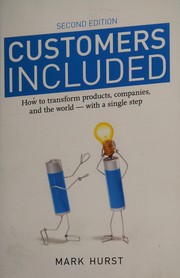
Why including customers is essential to success, with cases from Apple to Netflix.
Recommended by: Albert Wenger
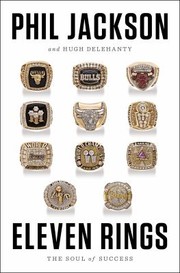
Leading the Chicago Bulls and Los Angeles Lakers to eleven championships.
“My vacation reading this year included Eleven Rings: The Soul of Success by Phil Jackson.” — Bill Nygren
Source: Bill Nygren Market Commentary | 1Q14
Recommended by: Bill Nygren, Jim Collins, Tom Bilyeu
Lessons in extraordinary service from a postman named Fred, updated.
Recommended by: Tony Hsieh

Recommended by: Mohnish Pabrai
Why few women reach senior roles, and what women and firms can do about it.
Recommended by: Mohnish Pabrai, Richard Branson and 3 others
Why remote work beats office work for most knowledge workers, and how to run it.
“Speaking of being a distributed company with lots of text communication, I'm going to recommend a book called Remote, which is by the folks over at Basecamp, Jason Fried and David Heinemeier Hansson.” — Matt Mullenweg
Source: The Tim Ferriss Show Transcripts: Books I've Loved — Matt Mullenweg (#420)
Recommended by: Matt Mullenweg, Nat Eliason, Richard Branson and 3 others
How to serve customers with consistency and sincerity, from Walt Disney World.
Recommended by: Tony Hsieh
How McKinsey built the modern consulting partnership and its influence.
Recommended by: Andrew Chen
Inside the firm behind WordPress.com and its remote work culture.
Recommended by: Matt Mullenweg
Seven traits that distinguish the best professional firms.
Where American charities fail, and a better way to give.
Recommended by: Mohnish Pabrai
Lessons from Fortune's 40 Under 40 on how top founders and leaders built careers.
Recommended by: Mohnish Pabrai
Berkshire as an operating company: its subsidiaries' culture and whether it lasts.
Recommended by: Mohnish Pabrai
How to take smart risks and act like an entrepreneur, from facing fear to critics.
“If I’m describing you when you see the phrase “first time or aspiring entrepreneur”, grab Crazy is a Compliment and pre-order Startup Opportunities.” — Brad Feld
Source: Book: Crazy is a Compliment — Feld Thoughts
Recommended by: Brad Feld, Mohnish Pabrai
Honda's decentralised engineering culture and how it differs from Toyota's.
Recommended by: Mohnish Pabrai
How Google hired and managed smart creatives, people who can't be told what to do.
Recommended by: Cynthia Johnson, Keith Rabois and 2 others
Why some people seem to make no sense to us, and how to reason with them.
Recommended by: Karlene Markham
Employment as an honest alliance: set tours of duty between firm and employee.
“Reid Hoffman, Ben Casnocha, and Chris Yeh have written an outstanding and important book called The Alliance: Managing Talent in the Networked Age.” — Brad Feld
Source: Book: The Alliance — Feld Thoughts
Recommended by: Brad Feld, Brian Armstrong, Phil Libin

How Joshua Boger left Merck to found a drug company to take on the giants.
Recommended by: Laura Deming
How Caterpillar went from losing a million dollars a day to strong performance.
Recommended by: Mohnish Pabrai
A century of political leadership against the belief that strong leaders are best.
Recommended by: Bill Gates
Rakuten's founder and his economist father debate how Japan can compete again.
Recommended by: Bill Gates, Mohnish Pabrai
Leadership lessons from forty years of building the Virgin Group.
Recommended by: Mohnish Pabrai
A coach's 12 lessons in leadership and his Pyramid of Success for a winning team.
Recommended by: Patrick Collison
Price is the strongest profit lever and the least managed; how to set it well.
Recommended by: Michael Mauboussin
How Popeyes recovered when its chief chose to lead by serving others.
Recommended by: Mohnish Pabrai
Eight activist letters over a century, from Graham in 1927, and what lay behind them.
Recommended by: Mohnish Pabrai
How to anticipate change and create your own opportunities in business.
Recommended by: Tom Bilyeu
A manufacturer's approach to leadership that cares for employees like family.
Recommended by: Simon Sinek

Lessons in enduring leadership from figures such as Henry Ford and Coco Chanel.
Recommended by: Richard Branson
How meditation and mindfulness entered business and leadership.
Recommended by: Arianna Huffington
Why a few simple rules help people and firms decide well in a complex world.
“Not a book that gives you simple rules. Instead it's on the meta-topic of simple rules. Gives examples from medicine, crime, gambling, investing, etc.” — Derek Sivers
Source: Derek Sivers book notes (primary, rated list) · Rating: 2/10
Recommended by: Derek Sivers, Nat Eliason
Fifteen commitments for leading from curiosity instead of defensiveness.
Recommended by: Alex Lieberman, Austin Rief, Brian Armstrong and 3 others
A short guide to everyday leadership, revised for the modern workplace.
Recommended by: Tim Ferriss, Ali Abdaal, Brian Armstrong
Why combining a top job and family failed her, and the sex roles at work behind it.
Recommended by: Arianna Huffington
How Google hires, manages and pays its people, with the data behind each choice.
Recommended by: Mohnish Pabrai, Changpeng Zhao, David Cancel and 3 others
An illustrated satire of office life: 100 ways to look clever in meetings.
Recommended by: Jake Knapp
Seven sources of lasting advantage, each a benefit plus a barrier to rivals.
Recommended by: Keith Rabois, Alex Lieberman, Brett Adcock and 6 others
Customers hire products to do a job; innovate by finding the job, not the buyer type.
“Clayton M. Christensen, Taddy Hall, Karen Dillon, and David S. Duncan, Competing Against Luck: The Story of Innovation and Customer Choice (New York: HarperBusiness, 2016)” — Michael Mauboussin
Source: Measuring the Moat: Assessing the Magnitude and Sustainability of Value Creation, page 64
Recommended by: Michael Mauboussin
A humorous guide to fighting sex discrimination and sexism at work.
Recommended by: Sheryl Sandberg
What Japanese companies that have lasted over a century have in common.
“Recently, I came across two books on long lived companies: ‘‘The Living Company, Habits for Survival in a Turbulent Business Environment’’ by Arie de Geus, and ‘‘Lessons from Century Club Companies, Managing for Long Term Success’’ by Vicki Tenhaken.” — Prem Watsa
Source: Chairman's Letter to Shareholders 2020, page 27
Recommended by: Prem Watsa

Experiments showing people work for meaning and recognition, not just money.
Recommended by: Tim Ferriss, Alfred Lin
The five business principles behind Mark Zuckerberg's success with Facebook.
Recommended by: Gary Vaynerchuk

How leaders turn a founder-driven startup into a company that lasts.
Recommended by: Reed Hastings
Courageous leadership in crisis, from Shackleton, Lincoln, Douglass and others.
Recommended by: Satya Nadella
The confidence gap that holds young women back at work, and how to overcome it.
Recommended by: Zoë Foster Blake
How to design moments that make experiences richer and more memorable.
Recommended by: Jake Knapp, Joel Connolly, Michael Batko
Decision rules from building Bridgewater: radical truth and radical transparency.
“Several people recommended Ray Dalio’s book Principles to me.” — Brad Feld
Source: Book: Principles by Ray Dalio — Feld Thoughts
Recommended by: Alfred Lin, Brad Feld, Derek Sivers and 31 others

How millennial women are redefining power and success, and how to get there.
Recommended by: Kathryn Minshew
How people without credentials can make a difference with their own ideas.
“Nilofer's book, sorry, "The Power of Onlyness," is the full title. That actually just came out, but her, I think ideas and perspective have been very impactful, I mean for a long time.” — Kathryn Minshew
Source: Transcript: Kathryn Minshew, The Muse
Recommended by: Kathryn Minshew
Why getting rich depends on avoiding stupid decisions, and how to think them through.
Recommended by: Ran Segall
How established companies can bring startup methods into their culture.
Recommended by: Aaron Levie, Paul Graham
What big businesses did right, as lessons for owners of small ones.
Recommended by: Ran Segall
Lessons from women who rose to lead against the odds.
Recommended by: Chelsea Krost
When and how to put speed before efficiency to capture a market before rivals.
“A great book on blitzscaling: An insightful book on how to scale at a very fast pace and more importantly WHEN.” — Vinod Khosla
Source: 2019 Book Recommendations — Vinod Khosla, Medium
Recommended by: Vinod Khosla, Anthony Pompliano, Bill Gates and 7 others
How the economy changes when intangible assets replace physical capital.
“For a more thorough review of the characteristics of intangible assets, see Jonathan Haskel and Stian Westlake, Capitalism Without Capital: The Rise of the Intangible Economy (Princeton, NJ: Princeton University Press, 2017), 56-88” — Michael Mauboussin
Source: The Impact of Intangibles on Base Rates, page 10
Recommended by: Bill Gates, Michael Mauboussin
Lessons from a dyslexic boy from West Virginia who became a leading chief executive.
Recommended by: Safra Catz
How Peter Thiel secretly funded the lawsuits that destroyed Gawker Media.
Recommended by: Brian Koppelman, Jeff Jordan, Joel Connolly and 2 others
Nearly eighty letters of advice for founders on building a company.
Recommended by: Meg Whitman
How the advertising business is being upended, told from its most powerful rooms.
Recommended by: Alexis Ohanian, Michael Bloomberg
How to run a company as it grows from ten employees to several thousand.
Recommended by: Balaji S. Srinivasan, Matt Mullenweg and 10 others
How Netflix built its culture of recruiting, motivating and building teams.
Recommended by: Matt Mullenweg, Austin Rief, Keith Rabois and 1 other
Networking advice for introverts from a former Google and Twitter executive.
Recommended by: Ryan Hoover
Why boards should manage talent with the rigour they give capital.
Recommended by: Keith Rabois
How men and women can work together better, and what women contribute.
Recommended by: Mark Cuban
Nine principles for women who want to go bigger in their careers.
Recommended by: Sheryl Sandberg
Why serving a larger purpose drives motivation, and how leaders create meaning.
Recommended by: Reid Hoffman
How to navigate the volatile middle stretch of new ventures and creative projects.
“Many of you are either in the messy middle or aspire to be (whether you realize it or not.) And, if you don’t aspire to be in the messy middle, but hope to one day be a large company, you may as well deal with the reality that you’ll enjoy time in the messy middle.” — Brad Feld
Source: Book: The Messy Middle — Feld Thoughts
Recommended by: Brad Feld, Jackie Vullinghs
How leaders and organisations unlearn old habits to change and succeed.
Recommended by: Jake Knapp
How organisations can change the way they work to become more effective.
Recommended by: Sheryl Sandberg
A general and former defence secretary on learning to lead in a chaotic world.
Recommended by: Ryan Holiday
Why a business can stay small on purpose instead of chasing growth.
Recommended by: Eric Jorgenson, Cal Newport, David Hellmann and 3 others
Turning occasional transactions into continuous customer relationships.
Recommended by: Reid Hoffman
Why you must know and lead yourself before you can lead others.
Recommended by: Arianna Huffington
Why organisations kill breakthrough projects, and how structure can protect them.
“This book explores the beauty, quirkiness, and complexity of ideas, especially new and out-of-the-box ones.” — Vinod Khosla
Source: 2019 Book Recommendations — Vinod Khosla, Medium
Recommended by: Keith Rabois, Vinod Khosla and 8 others
How the digital revolution upended newspapers and journalism.
Recommended by: Balaji S. Srinivasan
How large companies can build new businesses and products like startups.
Recommended by: Kathryn Minshew
An illustrated guide to handling emotions at work while staying professional.
Recommended by: Cal Newport
An executive coach on leading with authenticity through radical self-inquiry.
“Jerry Colonna has written a “must read for everyone on planet earth book” titled Reboot: Leadership and the Art of Growing Up.” — Brad Feld
Source: Book: Reboot: Leadership and the Art of Growing Up — Feld Thoughts
Recommended by: Brad Feld, Kirsten Green
An operating manual for founders scaling from a few people to a few hundred.
Recommended by: Nat Eliason, Alexis Ohanian, Ali Abdaal and 4 others

Why business is an infinite game with no end, and how to lead in one.
Recommended by: Changpeng Zhao
How to lead and work in a workplace of four or five generations.
Recommended by: Arianna Huffington
Running Disney and buying Pixar, Marvel, Lucasfilm and Fox to add creative talent.
Recommended by: Bill Gates, Tim Ferriss, Alexis Ohanian and 8 others
Research on why meetings fail and how to make them worth the time.
Recommended by: Arianna Huffington
How Bill Campbell coached the leaders of Google, Apple and Intuit.
Recommended by: Matt Mullenweg, Bryant Chou and 5 others
How the flywheel of reinforcing actions builds an organisation's momentum.
“If you are a CEO trying to build an enduring company, get Turning the Flywheel now and read it this upcoming weekend.” — Brad Feld
Source: Book: Turning the Flywheel — Feld Thoughts
Recommended by: Brad Feld
Culture is how people behave when the leader is absent, and must be designed.
Recommended by: Matt Mullenweg, Vinod Khosla, Andrew Chen and 2 others
An expanded edition of a guide for entrepreneurs, with material from later research.
Interviews with leaders such as Jeff Bezos on how they lead.
How Netflix built talent density and candour so it could remove controls.
Recommended by: Matt Mullenweg, Alex Lieberman, Ben Horowitz and 2 others

A simple system of three alarms to improve health, wealth and relationships.
Recommended by: Ali Abdaal
US politics analysed as an industry with five forces, and reforms to fix it.
Recommended by: Charles Koch, Mark Cuban
How leaders drive hypergrowth by raising standards, focus and urgency.
Recommended by: Jason Calacanis, Terrance McArthur
How a company's life-cycle stage decides how to read, value and manage it.
“Habib and Mostafa Monzur Hasan, “Corporate Life Cycle Research in Accounting, Finance and Corporate Governance: A Survey, and Directions for Future Research,” International Review of Financial Analysis, Vol. 61, January 2019, 188-201 and Aswath Damodaran, The Corporate Life Cycle: Business, Investment, and Management Implications (New York: Portfolio, 2024)” — Michael Mauboussin
Source: Trading Stages in the Company Life Cycle, page 17
Recommended by: Michael Mauboussin
How the economy became a black box of systems that no one understands.
Recommended by: Andrew Wilkinson
Why social tools should be the backbone of a business model, not just its media.
Recommended by: Kathryn Minshew
Why an amazing customer experience is a business's edge, and how to deliver one.
Recommended by: Tony Hsieh
The chairman's letters to Berkshire Hathaway shareholders, bound in two books.
Recommended by: Mohnish Pabrai
Fifty years of Berkshire Hathaway's shareholder letters, unedited.
Recommended by: Mohnish Pabrai
Self-managed organizations, where people hold real power from the day they join.
Recommended by: Tony Hsieh
How technology can run businesses better and change the nature of business.
Recommended by: Mohnish Pabrai
Fifteen classic Harvard Business Review essays on management.
Recommended by: Mohnish Pabrai
How brands such as Nike and Starbucks broke through with new cultural ideologies.
Recommended by: Keith Rabois
Contributors from many fields propose fixes for the harms of the digital revolution.
Recommended by: David Hellmann
Lessons from dozens of women who broke the corporate glass ceiling.
Recommended by: Ginni Rometty

How challenger brands can compete against the brand leaders.
Recommended by: Vinod Khosla
A military expert's framework for fast, frugal innovation.
Recommended by: Claire Diaz-Ortiz
Why people work harder but achieve less, and how to replace fake work with real work.
Recommended by: Tony Hsieh

More than 80 games for meetings to break down barriers and generate ideas.
Recommended by: Andy Budd
Holacracy, a management system that spreads authority so that everyone leads.
Recommended by: Bryant Chou, Ev Williams, Tony Hsieh
183 tips for small business owners, from hiring to finance, PR and sales.
Recommended by: Simon Sinek
How to get what you need from your boss, step by step.
Recommended by: Tim Ferriss
A commissioned history of Peter Kiewit Sons, the Omaha construction firm.
Recommended by: Mohnish Pabrai
The early development and growth of leadership in American presidents.
Recommended by: Bill Gates, Scott Belsky
Outward Bound's methods for leading at work, in the wilderness and in the community.
Recommended by: Ray Dalio

How organisations learn, and why those that do not fall behind.
Recommended by: Ray Dalio
What the records of Boeing, GE, Honeywell and Danaher teach about running a company.
Recommended by: Patrick O'Shaughnessy
Nine toddler traits, such as imagination and determination, that adults can relearn.
Recommended by: Richard Branson
A textbook on information technology for business and management.
Recommended by: Ryan Hoover
A former ITT chairman on the principles and practices of good business management.
Recommended by: Marc Benioff
An operating framework for growing firms: priorities, data and meeting rhythm.
Recommended by: Julie Stevanja
Why consultants should charge for the value they create rather than their time.
“My college girlfriend's rich dad gave me this because I wanted to get rich too. He said read it and you'll be rich. Good advice.” — Noah Kagan
Source: The 25 Best Business Books I Ever Read (Out of 697)
Recommended by: Nat Eliason, Noah Kagan
How to get ahead by reaching out to people and keeping a network of relationships.
Recommended by: Nat Eliason, Ramit Sethi, Simon Sinek and 1 other
Leadership principles applied to raising a family and working well.
Recommended by: Arianna Huffington
McKinsey's history and principles, told by the partner who led it for 17 years.
Recommended by: Patrick Collison
How platforms create value by matching groups, unlike linear pipeline businesses.
Recommended by: Reid Hoffman
An energy chairman on business basics, cautious analysis and disciplined management.
Recommended by: Mohnish Pabrai
An insider on the tactics of Chinese factories that make goods for Western importers.
Recommended by: Patrick Collison
What makes partnerships succeed, told through the stories of famous pairs.
Recommended by: Mohnish Pabrai
Why maximising shareholder profit is the wrong purpose for a company, and what to do.
Recommended by: Satya Nadella
How to turn a mission into a movement for change, at work or in a community.
Recommended by: Arianna Huffington
How small, one-of-a-kind stores compete against giant chains.
Recommended by: Tom Peters
How business innovation can come from ordinary companies in ordinary fields.
Recommended by: Tom Peters
A case study and business analysis of Southwest Airlines.
Recommended by: Mohnish Pabrai
Essays on technology, its history and its link to management and society.
Recommended by: Patrick Collison
The 3G Capital trio's management system, summarised for operators.
Recommended by: Mohnish Pabrai
How brands must shift from selling products to offering meaning to customer tribes.
Recommended by: Vinod Khosla
Buffett, Munger and scholars discuss governance and investing at a 1996 symposium.
Recommended by: Mohnish Pabrai
How to pick higher-impact projects, complete twice as many and deliver most on plan.
Recommended by: Nat Eliason
How to make money when customers expect products for free.
Recommended by: Brad Feld, Matej Latin
A series on office life through The Office: sociopaths, clueless managers and losers.
Recommended by: Nat Eliason
How a company can build new businesses through low-end and new-market disruption.
“Required reading for business-owners and investors. Shows how technology improves faster than people's ability to use it, so when someone says a technology is “not good enough”, add “yet” and prepare for disruption.” — Derek Sivers
Source: Derek Sivers book notes (primary, rated list) · Rating: 8/10
Recommended by: Derek Sivers, Keith Rabois and 3 others
What a new manager needs to know about leading people, meetings, hiring and feedback.
Recommended by: Ali Abdaal, Jake Knapp, Stewart Butterfield
A philosopher's critique of management theory and its claims.
Recommended by: David Heinemeier Hansson
A book of renewal for leaders whose winning at work means losing at life.
Recommended by: Mohnish Pabrai
A step-by-step guide to finding customers, a market and product-market fit.
Recommended by: Patrick Collison, Matej Latin and 1 other
Strategic planning under uncertainty, and how to manage strategic risk.
“Michael E. Raynor, The Strategy Paradox: Why Commitment to Success Leads to Failure (and What to Do About It) (New York: Currency Doubleday, 2007)” — Michael Mauboussin
Source: Measuring the Moat: Assessing the Magnitude and Sustainability of Value Creation, page 62
Recommended by: Michael Mauboussin, Ryan Holiday
How Ticketmaster, Live Nation and others built the concert ticket business.
Recommended by: Mohnish Pabrai
A system for running and planning a growing entrepreneurial business.
Recommended by: Nat Eliason
Why people buy what they buy, from the Motorola RAZR to Wal-Mart.
Recommended by: Keith Rabois
How digital products from Google, Amazon and others take over daily life.
Recommended by: David Hellmann
What makes winners succeed, from motivation to performance.
Recommended by: Richard Branson
Amazon's operating mechanisms, from leadership principles to the six-page memo.
Recommended by: Jeff Bezos
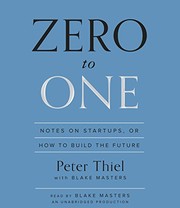
Why startups should build something new and own a small market before growing.
“Inspired by modern tech classics like Zero to One and The Hard Thing About Hard Things, I wrote the book to be succinct, thorough, and accessible.” — Chris Dixon
Source: I wrote a book: Read Write Own — cdixon
Recommended by: Balaji S. Srinivasan, Chris Dixon and 38 others
 Peter F. Druckerwrote 29 books here
 Michael E. Porterwrote 9 books here
 Clayton Christensenwrote 8 books here
 Jim Collinswrote 8 books here
 Lawrence A. Cunninghamwrote 5 books here
 Warren Buffettwrote 4 books here
 Patrick Lencioniwrote 4 books here
 Richard Rumeltwrote 3 books here
Show all 74
 Reid Hoffmanwrote 3 books here
 Seth Godinwrote 3 books here
 Stephen Coveywrote 3 books here
 Guy Kawasakiwrote 3 books here
 Simon Sinekwrote 3 books here
 Andrew S. Grovewrote 2 books here
 Ben Horowitzwrote 2 books here
 John C. Boglewrote 2 books here
 Alfred Rappaportwrote 2 books here
 Eric Schmidtwrote 2 books here
 David Heinemeier Hanssonwrote 2 books here
 Don Tapscottwrote 2 books here
 Marty Caganwrote 2 books here
 Aswath Damodaranwrote 1 book here
 John Kenneth Galbraithwrote 1 book here
 Michael Lewiswrote 1 book here
 Peter Thielwrote 1 book here
 Ray Daliowrote 1 book here
 Adam Grantwrote 1 book here
 Al Rieswrote 1 book here
 Chris Andersonwrote 1 book here
 Dan Arielywrote 1 book here
 David M. Rubensteinwrote 1 book here
 Ed Catmullwrote 1 book here
 Geoffrey A. Moorewrote 1 book here
 Gillian Tettwrote 1 book here
 Hamilton Helmerwrote 1 book here
 John Doerrwrote 1 book here
 Pat Dorseywrote 1 book here
 Tyler Cowenwrote 1 book here
 William N. Thorndike Jr.wrote 1 book here
 Dan Gardnerwrote 1 book here
 Ryan Holidaywrote 1 book here
 Safi Bahcallwrote 1 book here
 Bill Gateswrote 1 book here
 Brené Brownwrote 1 book here
 Daniel Grosswrote 1 book here
 David Hardingwrote 1 book here
 Jack Welchwrote 1 book here
 Jake Knappwrote 1 book here
 James Allworthwrote 1 book here
 Jerry Colonnawrote 1 book here
 Julie Zhuowrote 1 book here
 Nir Eyalwrote 1 book here
 Paul Jarviswrote 1 book here
 Reed Hastingswrote 1 book here
 Richard Bransonwrote 1 book here
 Scott Belskywrote 1 book here
 Scott Daviswrote 1 book here
 Sheryl Sandbergwrote 1 book here
 Stanley McChrystalwrote 1 book here
 Tony Hsiehwrote 1 book here
 Mohnish Pabrairecommends 194 books here
 Michael Mauboussinrecommends 62 books hereJim Collinsrecommends 29 books here
 Nat Eliasonrecommends 28 books here
 Patrick Collisonrecommends 27 books hereTony Hsiehrecommends 26 books here
 Marc Andreessenrecommends 24 books here
 Ev Williamsrecommends 23 books here
 David Cancelrecommends 20 books here
 Derek Siversrecommends 20 books here
 Keith Raboisrecommends 19 books here
 Alfred Linrecommends 18 books here
Show all 240
 Brad Feldrecommends 17 books hereReid Hoffmanrecommends 17 books hereBill Gatesrecommends 16 books here
 Tim Ferrissrecommends 16 books here
 Matt Mullenwegrecommends 15 books here
 Drew Houstonrecommends 14 books here
 Jeff Bezosrecommends 14 books hereSimon Sinekrecommends 12 books here
 Tom Bilyeurecommends 12 books here
 Andrew Chenrecommends 11 books here
 Brian Armstrongrecommends 11 books here
 Ryan Petersenrecommends 11 books hereRyan Holidayrecommends 10 books here
 Arianna Huffingtonrecommends 10 books hereNir Eyalrecommends 10 books hereSheryl Sandbergrecommends 10 books hereBen Horowitzrecommends 9 books here
 Paul Grahamrecommends 9 books here
 Alexis Ohanianrecommends 8 books here
 Changpeng Zhaorecommends 8 books here
 Kathryn Minshewrecommends 8 books here
 Michael Batkorecommends 8 books here
 Nick Huberrecommends 8 books here
 Ran Segallrecommends 8 books here
 Tobi Lütkerecommends 8 books hereWarren Buffettrecommends 7 books here
 Balaji S. Srinivasanrecommends 7 books here
 Jamie Dimonrecommends 7 books hereRichard Bransonrecommends 7 books here
 Satya Nadellarecommends 7 books hereRay Daliorecommends 6 books here
 Marc Benioffrecommends 6 books here
 Francois Rochonrecommends 6 books here
 Brett Adcockrecommends 6 books here
 Mark Cubanrecommends 6 books here
 Max Levchinrecommends 6 books here
 Michael Bloombergrecommends 6 books here
 Noah Kaganrecommends 6 books here
 Sam Altmanrecommends 6 books here
 Charlie Mungerrecommends 5 books herePeter Thielrecommends 5 books here
 Aaron Levierecommends 5 books here
 Chris Dixonrecommends 5 books here
 David Hellmannrecommends 5 books here
 Jason Calacanisrecommends 5 books hereJulie Zhuorecommends 5 books hereReed Hastingsrecommends 5 books here
 Vinod Khoslarecommends 5 books here
 Howard Marksrecommends 4 books here
 Guy Spierrecommends 4 books here
 Dustin Moskovitzrecommends 4 books here
 George Hatzisrecommends 4 books here
 Jack Dorseyrecommends 4 books hereJake Knapprecommends 4 books here
 Jensen Huangrecommends 4 books here
 Joel Connollyrecommends 4 books here
 Justin Kanrecommends 4 books hereMarty Caganrecommends 4 books here
 Matej Latinrecommends 4 books here
 Tony Robbinsrecommends 4 books hereJohn Doerrrecommends 3 books here
 Prem Watsarecommends 3 books hereGuy Kawasakirecommends 3 books here
 Ann Handleyrecommends 3 books here
 Bill Gurleyrecommends 3 books here
 Brian Cheskyrecommends 3 books here
 Daniel Ekrecommends 3 books here
 Elon Muskrecommends 3 books here
 Fred Wilsonrecommends 3 books here
 Graham Duncanrecommends 3 books here
 John Maedarecommends 3 books here
 Johnnie Gomezrecommends 3 books here
 Kevin Systromrecommends 3 books here
 Leo Polovetsrecommends 3 books here
 Meg Whitmanrecommends 3 books here
 Niki Scevakrecommends 3 books here
 Patrick Bet-Davidrecommends 3 books here
 Raoul Palrecommends 3 books here
 Ron Conwayrecommends 3 books here
 Stewart Brandrecommends 3 books here
 Stewart Butterfieldrecommends 3 books here
 Kevin Kellyrecommends 2 books here
 Morgan Houselrecommends 2 books here
 Seth Klarmanrecommends 2 books here
 Bill Nygrenrecommends 2 books hereDavid Heinemeier Hanssonrecommends 2 books here
 William Ackmanrecommends 2 books here
 Ana Fabregarecommends 2 books hereBrené Brownrecommends 2 books here
 Bryant Chourecommends 2 books here
 Cal Newportrecommends 2 books here
 Casey Neistatrecommends 2 books here
 Codie Sanchezrecommends 2 books here
 Daniel Burkarecommends 2 books here
 Daymond Johnrecommends 2 books here
 Doug McMillonrecommends 2 books here
 Eric Weinsteinrecommends 2 books here
 Fred Schebestarecommends 2 books here
 Gary Vaynerchukrecommends 2 books here
 Jack Marecommends 2 books here
 Jackie Vullinghsrecommends 2 books here
 James Altucherrecommends 2 books here
 Jeff Atwoodrecommends 2 books here
 John D Saundersrecommends 2 books here
 Jordan Hughesrecommends 2 books here
 Luis von Ahnrecommends 2 books here
 Mark Zuckerbergrecommends 2 books here
 Mel Robbinsrecommends 2 books here
 Mike Maples, Jr.recommends 2 books here
 Nate O'Brienrecommends 2 books here
 Ramit Sethirecommends 2 books here
 Susan Wojcickirecommends 2 books here
 Tim O’Reillyrecommends 2 books here
 Vlad Magdalinrecommends 2 books here
 Zack Oniskorecommends 2 books here
 Zoë Foster Blakerecommends 2 books hereAndrew S. Groverecommends 1 book here
 Daniel Kahnemanrecommends 1 book hereJohn C. Boglerecommends 1 book here
 Nassim Nicholas Talebrecommends 1 book here
 Bruce Flattrecommends 1 book here
 David Einhornrecommends 1 book hereEric Schmidtrecommends 1 book here
 Daniel Loebrecommends 1 book hereSafi Bahcallrecommends 1 book here
 Abi Tyas Tunggalrecommends 1 book here
 Aileen Leerecommends 1 book here
 Albert Wengerrecommends 1 book here
 Allen Gannettrecommends 1 book here
 Amy Hoodrecommends 1 book here
 Anne Wojcickirecommends 1 book here
 Anthony Pomplianorecommends 1 book here
 Arnold Van Den Bergrecommends 1 book here
 Biz Stonerecommends 1 book here
 Bryan Johnsonrecommends 1 book here
 Caterina Fakerecommends 1 book here
 Charles Kochrecommends 1 book here
 Chase Jarvisrecommends 1 book here
 Chelsea Krostrecommends 1 book here
 Cindy Eckertrecommends 1 book here
 Claire Diaz-Ortizrecommends 1 book here
 Craig Blairrecommends 1 book here
 Cynthia Johnsonrecommends 1 book here
 David Kadavyrecommends 1 book here
 Demis Hassabisrecommends 1 book here
 Diana Kimballrecommends 1 book here
 Donald Trumprecommends 1 book here
 Evan Spiegelrecommends 1 book here
 Ezra Kleinrecommends 1 book here
 Garry Tanrecommends 1 book here
 Ginni Romettyrecommends 1 book hereJames Allworthrecommends 1 book here
 Jeff Jordanrecommends 1 book here
 Jessica Hischerecommends 1 book here
 Kara Swisherrecommends 1 book here
 Kirsten Greenrecommends 1 book here
 Larry Ellisonrecommends 1 book here
 Larry Pagerecommends 1 book here
 Laura Demingrecommends 1 book here
 Melinda Gatesrecommends 1 book here
 Mike Cannon-Brookesrecommends 1 book here
 Mr. Beastrecommends 1 book here
 Nathan Murphyrecommends 1 book here
 Naval Ravikantrecommends 1 book here
 Nick Molnarrecommends 1 book here
 Peter Attiarecommends 1 book here
 Peter Malloukrecommends 1 book here
 Phil Libinrecommends 1 book here
 Ruth Poratrecommends 1 book here
 Safra Catzrecommends 1 book hereScott Belskyrecommends 1 book here
 Sophia Amorusorecommends 1 book here
 Steve Jobsrecommends 1 book here
 Susan Cainrecommends 1 book here
 Terrance McArthurrecommends 1 book here
 Tim Cookrecommends 1 book here
 Trevor Ncuberecommends 1 book here
 Vlad Tenevrecommends 1 book here
 Wally Weitzrecommends 1 book here