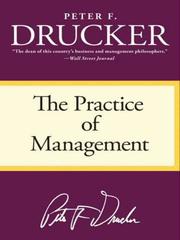
The Practice of Management
Management as a discipline: business purpose, objectives and managing managers.
The book that defined management as a discipline.
Summary
Peter Drucker published this in 1954 and it established management as a subject that could be studied and taught. Before it, books about business addressed either specific functions or the personal qualities of executives; Drucker treated management as a distinct body of knowledge with its own principles.
The famous formulations are here. The purpose of a business is to create a customer, from which it follows that marketing and innovation are the only functions producing results and everything else is a cost. Management must answer the question what is our business, and the answer must come from the customer's perspective rather than the producer's, which Drucker illustrates with the argument that a railway company defining itself as being in the railway business rather than the transport business has answered wrongly. A business must set objectives in multiple areas simultaneously, because optimising any single measure damages the others; Drucker lists eight, including market standing, innovation, productivity, physical and financial resources, profitability, manager performance and development, worker performance and attitude, and public responsibility.
The book also introduces management by objectives and self-control, in which managers set objectives for their own units in line with the enterprise's goals and measure their own performance against them, which Drucker distinguishes sharply from management by targets imposed from above. It covers the manager's job, the structure of the organisation, and the development of managers. The specific industrial examples are dated and the treatment of the worker belongs to its period. The framing questions have not been superseded.
Key takeaways 7
- The purpose of a business is to create a customer, which makes marketing and innovation the only functions producing results.
- A business must define what business it is in from the customer's perspective, and defining it by its product answers wrongly.
- Objectives must be set in multiple areas simultaneously, because optimising a single measure damages the others.
- Management by objectives means managers setting and measuring their own goals in line with the enterprise's, not targets imposed from above.
- Profit is a condition of survival and a cost of remaining in business rather than the purpose of the enterprise.
- Management is a distinct body of knowledge that can be studied and taught rather than a set of personal qualities.
- An organisation must develop the managers it will need in the future, and this is a present responsibility rather than a future one.
Who should read it
Executives who want the book that created management as a discipline and the framing questions that every subsequent strategy framework restates.
About Peter F. Drucker
Management writer and consultant; professor at Bennington, NYU and Claremont Graduate University
He invented management as a field of study, and The Practice of Management and The Effective Executive remain the primary sources every later writer builds on.
Who recommended it 1 · 1 direct
Similar books 6
Chosen by shared topics, the entries that hold them, and the people who recommended both.
An 800-page treatise on management, meant as the field's standard work.
Recommended by: Jim Collins, Tobi Lütke
How a business focuses on opportunities, not problems, to produce economic results.
Recommended by: Jim Collins
Essays on the information age, organisations and management practice.
Recommended by: Jim Collins
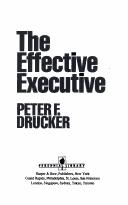
Effectiveness is learned practice: manage time, pick priorities, decide well.
“The second is The Effective Executive by Peter Drucker, and the central core of that book is really about it's very easy to mistake effort for effectiveness.” — Drew Houston
Source: The Tim Ferriss Show Transcripts: Drew Houston (#334)
Recommended by: Drew Houston, Ev Williams, Jim Collins and 6 others
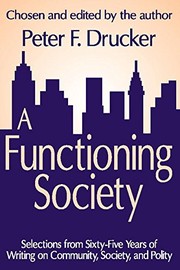
Essays from five decades on community, society and how they function.
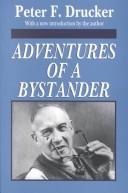
A memoir told through portraits of the people the author knew, from Vienna on.
Recommended by: Mohnish Pabrai, Stewart Brand
Where it sits in the reference 3
Topics 1
As an Amazon Associate I earn from qualifying purchases.