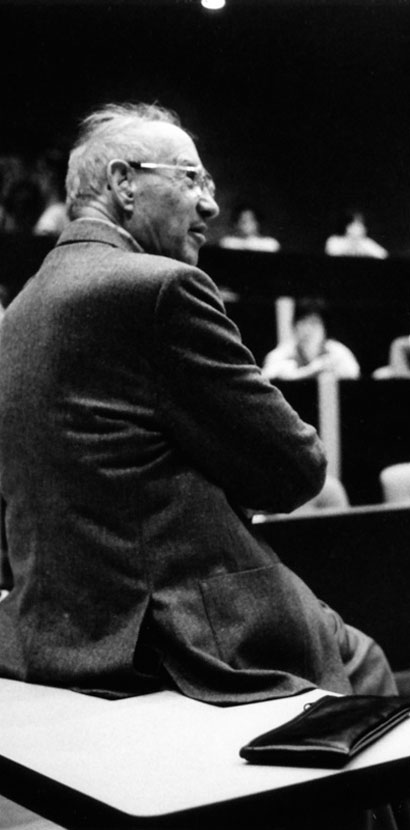
Peter F. Drucker
Austrian-American consultant, educator and author whose writing laid foundations of modern management theory and popularised management by objectives. Died in 2005. He invented management as a field of study, and The Practice of Management and The Effective Executive remain the primary sources every later writer builds on.
 Bennington
 NYU
 Claremont Graduate University
Start here
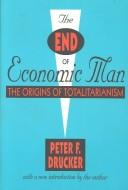
Fascism and Nazism explained as fundamental revolutions.
Recommended by: Jim Collins
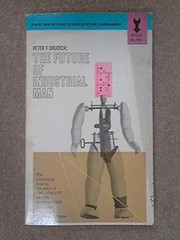
A basic social theory of what makes a society legitimate, applied to industry.
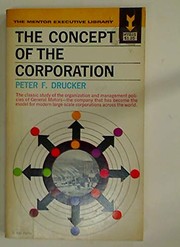
Eighteen months inside General Motors: the large corporation as a social institution.
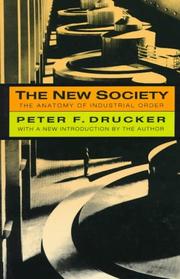
The third of the early books on industrial society: work, management and labour.
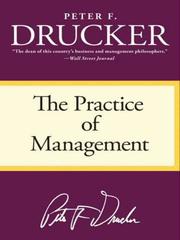
Management as a discipline: business purpose, objectives and managing managers.
Recommended by: Jim Collins
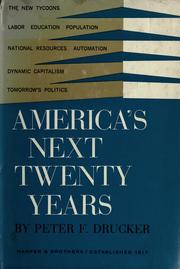
Forecasts for the United States over two decades, drawn from trends already set.
A forecast of changes in three areas of life, starting with a shift in philosophy.
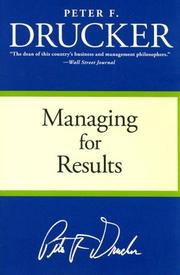
How a business focuses on opportunities, not problems, to produce economic results.
Recommended by: Jim Collins
Effectiveness is learned practice: manage time, pick priorities, decide well.
“The second is The Effective Executive by Peter Drucker, and the central core of that book is really about it's very easy to mistake effort for effectiveness.” — Drew Houston
Source: The Tim Ferriss Show Transcripts: Drew Houston (#334)
Recommended by: Drew Houston, Ev Williams, Jim Collins and 6 others

Four breaks with the postwar world, from a global economy to knowledge as capital.
Recommended by: Patrick Collison
Essays on technology, its history and its link to management and society.
Recommended by: Patrick Collison
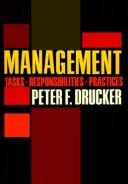
An 800-page treatise on management, meant as the field's standard work.
Recommended by: Jim Collins, Tobi Lütke
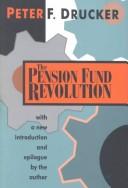
How employee pension funds came to own a controlling share of American industry.
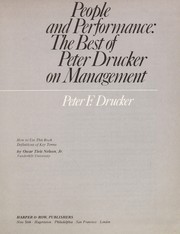
An anthology of management writing on people, decisions and performance.
“Peter F. Drucker, People and Performance: The Best of Peter Drucker on Management (Boston, MA: Harvard Business School Press, 2007), 56” — Michael Mauboussin
Source: A Long Look at Short-Termism: Questioning the Premise, page 21
Recommended by: Michael Mauboussin
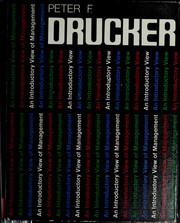
A condensed teaching version of Management: Tasks, Responsibilities, Practices.
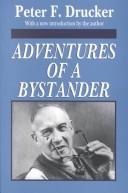
A memoir told through portraits of the people the author knew, from Vienna on.
Recommended by: Mohnish Pabrai, Stewart Brand
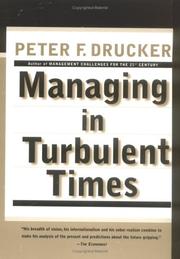
How to manage through inflation, oil shocks and slowing productivity.
Essays from the seventies on economics, management and how they meet.
Columns on the changing conditions of executive work.
Innovation as a learnable discipline, with seven sources of opportunity to search.
Recommended by: Patrick Collison, Patrick O'Shaughnessy and 1 other
Essays on new economic forces, the workplace and management concepts.
The new limits of government, political leadership and the transnational economy.
How to manage non-profit institutions, with interviews with their leaders.
Peter Drucker's Harvard Business Review articles across twenty-six years.
Essays on management and organisations from the late eighties and early nineties.
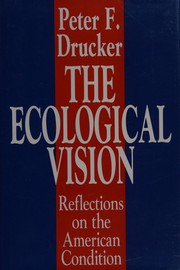
Essays on 'social ecology': how societies and institutions change, Japan included.
How developed economies moved from capitalism to a knowledge society.
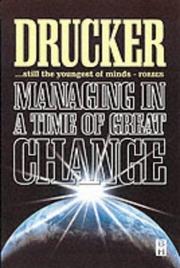
Essays on the information age, organisations and management practice.
Recommended by: Jim Collins
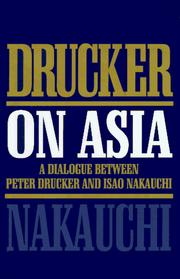
A dialogue by letter between Peter Drucker and Daiei's founder on Asia's economies.
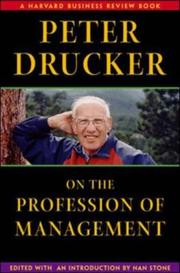
Harvard Business Review articles across three decades on management as a profession.
Which management assumptions had stopped being true at the century's end.
Twenty-six chapters chosen as a one-book introduction to management.
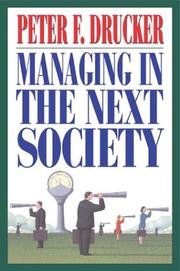
Essays on the internet boom's aftermath and the demographic changes ahead.
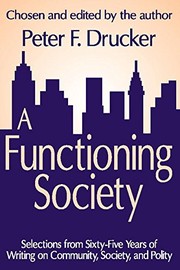
Essays from five decades on community, society and how they function.
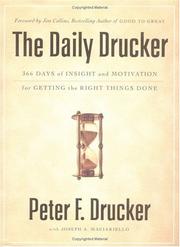
366 daily readings from management writing, each with an action point.
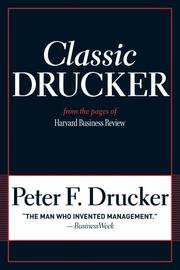
Fifteen of Peter Drucker's Harvard Business Review articles.
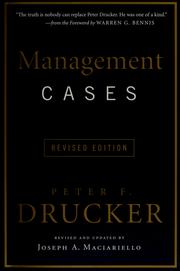
Short management cases, the companion to Management.
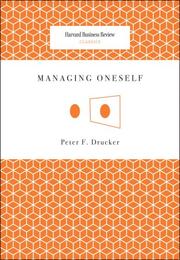
Knowledge workers must run their own careers by knowing their strengths and values.
Recommended by: Nat Eliason, Patrick Collison and 4 others
How pension funds made American workers owners of the nation's economy.
“See his 1976 book The Unseen Revolution, describing the 1950 genesis of General Motors’ precedent-setting pension plan, designed to invest in “The American Economy.” — John C. Bogle
Source: Putting Investors First, page 6
Recommended by: John C. Bogle
a symposium on the occasion of the fiftieth anniversary of the Graduate School of Business Administration, New York University
 The End of Economic Man | Fascism and Nazism explained as fundamental revolutions. | 1939 | Jim Collins | |
 The Future of Industrial Man | A basic social theory of what makes a society legitimate, applied to industry. | 1942 | – | |
 Concept of the Corporation | Eighteen months inside General Motors: the large corporation as a social institution. | 1946 | T1 | – |
 The New Society | The third of the early books on industrial society: work, management and labour. | 1949 | T4 | – |
 The Practice of Management | Management as a discipline: business purpose, objectives and managing managers. | 1954 | T1 | Jim Collins |
 America's Next Twenty Years | Forecasts for the United States over two decades, drawn from trends already set. | 1957 | T4 | – |
 Landmarks of Tomorrow | A forecast of changes in three areas of life, starting with a shift in philosophy. | 1957 | – | |
 Managing for Results | How a business focuses on opportunities, not problems, to produce economic results. | 1964 | T4 | Jim Collins |
 The Effective Executive | Effectiveness is learned practice: manage time, pick priorities, decide well. | 1967 | T1 | Drew Houston, Ev Williams, Jim Collins and 6 others |
 The Age of Discontinuity | Four breaks with the postwar world, from a global economy to knowledge as capital. | 1969 | T4 | Patrick Collison |
 Technology, Management and Society | Essays on technology, its history and its link to management and society. | 1970 | T4 | Patrick Collison |
 Men, Ideas and Politics | – | 1971 | – | |
 Management: Tasks, Responsibilities, Practices | An 800-page treatise on management, meant as the field's standard work. | 1973 | T4 | Jim Collins, Tobi Lütke |
 The Pension Fund Revolution | How employee pension funds came to own a controlling share of American industry. | 1976 | T4 | – |
 People and Performance | An anthology of management writing on people, decisions and performance. | 1977 | T4 | Michael Mauboussin |
 An Introductory View of Management | A condensed teaching version of Management: Tasks, Responsibilities, Practices. | 1977 | T4 | – |
 Adventures of a Bystander | A memoir told through portraits of the people the author knew, from Vienna on. | 1979 | T4 | Mohnish Pabrai, Stewart Brand |
 Managing in Turbulent Times | How to manage through inflation, oil shocks and slowing productivity. | 1980 | T4 | – |
 Toward the Next Economics and Other Essays | Essays from the seventies on economics, management and how they meet. | 1981 | T4 | – |
 The Changing World of the Executive | Columns on the changing conditions of executive work. | 1982 | T4 | – |
 The Last of All Possible Worlds | Novel | 1982 | – | |
 The Temptation to Do Good | Novel | 1984 | – | |
 Innovation and Entrepreneurship | Innovation as a learnable discipline, with seven sources of opportunity to search. | 1985 | T1 | Patrick Collison, Patrick O'Shaughnessy, Matt Mullenweg |
 The Frontiers of Management | Essays on new economic forces, the workplace and management concepts. | 1986 | T4 | – |
 The New Realities | The new limits of government, political leadership and the transnational economy. | 1989 | – | |
 Managing the Non-Profit Organization | How to manage non-profit institutions, with interviews with their leaders. | 1990 | T4 | – |
 Drucker in the Harvard Business Review, 1963-1989 | Peter Drucker's Harvard Business Review articles across twenty-six years. | 1991 | T4 | – |
 Managing for the Future | Essays on management and organisations from the late eighties and early nineties. | 1992 | T4 | – |
 The Ecological Vision | Essays on 'social ecology': how societies and institutions change, Japan included. | 1993 | T4 | – |
 Post-Capitalist Society | How developed economies moved from capitalism to a knowledge society. | 1993 | T4 | – |
 Managing in a Time of Great Change | Essays on the information age, organisations and management practice. | 1995 | T4 | Jim Collins |
 Drucker on Asia | A dialogue by letter between Peter Drucker and Daiei's founder on Asia's economies. | 1997 | T4 | – |
 Peter Drucker on the Profession of Management | Harvard Business Review articles across three decades on management as a profession. | 1998 | T4 | – |
 Management Challenges for the 21st Century | Which management assumptions had stopped being true at the century's end. | 1999 | T4 | – |
 The Essential Drucker | Twenty-six chapters chosen as a one-book introduction to management. | 2001 | T4 | – |
 Managing in the Next Society | Essays on the internet boom's aftermath and the demographic changes ahead. | 2002 | T4 | – |
 A Functioning Society | Essays from five decades on community, society and how they function. | 2003 | T4 | – |
 The Daily Drucker | 366 daily readings from management writing, each with an action point. | 2004 | T4 | – |
 Classic Drucker | Fifteen of Peter Drucker's Harvard Business Review articles. | 2006 | T4 | – |
 Management Cases | Short management cases, the companion to Management. | 2008 | T4 | – |
 Managing Oneself | Knowledge workers must run their own careers by knowing their strengths and values. | 2008 | T4 | Nat Eliason, Patrick Collison, Patrick O'Shaughnessy and 3 others |
| The Unseen Revolution | How pension funds made American workers owners of the nation's economy. | 1976 | John C. Bogle | |
| The Drucker Foundation self-assessment tool | – | 1993 | – | |
| Preparing tomorrow's business leaders today | a symposium on the occasion of the fiftieth anniversary of the Graduate School of Business Administration, New York University | 1969 | – | |
| The Drucker lectures | – | 2010 | – | |
| Drucker on management | – | 1970 | – |
| Managing Oneself | Harvard Business Review | Article | 2005-01-01 |
| What Makes an Effective Executive | Harvard Business Review | Article | 2004-06-01 |
| The Discipline of Innovation | Harvard Business Review | Article | 2002-08-01 |
| They're Not Employees, They're People | Harvard Business Review | Article | 2002-02-01 |
| Looking Ahead: Implications of the Present | Harvard Business Review | Article | 1997-09-01 |
| The Information Executives Truly Need | Harvard Business Review | Article | 1995-01-01 |
| The Theory of the Business | Harvard Business Review | Article | 1994-09-01 |
| The Post-Capitalist Executive: An Interview with Peter F. Drucker | Harvard Business Review | Interview | 1993-05-01 |
| Management and the World's Work | Harvard Business Review | Article | 1988-09-01 |
| The Coming of the New Organization | Harvard Business Review | Article | 1988-01-01 |
| How to Make People Decisions | Harvard Business Review | Article | 1985-07-01 |
| What We Can Learn from Japanese Management | Harvard Business Review | Article | 1971-03-01 |
| The Effective Decision | Harvard Business Review | Article | 1967-01-01 |
| Managing for Business Effectiveness | Harvard Business Review | Article | 1963-05-01 |


