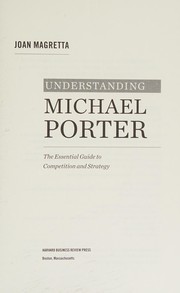
Understanding Michael Porter: The Essential Guide to Competition and Strategy
Porter's frameworks on competition and strategy, restated with misuses corrected.
Joan Magretta's accessible synthesis of Porter's body of work clarifies the distinction between operational effectiveness and strategy proper. Essential for anyone who found Competitive Strategy dense or wants the argument stripped of its academic scaffolding.
Summary
Magretta worked with Porter at Harvard and wrote a compact restatement of his framework, organised as a correction of the ways it gets misused. The book runs about two hundred pages and covers material that occupies several thousand pages in the original works.
The first half addresses competition. Magretta argues that the common assumption, that competition means striving to be the best, is wrong and produces convergence: firms imitate each other's practices, compete on the same dimensions, and compete away their profits. Porter's alternative is that competition should be to be unique, meaning to serve a distinct set of needs, customers or access channels. She then presents the five forces as an analysis of industry structure that explains why profitability differs systematically across industries, and insists that the forces determine the average industry profitability while a firm's position within the industry determines its deviation from that average. Competitive advantage, correctly defined, means achieving a price premium or a lower cost than rivals, measurable in the profit and loss account, not a general sense of being better.
The second half covers strategy. A strategy requires a distinct value proposition, a tailored value chain with activities that differ from rivals', explicit trade-offs about what the firm will not do, fit between activities so they reinforce each other, and continuity over time. Magretta argues that trade-offs are the element most often missing and that fit is what makes a strategy hard to copy, because a rival must replicate a whole system rather than a single practice.
She also restates Porter's distinction between operational effectiveness and strategy, arguing that most improvement programmes are the former and produce no durable advantage. The book adds little new and is best read as a clear summary; readers seeking the original evidence must go to Competitive Strategy and Competitive Advantage.
Key takeaways 7
- Competing to be the best drives rivals toward identical positions and eliminates the profit they are competing for.
- Industry structure explains a large share of the variation in profitability across firms, independent of managerial quality.
- Competitive advantage means a measurable price premium or cost advantage relative to rivals, not general superiority.
- A strategy requires explicit choices about which customers and needs the firm will not serve.
- Fit between activities, rather than any single activity, is what makes a strategy difficult to imitate.
- Operational effectiveness improvements diffuse across an industry and produce no lasting advantage.
- Continuity of direction is a condition of strategy, because tailoring a value chain takes years and repeated changes prevent it.
Who should read it
Founders and executives who need Porter's framework correctly stated and applied, without reading three of his books first.
Who recommended it 2 · 2 direct
“Joan Magretta, Understanding Michael Porter: The Essential Guide to Competition and Strategy (Boston, MA: Harvard Business Review Press, 2012), 114-115”
Similar books 6
Chosen by shared topics, the entries that hold them, and the people who recommended both.
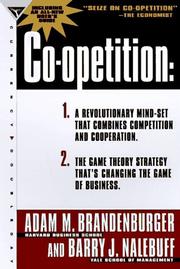
Game theory applied to business, which is cooperative and competitive at once.
“Adam M. Brandenburger and Barry J. Nalebuff, Co-opetition (New York: Currency Doubleday, 1996)” — Michael Mauboussin
Source: The Ecosystem Edge, page 10
Recommended by: Michael Mauboussin, Mohnish Pabrai
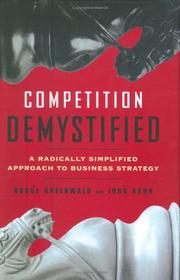
Why barriers to entry are the one force that matters in business strategy.
“Bruce Greenwald and Judd Kahn, Competition Demystified: A Radically Simplified Approach to Business Strategy (New York: Portfolio, 2005), 52-76” — Michael Mauboussin
Source: New Business Boom and Bust: How Capitalism Experiments, page 9
Recommended by: Li Lu, Michael Mauboussin, Mohnish Pabrai
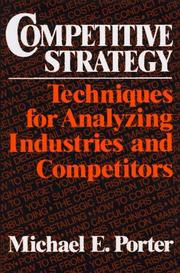
The five forces model for analysing an industry and a firm's place in it.
“For example, I read Competitive Strategy and Competitive Advantage by Michael Porter.” — Michael Mauboussin
Source: Thirty Years: Reflections on the Ten Attributes of Great Investors, page 3
Recommended by: Jim Collins, Michael Mauboussin and 3 others
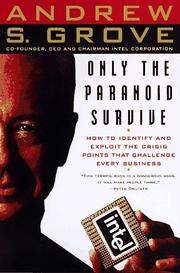
How to spot a strategic inflection point, when a tenfold force changes a business.
“There's also a number of great books that just tell the narrative of one company, such as The New New Thing, Startup, eBoys, Only the Paranoid Survive, Breaking Windows, but I've left those off the list even though they are very fun to read.” — Andrew Chen
Source: Ten classic books that define tech
Recommended by: Andrew Chen, Charlie Munger, Jim Collins and 12 others
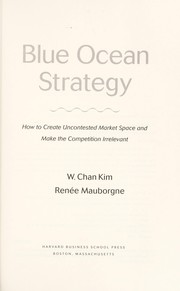
How to create new market space instead of fighting rivals over existing demand.
“It's the epitome of Blue Ocean Strategy. To find a breakthrough angle in commerce, it's as important to decide where you will not compete, as it is to decide where you will compete.” — David Heinemeier Hansson
Source: Turns out nobody cared about panel gaps
Recommended by: David Heinemeier Hansson, Mohnish Pabrai and 6 others
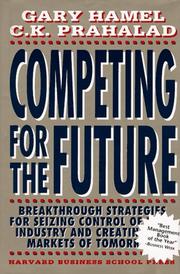
How firms lead future industries by seeing tomorrow's chances and building skills.
Recommended by: Mohnish Pabrai
Where it sits in the reference 2
Topics 1
As an Amazon Associate I earn from qualifying purchases.