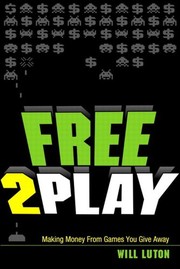
Free-to-Play
How to design and earn money from free-to-play games.
Games operator on retention, whales and the shape of monetisation curves.
Summary
Luton, a game designer and consultant, wrote a practical guide to designing and monetising free-to-play games.
The economic premise is that a free game removes the purchase decision entirely, which produces a very large user base of whom a small fraction pay. Luton is explicit that the model works arithmetically: if the lifetime value of an average user exceeds the cost of acquiring one, the business scales with marketing spend. Everything else follows from that inequality.
The design content covers how to make it hold. Retention is the first requirement, since a user who leaves in the first session has no lifetime value, and Luton covers first-session design, tutorial construction and the early progression that establishes habit. Engagement over time requires a core loop that remains interesting, session pacing and reasons to return. Monetisation design covers what is sold: convenience through time acceleration, capability through items that improve performance, content through new levels or characters, and personalisation, with the argument that each appeals to a different motivation and that a game should offer more than one. He covers pricing, virtual currency as a device that separates the purchase decision from the spending decision, and the design of the moments at which a purchase is offered.
The analytics content covers the metrics: daily and monthly active users, retention curves at defined days, average revenue per user and per paying user, conversion rate, and the funnel from acquisition to first purchase.
Luton addresses the ethical questions briefly, including the concentration of revenue among a small number of heavy spenders and the design of mechanics that exploit compulsion.
The book is from 2013 and the market has changed substantially, including regulatory attention to loot boxes and to spending by minors, platform policy changes and privacy rules that broke the user acquisition targeting the model depended on. The design principles remain applicable.
Key takeaways 7
- A free-to-play business works when the lifetime value of an average user exceeds the cost of acquiring one, and everything else serves that inequality.
- Retention in the first session determines whether a user has any lifetime value at all, which makes early design the highest-leverage work.
- A small fraction of users generate nearly all revenue, so the model depends on serving heavy spenders without alienating everyone else.
- Games can sell convenience, capability, content or personalisation, and each appeals to a different motivation.
- Virtual currency separates the purchase decision from the spending decision, which changes how users evaluate cost.
- The moment at which a purchase is offered determines conversion more than the price does.
- Privacy changes that broke acquisition targeting altered the economics the model depended on after this book was written.
Who should read it
Game designers and operators of consumption-based digital products who want the design and monetisation mechanics of the free-to-play model.
Similar books 6
Chosen by shared topics, the entries that hold them, and the people who recommended both.
The arithmetic of freemium businesses: conversion, lifetime value and whales.
Economics for information goods: pricing, versioning, lock-in and network effects.
“Carl Shapiro and Hal R. Varian, Information Rules (Boston, MA: Harvard Business School Press, 1999), 174” — Michael Mauboussin
Source: The Ecosystem Edge, page 10
Recommended by: Michael Mauboussin, Mohnish Pabrai and 1 other
Why social tools should be the backbone of a business model, not just its media.
Recommended by: Kathryn Minshew
Forecasts of how information technology and biotechnology will change business.
Recommended by: Mohnish Pabrai
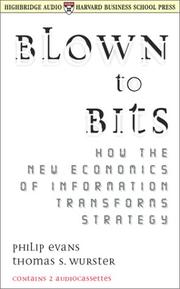
How the new economics of information ends the trade-off between richness and reach.
“Evans, Philip, and Thomas S. Wurster, Blown to Bits: How the New Economics of Information Transforms Strategy (Boston: Harvard Business School Press, 1999)” — Michael Mauboussin
Source: Measuring the Moat: Assessing the Magnitude and Sustainability of Value Creation, page 48
Recommended by: Michael Mauboussin, Mohnish Pabrai
How technology can run businesses better and change the nature of business.
Recommended by: Mohnish Pabrai