Updates

  1. 137 new fund letters and reports, each with its own page: Kayne Anderson Rudnick (48 market briefings, KayneCast episodes and TV commentaries), Shelton Capital Management (48 shareholder reports and a commentary), Lakehouse Capital (10 Small Companies Fund letters), Smead (5 newsletters), RIT Capital Partners (5 monthly commentaries), Kovitz, Legal & General, Generation, Hosking, Marram, Munro, Oldfield and others.
  2. 200 new fund letters and reports, each with its own page: Spheria (41 monthly reports), Peapack Private (41 weekly recaps and planning newsletters), Fort Washington (23), Polen Capital (15), Aristotle Pacific (14), Riverwater (13), Chou (10), Apollo Asia Fund (8, back to 1998), Personal Asset Trust, Rockwood Strategic, J Capital Research, I/O Fund, Penn Davis McFarland, Pomona and others.
  3. Investor pages have one Investments tab with shares, changes, % owned, class, market cap and Market cap and Status filters, a Funds tab listing each fund the firm runs, and assets under management from Form ADV. The Investors table shows AUM and current investments, and its search finds investors by what they hold.
  4. Filters, search and sort stay as you left them when you come back to a section. Person cards look like book cards. Company pages name their Investors tab Ownership. Kind and Sector filters use four kinds and GICS sectors with industries. Dead links left the Links tabs.
  5. 190 more investors from fiscal.ai's list, with their sites, letters, partners and 13F holdings; 556 more partner descriptions. Experts now lists only people.
  6. Fund letters lists 144 new documents from 23 firms, each with its own page: a summary, key insights and quotes. Among them: 37 BlackRock articles, 21 Value Partners monthly notes, eight Baron Capital letters, six Stone Sentinel letters to partners, seven Value Line portfolio manager Q&As, BNY's 2026 earnings releases and Starboard Value's 2026 conference presentations.
  7. 584 more investors, with their websites, 6,776 letters from their own sites, 1,385 partners with pages and the 13F holdings of 213 firms. New letters arrive daily from 290 more archives.
  8. Media and Companies filter by GICS sector and industry group, taken from the companies an episode or page names. 1,860 more company pages show a logo, the SEC's list included.
  9. The home page counts what the platform holds and lists features such as the document reader, the player and saved marks. Settings sits at the foot of the rail. Book cards are a quarter wider, so rows hold fewer. Companies drops the Named in filter, and the Role list in your account runs A to Z.
  10. Investor pages of 13 firms show their newsroom's latest posts. New 13F filings are read as the SEC publishes them.
  11. Investor pages have an Investments tab: 13,975 holdings for 105 investors, from their 13F filings with the SEC and their own portfolio pages, with status and sector. 7,338 more companies have a page of their own.
  12. A podcast or YouTube episode keeps playing while you move around the site, in a bar with skip, speed and volume. Media tables show each episode's length and description.
  13. Press releases come from each company's own newsroom (167 companies); SEC filings sit on the Filings tab. Tickers name their exchange, and a company's Experts tab includes guests whose episode description names it.
  14. Letter types now include Market commentary, Fact sheet, Interim report, Annual report, Proxy circular and Governance document. The reader opens over the whole window.
  15. Partners of investment firms have 2,836 appearances and 580 pieces of writing on their pages; Derek Sivers's page lists every book he rates, with his rating.
  16. Fund letters lists three Akre Focus shareholder reports: the ETF's annual report for the year to July 2026, its semi-annual report to January 2026 and the fund's semi-annual report to January 2025, each with its own page: a summary, key insights and quotes.
  17. 837 partners of 73 investment firms now have their own pages, with title, description, photograph and social accounts; Andreessen Horowitz partners' pages also list their writing on a16z.com.
  18. Company pages have a Press releases tab: 8,229 releases for 203 companies, from SEC filings and company newsrooms. Companies filter by For-profit or Non-profit. Own media is a table with filters. Media filters by sector and industry. Publication pages link their publisher in the description.
  19. The Unilever page's Letters tab shows what each fund letter says about Unilever, word for word with its page, and whether the letter is bullish, bearish, mixed or neutral. Filter by sentiment, and see 10 letters at a time.
  20. 492 more fund letters and 3,183 more articles show the day they were published, read from each letter's first page or each article's own page.
  21. The PDF reader has a search box: type words to see every match in the document and step through them. About 540 letters that were web pages, among them Oakmark's commentaries, Bill Miller's letters and Howard Marks's memos, now open in the reader.
  22. Person pages: recommendations open with tier 1 books; one button per organisation; transcripts sit on their episodes; the books on 129 reading lists joined the Recommends tabs.
  23. Companies lists every company with a ticker on the SEC's list, with a Source filter. A quote on a company page opens the letter at that page with the words marked. A company's Media tab lists only episodes that name it, and a new Own media tab lists its podcasts, publications and YouTube channel. Show pages link their publisher. A page opened from a table no longer shows that table's filters beside it.
  24. Company, investor and person pages show more of their social accounts: Facebook, TikTok, Bluesky, Medium, GitHub, Discord and podcast shows. Investor pages list every partner the firm's own team page names: 965 people across 73 investors, 98 for Andreessen Horowitz.
  25. About 170 more letters and papers open in the reader: Mohnish Pabrai's letters and transcripts from his site's new folder, and free copies of papers by Asness, Harvey, Altman, Lo and others from their own or their schools' sites.
  26. Every company a fund letter names has a page, with the letters and quotes that name it: 47 new pages, among them Atom Computing, Hugging Face, Rolls-Royce Holdings and Westinghouse Electric. Company pages have a Quotes tab.
  27. A person's Writing tab has a Type column and filter (Article, Essay, Transcript, Speech, Foreword, Interview and the rest), and Publication names only the publication that published each piece.
  28. Fund letters opens on the newest published letter, and a letter or paper found by search opens its own page here instead of the publisher's site.
  29. A letter or paper with a copy on the site opens its PDF over its page, with a button to open it in a new tab. Select text to highlight or underline it; signed-in readers keep their marks in their account. Each quote opens the PDF at its page with its words marked, and a Source link leads to the publisher's original.
  30. Fund letters lists 61 more documents, each with its own page: Fairfax's 2025 and 2026 interim reports, proxy circulars and 2025 annual report (with their French editions), 26 Charlie Munger meeting transcripts, talks and essays, Third Point's 2026 monthly reports and Malibu Life's interim results, and a Seth Klarman interview. Papers adds Richard Thaler's two 2020 editorials on nudges.
  31. Fund letters lists Lux Capital's letters for Q2 and Q3 2026, by Josh Wolfe, each with its own page: a summary, key insights and quotes.
  32. Fund letters lists Brookfield's letter to shareholders for Q3 2026, by Bruce Flatt, with its own page: a summary, key insights and quotes.
  33. Fund letters lists Howard Marks's memo of 11 November 2026, A Layman Thinks About AI, with its own page: a summary, key insights and quotes.
  34. Fund letters lists 118 more letters, each with its own page: 44 weekly commentaries by Jeremy Siegel from 2026, 31 issues of Van Tharp's newsletter from 2018, 23 Pabrai Investment Funds letters from 2021 to Q3 2026, 13 Efficient Frontier essays by William Bernstein, Oakmark's three 3Q 2026 commentaries, two Lindsell Train reports, a John Hussman comment and Third Point's Q3 2026 letter.
  35. 2,027 more books carry a one-line description in the Books table and on their pages; 7,067 of 7,715 have one, every tier 1, 2 and 3 book among them.
  36. Fund letters lists 187 more letters from 19 firms, among them Permanent Equity, Social Capital, Lux Capital, Square Peg, Bestinver, Cobas, Sequoia Fund, Marketfield and EquityCompass; each shows on its investor's page and has a page of its own.
  37. 2,928 more books carry a one-line description in the Books table and on their pages, so every tier 1, 2 and 3 book has one; 5,040 in all.
  38. Every publication on Newsletters has its own page: its writing, its writers, its staff and who recommends it. Investor pages have a Management tab; a company's Experts tab now leaves out its own people, who list under Management. Tabs on a phone move sideways only.
  39. Every fund letter and research paper has its own page: the thesis, the PDF, the companies and books it names, and for 176 letters and 24 papers so far a summary, key insights and quotes with their page.
  40. 99 books that no page listed now sit under their topics in Books, among them Caste, American Prometheus and Pale Blue Dot.
  41. Newsletters lists every newspaper, magazine, investment newsletter, journal and blog the reference holds, 442 in all, with the people who write there. The search box keeps your last 20 searches. You can create an account.
  42. 283 books that fund managers recommend in their letters are on the shelf, each with the letter's own words and page; investor pages have a Recommends tab.
  43. Person, company, investor and show pages link their own accounts on X, Threads, Instagram, LinkedIn, YouTube and Substack: 275 people, 552 companies and organisations, 88 investors and 478 shows.
  44. 716 more book recommendations name their source: the person's own reading list, letter, blog post, speech or interview, or an article that reports it. 232 of them quote the person's own words about the book, on the book card and on the book's page.
  45. Every US-listed company has a page with its SEC filings. Company pages list their experts and their management, past and present. Fund managers sit under Investors. Each show has a page of its episodes, and an episode page names its guests and hosts. Biographies lists groups, then people. Breadcrumbs show where a page sits.
  46. Media lists every podcast episode, video, interview and talk, over 10,000, by person, company, publisher and event; each filter searches its own choices. Books opens on its table, then Browse, then Authors and Recommenders. A filter's count no longer covers its arrow.
  47. A book that no company, country or subject page lists shows its topics under Where it sits in the reference. On a phone, a page's tabs scroll sideways only. Descriptions read the same on every page. See them in the Experts tab lists every expert the page names.
  48. Every podcast episode, video and interview has its own page with a video or audio player and a link to the source. Investor pages show each company's sector and market cap; firms such as Berkshire Hathaway have one page that holds their letters and their company tabs. Letters tabs filter by company and search the theses. Companies filter by Public, Private and Defunct and link each company's website.
  49. Every tab, view and search has its own address, such as /books/table/asset or /letters/companies, so Back works and a link opens the same place. Page addresses no longer end in .html. Fund letters, Investors, Companies and Papers load about a fifth of the data they did.
  50. Fund letters has a Companies tab: every company the letters name, with its market cap, sector, country, and how many letters and investors name it. Investor pages link each investor's website. Lists in table cells end with “… and N more” at every width.
  51. 1,120 more book summaries; descriptions for 373 papers; pages for 137 more companies, each with the fund letters that discuss it; 215 official photographs; search has its own page.
  52. 411 more books have a summary; person pages list 930 more of the books they wrote; 147 people show their official photograph.
  53. Every investor has a page with its letters and the companies they discuss; company pages list the investors whose letters name them.
  54. A Companies section at the top of the rail lists every company the books, experts and fund letters name.
  55. Person pages list letters, writing, profiles and links as sortable tables with filters, and show each person's companies as links; Fund letters show each letter's description in its own column.
  56. Experts show a checked job title and a short description of each person; 30 more people have photographs.
  57. Every company, fund, university and publication the experts work for has a page listing the people there.
  58. Fund letters show each letter's thesis and filter by it; 225 person pages list the essays, columns and newsletter issues the person wrote.
  59. Person pages list every essay and newsletter issue a person wrote, and their own books as a table in List view.
  60. Recommends shows the five largest kinds of book and the rest under More; browse pictures load sooner.
  61. Podcasts and talks link the original episode, filter by Audio and video or Press, and list each publisher once.
  62. Pages are wider, Recommends has List and Grid, and a filter clicked again turns off.
  63. Book cards sit in a ruled grid with Open Library and Goodreads links and each book's one-line note.
  64. Funds is now Investors; each investor's styles are buttons that filter the table.
  65. Podcasts and talks on a person's page filter by year and publisher and show as a list or a grid of pictures.
  66. Quotes show only people's own words: 472 summaries written by list sites are gone.
  67. Country pages open from Browse again, and every link on the shelf lands on a page.
  68. Subject and person pages show their sections as tabs, and each book appears once on a person's page.
  69. Book cards show the quote, who said it and the source; grids show five cards to a row.
  70. On a phone, a menu holds the sections, search, Updates, Feedback and dark mode.
  71. Feedback takes a screenshot of the page with no browser prompt, opens a screenshot full size when you click it, and clears itself once sent.
  72. Book cards are centred, search names the topic each book sits in, and any text cut short shows whole on hover.
  73. Search groups its results by kind: people, companies, geographies, subjects, topics, books, funds, fund letters and papers.
  74. The Books table lists who recommended each book by name, and the browser tab names the section you are in.
  75. Feedback can take a screenshot of the page, or one you paste or choose, and opens in the corner beside Updates.
  76. Each rail button reopens its section where you left it, and Browse, Table and People show on every book and subject page.
  77. Filters grey out choices that hold nothing instead of hiding them, and Books › People filters by authors or recommenders.
  78. Feedback takes a subject line and up to three screenshots.
  79. Biographies are grouped by the person they are about: 41 new pages, from Abraham Lincoln to Lee Kuan Yew.
  80. Sport splits into 23 sports, and Religion into one topic per faith.
  81. Book lists show as cards: the cover, one recommendation quote and every recommender by name.
  82. Seventeen subjects that had two or three pages under different names now have one page each.
  83. Every page lists its Experts as authors and recommenders, with a link to them on the Experts tab.
  84. Economics, Financial history, Financial panics and Accounting are subjects of their own, with one page per financial crisis.
  85. Book, person and subject pages open inside the app, so the tabs stay in view.
  86. 996 more book covers, and photographs or logos for 227 more people and companies.
  87. Books › Browse shows every subject as cards, and the rail holds Fund letters, Papers, Experts, Books and Funds.
  88. Every topic over 150 books splits into narrower topics, each with a page of its own.

Send feedback

What is it?
Screenshots, up to 3 (optional)
or paste one with Ctrl+V

We use your email only to reply to you.

ID

Innovation, disruption and platforms

Christensen's disruption theory, innovation management, e-business strategy and the economics of platforms and networks.

Start here

  1. MatchmakersDavid S. Evans, Richard Schmalensee, 2016
  2. Design RulesCarliss Y. Baldwin, Kim B. Clark, 1999
  3. Rembrandts in the AtticKevin G. Rivette, David Kline, 1999
  4. Prediction MachinesAjay Agrawal, Joshua Gans, Avi Goldfarb, 2018
  5. The Business of PlatformsMichael A. Cusumano, Annabelle Gawer, David B. Yoffie, 2019
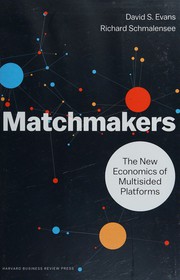
David S. Evans, Richard Schmalensee · 2016

How multi-sided platforms such as card networks get both sides on board at once.

“David S. Evans and Richard Schmalensee, Matchmakers: The New Economics of Multisided Platforms (Boston, MA: Harvard Business Review Press, 2016)” — Michael Mauboussin

Source: Measuring the Moat: Assessing the Magnitude and Sustainability of Value Creation

Recommended by: Michael Mauboussin
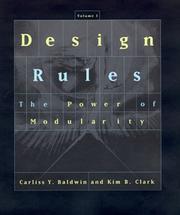
Carliss Y. Baldwin, Kim B. Clark · 1999

A theory of modularity in design, applied to the history of the computer industry.

“Carliss Y. Baldwin and Kim B. Clark, Design Rules: The Power of Modularity (Cambridge, MA: MIT Press, 2000)” — Michael Mauboussin

Source: Cultivating Your Judgment Skills: A Framework for Improving the Quality of Decisions, page 12

Recommended by: Michael Mauboussin

Kevin G. Rivette, David Kline · 1999

Treat patents as financial and strategic assets, not legal defences.
Ajay Agrawal, Joshua Gans, Avi Goldfarb · 2018

AI as a fall in the cost of prediction, and what that does to decisions and jobs.
Michael A. Cusumano, Annabelle Gawer, David B. Yoffie · 2019

Innovation platforms and transaction platforms, and what each needs to succeed.

“See Michael A. Cusumano, Annabelle Gawer, and David B. Yoffie, The Business of Platforms: Strategy in the Age of Digital Competition, Innovation, and Power (New York: Harper Business, 2019), 107-138” — Michael Mauboussin

Source: Market Share: Understanding Competitive Advantage Through Market Power, page 42

Recommended by: Michael Mauboussin
Thales S. Teixeira, Greg Piechota · 2019

Disruptors win by breaking one link in the customer's chain of activities.
A. G. Lafley, Ram Charan · 2008

How Procter and Gamble made innovation a systematic, repeatable process.

Mark Blaxill, Ralph Eckardt · 2009

How to make intellectual property a source of competitive advantage.

Mark W. Johnson · 2010

How firms invent new business models to reach markets their current one cannot.

Joe Weinman · 2012

Mathematical models of when renting cloud computing beats owning capacity.
Eric Benjamin Seufert · 2013

The arithmetic of freemium businesses: conversion, lifetime value and whales.

Sangeet Paul Choudary · 2015

A design guide for founders building marketplaces and networks.
Alex Moazed, Nicholas L. Johnson · 2016

How platform businesses connecting users differ from firms that make products.

“Alex Moazed and Nicholas L. Johnson, Modern Monopolies: What It Takes to Dominate in the 21st Century (New York: St. Martin’s Press, 2016)” — Michael Mauboussin

Source: Measuring the Moat: Assessing the Magnitude and Sustainability of Value Creation

Recommended by: Michael Mauboussin
Michael D. Smith, Rahul Telang · 2016

Data on how digital distribution shifted power from studios to streamers.

Stanley M. Davis · 1987

Recommended by: Mohnish Pabrai

Robert A. Burgelman, Modesto A. Maidique, Steven C. Wheelwright · 1988

Readings and cases on managing technology, innovation and new products.

Recommended by: Mohnish Pabrai
Stan Davis, Bill Davidson · 1991

Forecasts of how information technology and biotechnology will change business.

Recommended by: Mohnish Pabrai

Steven P. Schnaars · 1994

Strategies for firms that imitate other companies' innovations.

Recommended by: Mohnish Pabrai
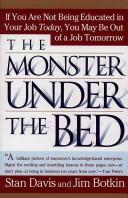
Stan Davis, Jim Botkin · 1994

How information technology makes continuous training of employees a business need.

Recommended by: Mohnish Pabrai

Tom Peters · 1994

210 short pieces of business advice for a fast-changing early-1990s economy.

Recommended by: Mohnish Pabrai

Jean-Philippe Deschamps, P. Ranganath Nayak · 1995

How companies lead markets by producing a steady stream of new products.

Recommended by: Mohnish Pabrai
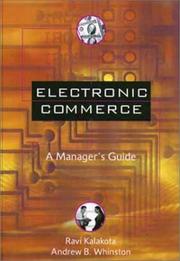
Ravi Kalakota, Andrew B. Whinston · 1996

A manager's guide to electronic commerce and the technology behind it.

Recommended by: Mohnish Pabrai
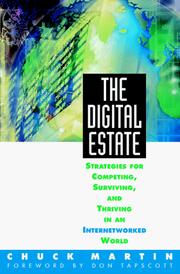
Chuck Martin · 1996

How the internet and the web will change how businesses work.

Recommended by: Mohnish Pabrai
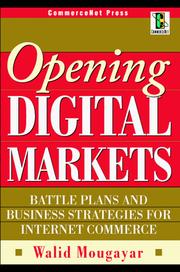
Walid Mougayar · 1997

Why and how to take a business onto the Internet, from websites to digital payments.

Recommended by: Mohnish Pabrai
Tom Peters · 1997

Cost-cutting can't produce growth; a company must stand out to win.

Recommended by: Mohnish Pabrai
Clayton M. Christensen · 1997

Why well-run firms lose to cheaper, worse products that enter at the market's bottom.

“Clayton Christensen's big "aha" in Innovator's Dilemma is that eventually a product will become over-featured and as a result feature growth will slow, and along with it innovation.” — Bill Gurley

Source: Picture Proof of the Innovator’s Dilemma: SlideRocket

Recommended by: Bill Gurley, Drew Houston, Jim Collins and 29 others
Carl Shapiro, Hal R. Varian · 1998

Economics for information goods: pricing, versioning, lock-in and network effects.

“Carl Shapiro and Hal R. Varian, Information Rules (Boston, MA: Harvard Business School Press, 1999), 174” — Michael Mauboussin

Source: The Ecosystem Edge, page 10

Recommended by: Michael Mauboussin, Mohnish Pabrai and 1 other
Larry Downes, Chunka Mui · 1998

Digital strategies for using information technology to dominate a market.

“Downes, Larry, and Chunka Mui, Unleashing the Killer App: Digital Strategies for Market Dominance (Boston: Harvard Business School Press, 1998)” — Michael Mauboussin

Source: Exploring Network Economics, page 15

Recommended by: Michael Mauboussin, Mohnish Pabrai
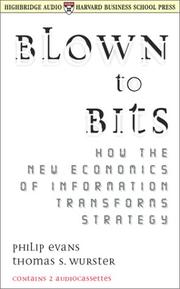
Philip Evans, Thomas S. Wurster · 1999

How the new economics of information ends the trade-off between richness and reach.

“Evans, Philip, and Thomas S. Wurster, Blown to Bits: How the New Economics of Information Transforms Strategy (Boston: Harvard Business School Press, 1999)” — Michael Mauboussin

Source: Measuring the Moat: Assessing the Magnitude and Sustainability of Value Creation, page 48

Recommended by: Michael Mauboussin, Mohnish Pabrai
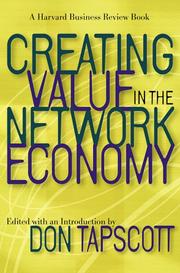
Don Tapscott · 1999

Harvard Business Review articles on doing business in networked markets.

Recommended by: Mohnish Pabrai

Clayton M. Christensen · 1999

Harvard teaching cases on managing innovation and new products.
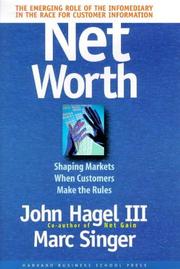
John Hagel III, Marc Singer · 1999

Why buyers will hire agents to bargain for them online, and what sellers should do.

Recommended by: Mohnish Pabrai
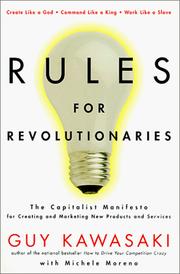
Guy Kawasaki · 1999

How to create and launch new products, from the Macintosh years onward.

Recommended by: Mohnish Pabrai
Geoffrey A. Moore · 2000

Run a tech company for shareholder value by funding its core advantage.

“Moore’s forthcoming book, Living on the Fault Line: Managing for Shareholder Value in the Age of the Internet, is terrific and highly recommended.” — Michael Mauboussin

Source: Network to Net Worth: Exploring Network Dynamics, page 29

Recommended by: Michael Mauboussin

Richard Foster, Sarah Kaplan · 2001

Why long-lived companies underperform the market, and how to transform them.

“Richard Foster and Sarah Kaplan, Creative Destruction (New York: Doubleday, 2001)” — Michael Mauboussin

Source: Innovation and Markets: How Innovation Affects the Investing Process, page 20

Recommended by: Michael Mauboussin, Mohnish Pabrai
Mohan Sawhney, Jeff Zabin · 2001

Seven steps for senior executives taking a firm into e-business.

Recommended by: Mohnish Pabrai
Annabelle Gawer, Michael A. Cusumano · 2002

How Intel and others became and stayed leaders of technology platforms.

“Annabelle Gawer and Michael A. Cusumano, Platform Leadership (Boston, MA: Harvard Business School Press, 2002)” — Michael Mauboussin

Source: The Ecosystem Edge, page 10

Recommended by: Michael Mauboussin
Tom Peters · 2003

A manifesto to rebuild firms for an age of automated white-collar work and design.

“Too many great Tom Peters books, start with this one.” — David Cancel

Source: The Books Every Startup CEO Should Read — David Cancel, Medium

Recommended by: David Cancel
Clayton M. Christensen · 2004

Disruption theory used to forecast how industries will change.

“also Clayton M. Christensen, Scott D. Anthony, and Erik A. Roth, Seeing What’s Next: Using the Theories of Innovation to Predict Industry Change (Boston, MA: Harvard Business School Press, 2004)” — Michael Mauboussin

Source: Untangling Skill and Luck: How to Think About Outcomes - Past, Present, and Future, page 31

Recommended by: Michael Mauboussin, Ev Williams
Douglas Rushkoff · 2005

Why businesses innovate best by deepening what they already do well.

Recommended by: Ev Williams, Keith Rabois
Gary P. Pisano · 2006

Why the biotechnology industry fell short of its promise.

“Pisano, Gary P., Science Business: The Promise, The Reality, and the Future of Biotech (Boston, MA: Harvard Business School Press, 2006)” — Michael Mauboussin

Source: Capital Allocation: Evidence, Analytical Methods, and Assessment Guidance, page 64

Recommended by: Michael Mauboussin, Bill Gates

Chris Anderson · 2006

Without shelf limits, sales of many niche products add up to rival the hits.

“also Chris Anderson, The Long Tail: Why the Future of Business Is Selling Less of More (New York: Hyperion, 2006), 121” — Michael Mauboussin

Source: Was Harry Potter Inevitable? Cumulative Advantage, Counterfactuals, and the Halo Effect, page 10

Recommended by: Jim Collins, Michael Mauboussin, Ev Williams and 2 others
Don Tapscott, Anthony D. Williams · 2006

How cheap coordination lets crowds outside a firm do work firms once did.

“Lessons learned from Wikipedia can be applied to most other businesses. How can you harness the spare-time or self-interest of thousands to build something better for everyone?” — Derek Sivers

Source: Derek Sivers book notes (primary, rated list) · Rating: 7/10

Recommended by: Derek Sivers, Michael Mauboussin and 1 other
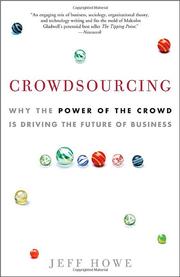
Jeff Howe · 2008

How the internet lets organisations draw on the talent of the crowd.

“Great look at a different way of getting a project done: not outsourcing it to a person, but developing a system where thousands of people can contribute a little bit.” — Derek Sivers

Source: Derek Sivers book notes (primary, rated list) · Rating: 7/10

Recommended by: Derek Sivers, Marc Benioff
Tom Hayes · 2008

How network culture is changing business and creating a new economy.

Recommended by: Mohnish Pabrai
Matt Mason · 2008

How open-source and pirate culture are changing control of information.

Recommended by: Ryan Holiday

Jerome H. Grossman, Jason Hwang · 2009

Disruptive innovation applied to health care.
Oded Shenkar · 2010

Why imitating others' innovations matters as much as innovating.

Recommended by: Mohnish Pabrai
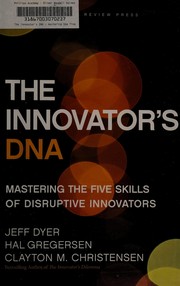
Jeff Dyer, Hal Gregersen · 2011

What innovative entrepreneurs and executives do differently from other managers.

Kevin Werbach, Dan Hunter · 2012

How game design can be used in marketing and business.

Recommended by: Nir Eyal

Mitch Joel · 2013

How technology has changed the way brands and businesses innovate and connect.

Recommended by: Gary Vaynerchuk

Will Luton · 2013

How to design and earn money from free-to-play games.

Jay Samit · 2015

How to anticipate change and create your own opportunities in business.

Recommended by: Tom Bilyeu
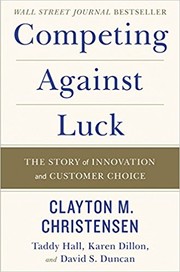
Taddy Hall, Karen Dillon, David S. Duncan · 2016

Customers hire products to do a job; innovate by finding the job, not the buyer type.

“Clayton M. Christensen, Taddy Hall, Karen Dillon, and David S. Duncan, Competing Against Luck: The Story of Innovation and Customer Choice (New York: HarperBusiness, 2016)” — Michael Mauboussin

Source: Measuring the Moat: Assessing the Magnitude and Sustainability of Value Creation, page 64

Recommended by: Michael Mauboussin
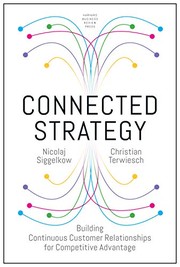
Nicolaj Siggelkow, Christian Terwiesch · 2019

Turning occasional transactions into continuous customer relationships.

Recommended by: Reid Hoffman

Safi Bahcall · 2019

Why organisations kill breakthrough projects, and how structure can protect them.

“This book explores the beauty, quirkiness, and complexity of ideas, especially new and out-of-the-box ones.” — Vinod Khosla

Source: 2019 Book Recommendations — Vinod Khosla, Medium

Recommended by: Keith Rabois, Vinod Khosla and 8 others
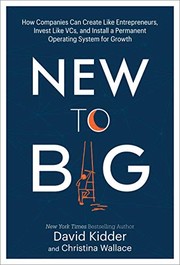
David Kidder, Christina Wallace · 2019

How large companies can build new businesses and products like startups.

Recommended by: Kathryn Minshew

Nilofer Merchant

Why social tools should be the backbone of a business model, not just its media.

Recommended by: Kathryn Minshew

Bill Gates · 1999

How technology can run businesses better and change the nature of business.

Recommended by: Mohnish Pabrai

Matthias Schrader, Volker Martens

Contributors from many fields propose fixes for the harms of the digital revolution.

Recommended by: David Hellmann

Ken J. Sousa, Effy Oz · 2006

A textbook on information technology for business and management.

Recommended by: Ryan Hoover
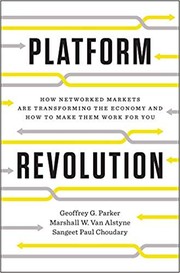
Geoffrey G. Parker, Marshall W. Van Alstyne, Sangeet Paul Choudary · 2016

How platforms create value by matching groups, unlike linear pipeline businesses.

Recommended by: Reid Hoffman
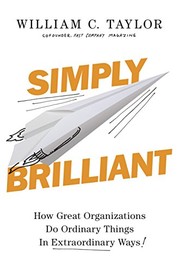
William C. Taylor · 2016

How business innovation can come from ordinary companies in ordinary fields.

Recommended by: Tom Peters
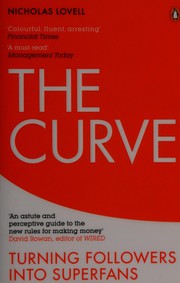
Nicholas Lovell · 2013

How to make money when customers expect products for free.

Recommended by: Brad Feld, Matej Latin
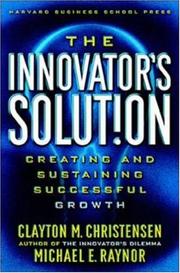
Clayton M. Christensen, Michael E. Raynor · 2003

How a company can build new businesses through low-end and new-market disruption.

“Required reading for business-owners and investors. Shows how technology improves faster than people's ability to use it, so when someone says a technology is “not good enough”, add “yet” and prepare for disruption.” — Derek Sivers

Source: Derek Sivers book notes (primary, rated list) · Rating: 8/10

Recommended by: Derek Sivers, Keith Rabois and 3 others
More management and organisational design