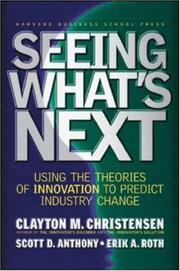
Seeing What's Next
Disruption theory used to forecast how industries will change.
Summary
Christensen, Anthony and Roth apply the disruption theory from The Innovator's Dilemma and The Innovator's Solution to the problem of forecasting industry change, arguing that theory allows you to predict which competitors will win without predicting the future.
The method has three parts. Identify signals of change, meaning non-consuming populations who lack the skill or money to use the existing product, over-served customers for whom the product already does more than they need, and asymmetries in what incumbents are motivated to do. Assess competitive battles by asking whether an entrant's approach is disruptive relative to each incumbent, since the same innovation is disruptive to one firm and sustaining to another, and whether the incumbent's business model can accommodate a response. And evaluate strategic choices including the firm's resources, processes and values, its market segmentation, and whether it can create a separate organisation for the disruptive business.
They then apply the framework to five industries: education, aviation, semiconductors, health care and telecommunications, with predictions for each, and to national economic development.
The forecasting record is mixed. The health care and education predictions have been partly borne out and partly not, and disruption theory generally has faced substantial empirical challenge since, including Jill Lepore's critique and quantitative work finding the theory's predictions no better than chance in several samples. The method's value is as a structured way of asking who is motivated to respond and who is not, which is useful independently of whether the predictions hold.
Key takeaways 7
- Theory allows prediction of which competitors will win without requiring prediction of what the future will look like.
- The same innovation is disruptive relative to one incumbent and sustaining relative to another, so disruption is a relationship rather than a property.
- Non-consumption, meaning populations who lack the skill or money to use the existing product, is where disruptive entrants begin.
- Over-served customers, for whom the product already exceeds their needs, are where an incumbent's improvements stop earning a premium.
- An incumbent's response is determined by what its business model motivates it to do rather than by what its management can see.
- A firm cannot pursue a disruptive business inside the organisation serving its existing customers, because the resource allocation process will starve it.
- Disruption theory has faced substantial empirical challenge, and its predictive record in tested samples has not been better than chance.
Who should read it
Executives and investors assessing competitive threats who want a structured method for asking who is motivated to respond, with the theory's record noted.
About Clayton Christensen
Kim B. Clark Professor of Business Administration, Harvard Business School 1992-2020; co-founder of Innosight, Rose Park Advisors and the Clayton Christensen Institute; died 23 January 2020
The Innovator's Dilemma turned disruption into a primary framework that the rest of the strategy and innovation literature argues with rather than around.
Who recommended it 2 · 1 direct
“also Clayton M. Christensen, Scott D. Anthony, and Erik A. Roth, Seeing What’s Next: Using the Theories of Innovation to Predict Industry Change (Boston, MA: Harvard Business School Press, 2004)”
Similar books 6
Chosen by shared topics, the entries that hold them, and the people who recommended both.
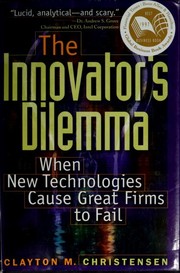
Why well-run firms lose to cheaper, worse products that enter at the market's bottom.
“Clayton Christensen's big "aha" in Innovator's Dilemma is that eventually a product will become over-featured and as a result feature growth will slow, and along with it innovation.” — Bill Gurley
Source: Picture Proof of the Innovator’s Dilemma: SlideRocket
Recommended by: Bill Gurley, Drew Houston, Jim Collins and 29 others
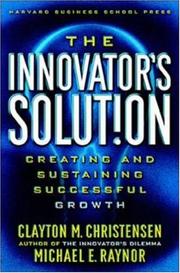
How a company can build new businesses through low-end and new-market disruption.
“Required reading for business-owners and investors. Shows how technology improves faster than people's ability to use it, so when someone says a technology is “not good enough”, add “yet” and prepare for disruption.” — Derek Sivers
Source: Derek Sivers book notes (primary, rated list) · Rating: 8/10
Recommended by: Derek Sivers, Keith Rabois and 3 others
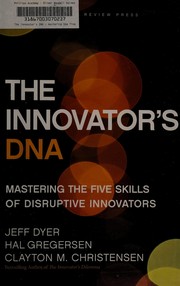
What innovative entrepreneurs and executives do differently from other managers.
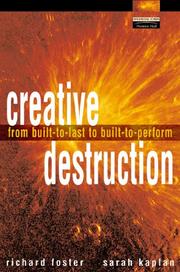
Why long-lived companies underperform the market, and how to transform them.
“Richard Foster and Sarah Kaplan, Creative Destruction (New York: Doubleday, 2001)” — Michael Mauboussin
Source: Innovation and Markets: How Innovation Affects the Investing Process, page 20
Recommended by: Michael Mauboussin, Mohnish Pabrai
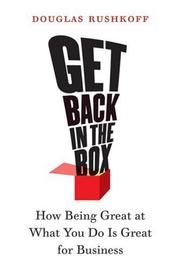
Why businesses innovate best by deepening what they already do well.
Recommended by: Ev Williams, Keith Rabois
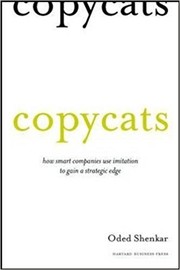
Why imitating others' innovations matters as much as innovating.
Recommended by: Mohnish Pabrai
Where it sits in the reference 4
Topics 2
As an Amazon Associate I earn from qualifying purchases.