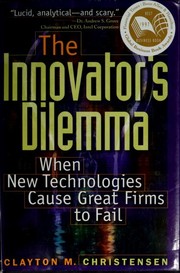
The Innovator's Dilemma
Why well-run firms lose to cheaper, worse products that enter at the market's bottom.
Summary
Christensen explains why well-managed incumbent firms lose to new entrants. His answer is that these firms fail precisely because they listen to their best customers, invest in higher-margin products and apply disciplined resource allocation. Disruptive technologies enter at the bottom of the market with worse performance on the attributes established customers value, so incumbents rationally ignore them. The disruptive technology then improves until it satisfies the mainstream, at which point the incumbent cannot respond.
The evidence comes from the disk drive industry, which Christensen studied in detail because its rapid generational cycles work as a natural laboratory. He tracks each transition from fourteen-inch through eight, five and a quarter, three and a half and two and a half inch drives, showing that incumbents led every sustaining innovation and lost nearly every disruptive one. He extends the analysis to mechanical excavators, steel minimills, motorcycles and discount retailing.
His prescription is organisational. Because resource allocation processes reflect existing customers and cost structures, a firm cannot pursue a disruptive technology inside its main organisation. It must create a separate unit small enough to be excited by small markets, with its own cost structure and its own customers. He also argues that markets for disruptive products cannot be researched because they do not exist, so firms should plan to learn rather than plan to execute.
The theory has been challenged seriously. Jill Lepore attacked the case selection in 2014, and Andrew King and Baljir Baatartogtokh found that only a minority of Christensen's own cases fit the theory when examined closely. The term disruption has been stretched to cover any new competitor, which is not what the book says. The disk drive evidence remains strong and the resource allocation argument is the durable part.
Key takeaways 8
- Established firms fail at disruptive technologies because they follow good management practice, not because they neglect it.
- Disruptive technologies underperform on the attributes mainstream customers value while offering different attributes that a fringe market wants.
- Resource allocation inside a firm follows existing customers and margin structures, which systematically starves projects aimed at smaller, lower-margin markets.
- Technology usually improves faster than customer needs do, so products eventually overshoot what the mainstream will pay for.
- A firm cannot pursue a disruptive market from inside its main organisation and must create a separate unit with its own cost structure.
- Markets for disruptive products cannot be discovered through conventional market research because the customers do not yet exist.
- Small organisations must be given small opportunities, because a large organisation cannot treat a small market as worth its attention.
- Failing early and cheaply in a new market is a plan, not an accident, and should be budgeted for.
Who should read it
Operators and investors assessing whether an incumbent can respond to a cheaper entrant, and founders judging whether they are attacking from below or competing head-on.
About Clayton Christensen
Kim B. Clark Professor of Business Administration, Harvard Business School 1992-2020; co-founder of Innosight, Rose Park Advisors and the Clayton Christensen Institute; died 23 January 2020
The Innovator's Dilemma turned disruption into a primary framework that the rest of the strategy and innovation literature argues with rather than around.
Who recommended it 32 · 7 direct
“Clayton Christensen's big "aha" in Innovator's Dilemma is that eventually a product will become over-featured and as a result feature growth will slow, and along with it innovation.”
“And so two of the books that were really instrumental, the first one is Innovator's Dilemma by Clay Christensen.”
“The third book that I want to talk about that changed my mind was a book called The Innovator's Dilemma by Clay Christensen.”
“My favorite way around this problem is the one identified by Clayton Christensen in The Innovator's Dilemma: don't go after existing customers in a category and try to get them to buy something new; instead, go find the new customers who weren't able to afford or adopt the incarnation of the status quo.”
“Clayton M. Christensen, The Innovator’s Dilemma: When New Technologies Cause Great Companies to Fail (Boston, MA: Harvard Business School Press, 1997)”
“Awesome book. May move soon to my Top Ten List. If anything will keep CEOs awake at night, reading this book certainly will.”
Similar books 6
Chosen by shared topics, the entries that hold them, and the people who recommended both.
How a company can build new businesses through low-end and new-market disruption.
“Required reading for business-owners and investors. Shows how technology improves faster than people's ability to use it, so when someone says a technology is “not good enough”, add “yet” and prepare for disruption.” — Derek Sivers
Source: Derek Sivers book notes (primary, rated list) · Rating: 8/10
Recommended by: Derek Sivers, Keith Rabois and 3 others
Why startups should build something new and own a small market before growing.
“Inspired by modern tech classics like Zero to One and The Hard Thing About Hard Things, I wrote the book to be succinct, thorough, and accessible.” — Chris Dixon
Source: I wrote a book: Read Write Own — cdixon
Recommended by: Balaji S. Srinivasan, Chris Dixon and 38 others
Run a tech company for shareholder value by funding its core advantage.
“Moore’s forthcoming book, Living on the Fault Line: Managing for Shareholder Value in the Age of the Internet, is terrific and highly recommended.” — Michael Mauboussin
Source: Network to Net Worth: Exploring Network Dynamics, page 29
Recommended by: Michael Mauboussin
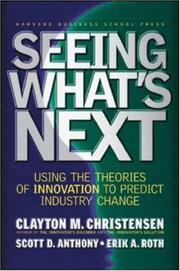
Disruption theory used to forecast how industries will change.
“also Clayton M. Christensen, Scott D. Anthony, and Erik A. Roth, Seeing What’s Next: Using the Theories of Innovation to Predict Industry Change (Boston, MA: Harvard Business School Press, 2004)” — Michael Mauboussin
Source: Untangling Skill and Luck: How to Think About Outcomes - Past, Present, and Future, page 31
Recommended by: Michael Mauboussin, Ev Williams
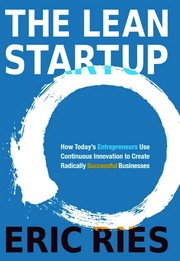
Build, measure, learn: test what customers want with small experiments.
“There's a bunch of - I think if it's a little company, Eric Ries's book is great, The Lean Startup.” — Ben Horowitz
Recommended by: Ben Horowitz, Derek Sivers, Kathryn Minshew and 19 others
What innovative entrepreneurs and executives do differently from other managers.
Where it sits in the reference 7
Topics 4
As an Amazon Associate I earn from qualifying purchases.