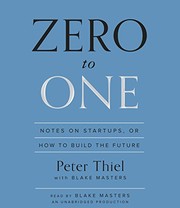
Zero to One: Notes on Startups, or How to Build the Future
Why startups should build something new and own a small market before growing.
actual publication 2014
Summary
Thiel argues that competition destroys profit and that the only durable business is a monopoly built on something nobody else has. He separates horizontal progress, which copies what already works, from vertical progress, which creates something that did not exist. Startups should aim at vertical progress and should aim at markets they can dominate, starting from a small niche and expanding outward only after they own it.
The material comes from Masters' notes on a 2012 Stanford course Thiel taught, reorganised into short chapters. Thiel draws on PayPal, Palantir and Founders Fund deals, plus a reading of the dot-com crash that inverts the standard lessons: he says the post-2000 rules taught founders to be incremental when they should have stayed ambitious. He also sets out four traits of monopoly, which are proprietary technology, network effects, economies of scale and branding, and argues that proprietary technology must be roughly ten times better than the alternative.
The book is most useful for two arguments founders can apply directly. The first is the contrarian question, which asks what important truth very few people agree with you on. The second is the claim that returns in venture follow a power law, so a fund and a founder should both concentrate on the few bets that can return everything. Thiel also insists that distribution is a product decision, and that engineers systematically underrate sales.
The book is contested on several fronts. Its monopoly framing rests on selected winners and does not test how often founders who chased monopoly failed. Its dismissal of lean startup methods treats iteration and vision as opposites when many companies use both. Thiel's political prominence since 2016 has also made readers argue about the book's politics rather than its business claims. The definite optimism chapters read as cultural commentary rather than evidence.
Key takeaways 8
- Competition erodes profit, so a company should aim to be the only one doing what it does rather than the best among rivals.
- All happy companies are different because each earns a monopoly by solving a unique problem, while all failed companies are the same because they failed to escape competition.
- A startup should first monopolise a deliberately small market, then expand into adjacent ones, rather than claiming a share of a huge existing market.
- Venture returns follow a power law in which one investment outperforms the entire rest of the portfolio, so both investors and founders should concentrate rather than diversify.
- Proprietary technology must be at least ten times better than the closest substitute to count as a real advantage.
- Distribution determines outcomes as much as product does, and technical founders consistently underestimate how much sales work a product needs.
- The last mover, not the first mover, captures the value, because what matters is generating cash flows far into the future.
- The 2000 crash taught founders the wrong lessons, including incrementalism and a preference for competitive markets over bold new ones.
Who should read it
Founders choosing what company to start, and investors who need a compact statement of the power law and monopoly logic that shapes how many venture firms think.
About Peter Thiel
Co-founder of PayPal and Palantir; co-founder and partner, Founders Fund; former manager of Clarium Capital
Zero to One is the primary text for the monopoly-and-secrets school of startup strategy, and his essays are cited far beyond venture capital.
Who recommended it 40 · 9 direct
“Inspired by modern tech classics like Zero to One and The Hard Thing About Hard Things, I wrote the book to be succinct, thorough, and accessible.”
“Brilliant, bold, and clear thoughts about how to make a big Silicon Valley size company. Other great insights like definite/indefinite optimism/pessimism.”
Similar books 6
Chosen by shared topics, the entries that hold them, and the people who recommended both.
How to lead a company through layoffs, near-death crises and the decision to sell.
“…books I've recommended, highlighted to death, or forced on friends.” — Andrew Wilkinson
Source: Andrew Wilkinson's Bookshelf, neverenough.com
Recommended by: Andrew Wilkinson, Balaji S. Srinivasan and 34 others
Build, measure, learn: test what customers want with small experiments.
“There's a bunch of - I think if it's a little company, Eric Ries's book is great, The Lean Startup.” — Ben Horowitz
Recommended by: Ben Horowitz, Derek Sivers, Kathryn Minshew and 19 others
How to run a company as it grows from ten employees to several thousand.
Recommended by: Balaji S. Srinivasan, Matt Mullenweg and 10 others
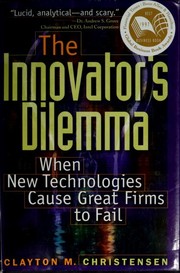
Why well-run firms lose to cheaper, worse products that enter at the market's bottom.
“Clayton Christensen's big "aha" in Innovator's Dilemma is that eventually a product will become over-featured and as a result feature growth will slow, and along with it innovation.” — Bill Gurley
Source: Picture Proof of the Innovator’s Dilemma: SlideRocket
Recommended by: Bill Gurley, Drew Houston, Jim Collins and 29 others
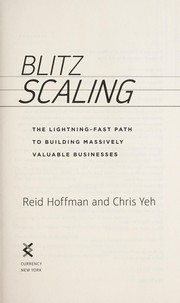
When and how to put speed before efficiency to capture a market before rivals.
“A great book on blitzscaling: An insightful book on how to scale at a very fast pace and more importantly WHEN.” — Vinod Khosla
Source: 2019 Book Recommendations — Vinod Khosla, Medium
Recommended by: Vinod Khosla, Anthony Pompliano, Bill Gates and 7 others
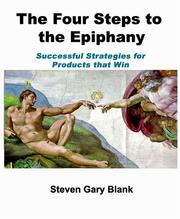
Customer development: how startups find customers before building the full product.
“Buy it, read it, keep it under your pillow and absorb it via osmosis.” — Marc Andreessen
Source: Book of the week: Best book for tech entrepreneurs this year, blog.pmarca.com
Recommended by: Andrew Chen, Marc Andreessen, Brad Feld and 2 others
Where it sits in the reference 12
Topics 3
As an Amazon Associate I earn from qualifying purchases.